China’s independent oil firms elbow into Iraq’s majors-dominated market


China’s independent oil companies are ramping up operations in Iraq, investing billions of dollars in OPEC’s number two producer even as some global majors have scaled back from a market dominated by Beijing’s big state-run firms.
Drawn by more lucrative contract arrangements, smaller Chinese producers are on track to double their output in Iraq to 500,000 barrels per day by around 2030, according to estimates by executives at four of the firms, a figure not previously reported.
For Baghdad, which is also seeking to lure global giants, the growing presence of the mostly privately run Chinese players marks a shift as Iraq comes under growing pressure to accelerate projects, according to multiple Iraqi energy officials. In recent years, Iraq’s oil ministry had pushed back on rising Chinese control over its oilfields.
For the smaller Chinese firms, managed by veterans of China’s state heavyweights, Iraq is an opportunity to leverage lower costs and faster development of projects that may be too small for Western or Chinese majors.
With meagre prospects in China’s state-dominated oil and gas industry, the overseas push mirrors a pattern by Chinese firms in other heavy industries to find new markets for productive capacity and expertise.
Little-known players including Geo-Jade Petroleum Corp, United Energy Group, Zhongman Petroleum and Natural Gas Group and Anton Oilfield Services Group made a splash last year when they won half of Iraq’s exploration licensing rounds.
Executives at smaller Chinese producers say Iraq’s investment climate has improved as the country becomes more politically stable and Baghdad is keen to attract Chinese as well as Western companies.
Iraq wants to boost output by more than half to over 6 million bpd by 2029. China’s CNPC alone accounts for more than half of Iraq’s current production at massive fields including Haifaya, Rumaila and West Qurna 1.
PROFIT-SHARING, RISK TOLERANCE
Iraq’s shift a year ago to contracts based on profit-sharing from fixed-fee agreements – an attempt to accelerate projects after ExxonMobil (NYSE:) and Shell scaled back – helped lure Chinese independents.
These smaller firms are nimbler than the big Chinese companies and more risk-tolerant than many companies that might consider investing in the Gulf economy.
Chinese companies offer competitive financing, cut costs with cheaper Chinese labour and equipment and are willing to accept lower margins to win long-term contracts, said Ali Abdulameer at state-run Basra Oil Co, which finalises contracts with foreign firms.
“They are known for rapid project execution, strict adherence to timelines and a high tolerance for operating in areas with security challenges,” he said. “Doing business with the Chinese is much easier and less complicated, compared to Western companies.”
Smaller Chinese firms can develop an oilfield in Iraq in two to three years, faster than the five to 10 years for Western firms, Chinese executives said.
“Chinese independents have much lower management costs compared to Western firms and are also more competitive versus Chinese state-run players,” said Dai Xiaoping, CEO of Geo-Jade Petroleum, which has five blocks in Iraq.
The independents have driven down the industry cost to drill a development well in a major Iraqi oilfield by about half from a decade ago to between $4 million and $5 million, Dai said.
TRADE-OFFS
A Geo-Jade-led consortium agreed in May to invest in the South Basra project, which includes ramping up the Tuba field in southern Iraq to 100,000 bpd and building a 200,000-bpd refinery. Geo-Jade, committing $848 million, plans to revive output at the largely mothballed field to 40,000 bpd by around mid-2027, Dai told Reuters.
The project also calls for a petrochemical complex and two power stations, requiring a multi-billion-dollar investment, said Dai, a reserve engineer who previously worked overseas with CNPC and Sinopec (OTC:).
Zhenhua Oil, a small state-run firm that partnered with CNPC in a $3 billion deal to develop Ahdab oilfield in 2008, the first major foreign-invested project after Saddam Hussein was toppled in 2003, aims to double its production to 250,000 bpd by 2030, a company official said.
Zhongman Petroleum announced in June a plan to spend $481 million on the Middle Euphrates and East Baghdad North blocks won in 2024.
Chinese firms’ cheaper projects can come at the expense of Iraq’s goal to introduce more advanced technologies.
Muwafaq Abbas, former crude operations manager at Basra Oil, expressed concern about transparency and technical standards among Chinese firms, which he said have faced criticism for relying heavily on Chinese staff and relegating Iraqis to lower-paid roles.
To be sure, some Western firms are returning to Iraq: TotalEnergies (EPA:) announced a $27 billion project in 2023, and BP (NYSE:) is expected to spend up to $25 billion to redevelop four Kirkuk fields, Reuters reported.
Source: Reuters



Related News.

OL Shipping Group in Tokyo: Capt. Eberhard Koch calls for realistic solutions to Maritime Decarbonisation
An intensive and engaging couple of days in Tokyo brought together leading figures from the international maritime community, providing a valuable…

Regatta for Peace one of the largest ever in Cyprus
Cyprus will host the first European stop on a global sailing journey leading up to the 2027 America’s Cup in Naples. More than 120 sailors…

The propulsion technology powering the marine energy transition
The marine industry is under increasing pressure to future-proof fleets, balancing the need to reduce emissions and improve efficiency. Propulsion…
Signal Ocean acquires Lgmar
Signal Ocean announced the acquisition of Lgmar, the Athens-based company behind Telix, a maritime email and communication platform in daily use…

Canada clean power push challenged by interprovincial grid limits, says GlobalData
Canada is entering a pivotal phase of power-sector expansion as federal tax credits, the phase-out of coal-fired generation, and accelerating…

Maritime safety depends on human factors and leadership, not procedures alone
Interim survey findings point to a gap between seafarers’ perceptions of risk and injury data Seafarers may misjudge when and where they are most at…

New BIMCO contracts tackle ship recycling and energy-saving retrofits
BIMCO adopted two new contractual solutions designed to help you manage important operational and regulatory challenges: the revised…
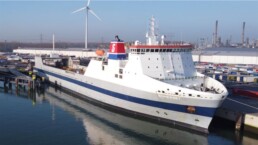
Stena Line to acquire vessel and make changes to its network
Stena Line has reached an agreement to acquire the RoRo vessel Somerset from CLdN. Subject to closure and transfer, the vessel would begin operating…
DORIC WEEKLY INSIGHT 16 OCTOBER 2026
Please find below the DORIC Market Insight for the week ending 16th October 2026. Weekly Report 16.10.2026
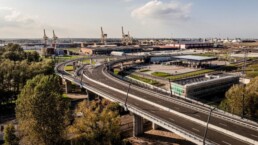
Important information for port clients and freight carriers effective November 1, a new traffic overpass and port checkpoint will open for traffic to the Port of Riga on Kundziņsala
Starting November 1 of this year, a new traffic overpass connecting Tvaika Street to Kundziņsala will open to facilitate traffic to and from the Port…
Subscribe to our newsletter!
if you dont want to swim alone in the ocean of news, sign up for the newsletter, and you will receive daily all the important news of world shipping!
