Health and air pollution benefits of a global 0.1% fuel sulfur limit on marine fuels

The International Maritime Organization (IMO) has progressively tightened global limits on the sulfur content of marine fuels to protect human health and the environment, including by implementing stricter sulfur limits in designated emission control areas (ECAs). Currently, ships must adhere to a global 0.5% fuel sulfur limit and a 0.1% limit in ECAs, unless they use scrubbers. However, studies have found that ships using scrubbers with heavy fuel oil emit more particulate matter and black carbon emissions than those using marine gas oil.
This brief examines how further reducing the global maximum allowable fuel sulfur content from 0.5% to 0.1% could affect air pollution emissions and premature mortality from fine particulate matter (PM2.5). The analysis considers three compliance pathways: a Scrubber Max scenario in which ships that use very-low sulfur fuel oil (VLSFO) switch to high-sulfur heavy fuel oil (HFO) with scrubbers to comply; a Scrubber Allowed scenario in which ships that use VLSFO switch to marine gas oil (MGO) to comply; and a Distillate Only scenario in which scrubbers are not allowed and ships that use HFO and scrubbers or VLSFO switch to MGO to comply.

Relative to a baseline scenario based on 2023 ship activity data, reducing the sulfur content of marine fuels to comply with a 0.1% sulfur limit would:
- Mitigate air pollution. Across the three compliance scenarios, shipping-attributable sulfur oxide emissions are estimated to fall by 75%–85%, PM2.5 by 46%–66%, and black carbon by 27%–41%. The scenario prohibiting scrubbers yields the highest estimated emission reductions.
- Reduce premature deaths. The three compliance scenarios avoid between 3,900 and 4,500 premature deaths annually, with the most significant reductions achieved when scrubbers are not allowed.
- Deliver substantial economic benefits. Health-related economic benefits are estimated to range from $9.3 billion to $10.9 billion annually, depending on the compliance pathway.
- Incentivize cleaner fuels. A global 0.1% sulfur standard that promotes distillate fuel use would increase baseline fossil fuel costs and reduce the price gap between conventional and zero or near-zero greenhouse gas emission fuels.
Source: International Council on Clean Transportation.



Related News.
European Shipowners call on MEPs to back Commission proposal to include two Indian yards in the EU ship recycling list
The Environment Committee of the European Parliament votes on 4 November on a motion for resolution objecting to the Commission’s proposal to add two…
Oversea signs commercial agreement with UECC following Successful Pilot
Following a successful pilot onboard Auto Advance, UECC has chosen to enter into a commercial agreement with Oversea. The pilot demonstrates how…
First NABEP Crude Cargo Under U.S. Agreement Arrives in Texas
Shipment of 1 million barrels arrived as NABEP production passes 223,000 barrels of oil equivalent per day. Two tankers carrying 1 million barrels of…

LNG carrier prices fall to $245 million, threatening Korean Shipbuilders’ Margins
Prices for high-value vessels, including liquefied natural gas carriers and ultra-large container ships, have begun to decline despite rising…
Vehicle Carrier Safety Forum publishes new Fire Drill Guidelines for vehicle carrying vessels
The Vehicle Carrier Safety Forum has published new Fire Drill Guidelines for Vehicle Carrying Vessels, providing vessel operators with a practical…
Is an Atlantic Basin crude glut on the cards?
Atlantic crude discounts fail to offset high freight to Asia, raising the risk of a regional glut as VLCC availability tightens. Freight…
The future of trade infrastructure in Europe is connectivity
One year after its inauguration, Rijeka Gateway offers a glimpse into the future of European trade. On 10 September last year,…
Allied – Weekly Market Review – Week 43
Please find below the Allied Weekly Report for Week 43 | 2026 ALLIED - Weekly Market Report- Week 43

Intermodal Report – Week 43 2026
Please find below the Intermodal market report for week 43 2026. Intermodal Report Week 43 2026
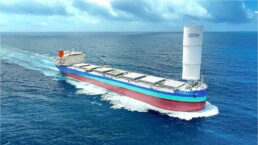
Wind Challenger-Equipped LNG Dual-Fueled Coal Carrier ‘MAIZURU KAZENOMAI’ Delivered
-While Supporting a Stable Energy Supply, Reducing Environmental Impact - Mitsui O.S.K. Lines announced the delivery and entry into service of an…
Subscribe to our newsletter!
if you dont want to swim alone in the ocean of news, sign up for the newsletter, and you will receive daily all the important news of world shipping!
