Autonomous ships will be a reality long before the industry is ready – and that’s a good thing


For years, shipping’s relationship with autonomy has been one of cautious optimism, mixed with deep scepticism. We’ve talked about autonomous ships as if they were distant sci-fi, something for the 2040s – after the technology matures, after the IMO agrees on every word of the autonomy rulebook, after shipowners cautiously test the waters with small-scale pilots…
This mindset is dangerously outdated, writes Orca AI CEO and Co-founder Yarden Gross.
The reality is this: autonomous ships are not coming – they’re already here. The first generation of AI-powered autonomous capabilities is already operational on commercial vessels today. Classification societies are certifying autonomous operational support systems. Regulators, rather than holding the industry back, are actively asking operators and technology developers to push faster, provide real-world evidence and help draft regulations on the fly.
The safe, comfortable consensus – that autonomy is a distant future – is no longer fit for purpose. Ships will sail autonomously long before the industry feels ready. And that’s exactly what needs to happen if shipping wants to remain competitive, safe and sustainable in a world that expects faster results than ever before.
THE INDUSTRY’S BIGGEST MYTH
This is it: “We’ll wait until it’s perfect.”
One of the most dangerous assumptions in the maritime tech community is that autonomy will arrive fully formed, tied up in a neat regulatory package and only when every risk has been meticulously solved.
That’s not how technological revolutions work. And it’s certainly not how autonomy will take hold in shipping.
Autonomy will not arrive because the IMO declares it so. It will force its way in, driven by the real-world economics of crew shortages, safety demands and tigthtening emissions targets that no human-operated fleet can meet at scale.
Autonomy is already financially viable. The first incremental systems – like digital watchkeeping and AI-powered collision avoidance – are onboard today, reducing fatigue, improving safety and providing immediate ROI. I acknowledge the technology isn’t perfect – but waiting for perfection in an industry built on tight margins and relentless schedules is simply unrealistic. That is nothing new in shipping!
AUTONOMY IS ALREADY OUTPACING THE REGULATORS
We all love to complain that regulation is the great bottleneck. The truth is that the regulatory process can’t keep up with technology anymore — and it shouldn’t even try.
Autonomous systems are improving with every single voyage, feeding real-time operational data back into smarter algorithms. Meanwhile, the IMO is still debating voluntary guidelines, and the full MASS code won’t be mandatory until 2032.
If shipping waits for regulatory certainty, it will hand over the future to technology-first disruptors who are willing to move faster. Autonomy is becoming a competitive differentiator, and waiting for global consensus is a luxury that agile players simply won’t entertain.
AI AT SEA DOESN’T NEED TO BE PERFECT – IT JUST NEEDS TO BE BETTER THAN US AT CERTAIN THINGS
Let’s face a hard truth: the status quo is unsafe. Fatigued crews, complex navigation environments and over-reliance on human lookouts combined with aging fleets operating with outdated technology – this is not a system worth defending.
Autonomous systems don’t need to achieve some fictional benchmark of flawless performance. They only need to outperform human crews in specific scenarios on their worst day – and that is a low bar in today’s risk-laden shipping environment.
We’ve already reached the point where AI-enhanced watchkeeping is demonstrably safer and more reliable than a distracted, sleep-deprived OOW or in extreme weather and low visibility conditions. Why would we wait to deploy technology that can save lives and prevent accidents today?
FULL AUTONOMY? FORGET IT — LET’S TALK HYBRID INTELLIGENCE
The obsession with ‘fully unmanned ships’ has also been a distraction. The real future is hybrid intelligence – human and AI systems working together, each doing what they do best. Humans bring creativity, flexibility and ethical judgment. AI brings tireless vigilance, data analysis at scale and real-time predictive insights.
The phased approach – where ships dynamically shift between different levels of autonomy based on context – is the real revolution, and it’s happening already. Ships today are gathering data, learning from every near-miss and self-improving at fleet scale.
SEAFARERS SHOULD FEAR STAGNATION, NOT AUTONOMY
If there’s one message the industry needs to hear, it’s this: autonomy is not coming to replace seafarers – it’s coming to complement them and to give a brighter future to our industry. I truly believe this.
No young budding talents want to join an industry defined by exhaustion, isolation and outdated technology. Autonomy can transform shipping into a high-tech career, where seafarers become data analysts, systems supervisors and AI partners, rather than lookouts staring at the horizon for hours on end.
Countries like Japan already see this — their MEGURI2040 initiative is using autonomy as a talent magnet to attract the next generation of digitally native seafarers. If we fail to follow that lead, shipping will not just lose the race for autonomy – it will lose an entire generation of enthusiastic youngsters.
READY OR NOT, HERE IT COMES
The safe conversation – that autonomy is decades away, and we’ll adopt it when we’re ready – is a lie shipping can no longer afford.
Autonomy is not waiting for consensus. It’s happening now, driven by economic necessity, technological readiness and regulatory pragmatism. The ships equipped with autonomous capabilities today are not pilots or experiments – they are the early majority and they are already delivering value.
The only real question is whether shipping’s leaders will seize the advantage – or cling to a status quo that is already sinking beneath them.



Related News.

5th CSN Greece ICT Conference, Athens 19th November 2026 “Intelligent Skies, Secure Seas: The AI Impact on ICT” – Save the date
About the Conference The 5th CSN Greece Shipping ICT Conference, titled “Intelligent Skies, Secure Seas: The AI Impact on ICT”, will take place on…
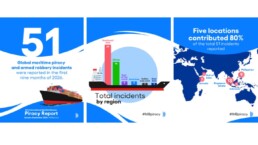
Maritime piracy incidents remain at historic lows despite Somali piracy concerns
The ICC International Maritime Bureau (IMB) has reported the lowest level (51) of piracy and armed robbery incidents since 1992 in the first nine…
Piraeus Port Authority main sponsor of Ferry Shipping Summit 2026
With the participation of more than 200 delegates from several European countries, the Ferry Shipping Summit 2026 took place on 8–9 October 2026 in…

EuroDry announces order for the construction of a third modern 82,000 DWT Kamsarmax Bulk Carrier
EuroDry , an owner and operator of drybulk vessels and provider of seaborne transportation for drybulk cargoes, announced that it has signed a…
India urges Russia, Ukraine to protect Black Sea shipping
India has urged both Russia and Ukraine to ensure safe passage for commercial shipping through the Black Sea as attacks on merchant vessels put…

PD Ports strengthens its commitment to the River Tees with multi-million pound Marine investment
PD Ports has officially opened a new multi-million-pound Marine facility on the banks of the River Tees, reinforcing its long-term commitment to the…

Maritime leaders head to Shanghai for the Annual Summit 2026
Shared seas, shifting horizons Maritime trade stands at a turning point. The rules-based order on which shipping has long depended is under…

Indian Register of Shipping grants type approval to Medha Energy’s 92 kWh LTO Lithium-Ion battery system
Indian Register of Shippinghas successfully completed the Type Approval process for the 92 kWh Lithium-Ion Battery System developed by M/s Medha…

KLine opens a Singapore New Hub for Consolidated Ship Management and Maritime Talenτ
Three Companies, One Roof — Singapore's New Hub for Consolidated Ship Management and Maritime Talenτ A ceremony for around 280 guests sets the stage…
ASA explores measures to Safeguard Free and Safe Navigation at Critical International Maritime Chokepoints
The Asian Shipowners’ Association which accounts for 56% of the world’s fleet capacity and consists of China, Cook Islands, Hong Kong, Japan, Korea…
Subscribe to our newsletter!
if you dont want to swim alone in the ocean of news, sign up for the newsletter, and you will receive daily all the important news of world shipping!
