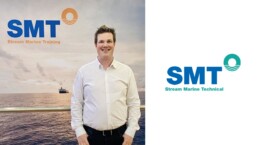

Methanol is leading the fight as a cleaner and sustainable alternative marine fuel in the drive to hit IMO net zero targets by 2050, but with some flag states requiring additional teaching over and above the Basic and Advanced IGF courses required under STCW and class, shipowners are demanding higher levels of awareness training for their seafarers.
Stream Marine Technical is meeting that need with the delivery of mandatory IGF basic and advanced training for the crews of vessels under the IGF code as well as bespoke projects to deliver methanol awareness training to the cruise industry, ship builders and ship operators worldwide.
Martin White, CEO of SMT, said that while there are many benefits to methanol as a marine fuel, “the International Code of Safety for Ships Using Gases or Other Low-Flashpoint Fuels (IGF code) cannot yet be considered able to fully address the training requirements for other alternate fuels that may fall within the framework of the code.
“Methanol is a toxic and highly flammable substance that must be handled correctly. Our training focuses on all levels of awareness of the methanol fuel systems, implementing the correct procedures within the safety management system as well as risk management, while focusing on the hazards and practical elements of methanol as a marine fuel through practical demonstrations,” he added.
SMT’s bespoke training covers a variety of topics such as the properties and hazards of methanol and methanol blends; safe handling practices and use of appropriate PPE; emergency response procedures (fire, leaks, spills); gas detection systems and calibration requirements; risk controls for ignition sources and electrostatic hazards; as well as emphasised compliance with the IGF Code.
“Our methanol familiarisation training examines issues such as core properties and hazards of methanol (flammable, toxic, volatility); overview of methanol production methods, including fossil-based, bio-methanol (from biomass), and e-methanol (from green hydrogen and CO₂ capture); environmental advantages and regulatory context (IMO GHG strategy, IGF Code); guidance on safe handling, PPE, gas detection, and first aid as well as key considerations for storage, bunkering, and engine integration on methanol-fuelled vessels,” said Mr White.
More Ship Owners and Operators are considering methanol as a cleaner more sustainable marine fuel, he said, with orders for new build methanol fuelled ships growing considerably. “when it comes to refits of existing engines, due to the simplicity of methanol technology, smaller vessels with less space can also benefit, as well as tankers, bulk carriers, containerships and cruise ships,” he stressed.
Worldwide about 100 ports have methanol storage facilities with bunkering via tank trucks to vessel and vessel to vessel.



Related News.

Navigating the Multi-Orbit Era: In Conversation with Intellian’s Jon Harrison at SMM 2026
At SMM 2026 in Hamburg, the rapid evolution of maritime satellite communications took centre stage. Across the exhibition halls, discussions among…
Cyprus ports need joint energy and investment strategy, shipping agents chief says
Cyprus needs a coordinated strategy for shipping, energy and environmental protection to support port investment and modernisation, Cyprus shipping…

MASO Public Affairs introduces MASO Regulatory Intelligence
A new subscription service helping businesses understand what is changing and what it means for them MASO Public Affairs introduces MASO Regulatory…
Anglo-Eastern helps turn CMBTECH’s ammonia ambition into an operational reality
From early feasibility study and risk-based design to newbuilding supervision, crew readiness and technical management, Anglo-Eastern drew on its…
Escalation of attacks threatens to derail recovery in Middle East oil exports
World oil demand is forecast to fall by 2.5 mb/d y-o-y in 4Q26 and 2.6 mb/d on average in 2026. As the Iran war manifests itself through restricted…
New study finds shipping pays twice its share to EU ETS earmarked revenues should triple to help build market for sustainable fuels and technologies
Shipping is responsible for around 10% of EU ETS emissions but pays almost 20% of the ETS bill. Unlike other sectors, it has never received free…
MSARC strengthens maritime mass rescue readiness through training and national live exercise off Dakar, Senegal
Joint MSARC–FHAS programme combines three days of SAR training with a national multi-agency live exercise The Maritime Search and Rescue Council ,…
Sogese report deliveries are still being delayed as container freight rates fluctuate
FOR IMPORTERS Spot rates into the Mediterranean are back at January levels, Far East to Europe reliability sits at pandemic lows, and nearly…
Glencore begins trading on Australian Securities Exchange
Glencore has begun trading on the Australian Securities Exchange under the ASX code GLC. Gary Nagle, Glencore’s CEO, said it was an exciting day for…
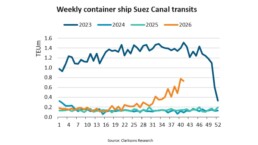
BIMCO Shipping Number of the Week
Suez Canal container ship transits exceed 50% of pre-disruption levels "During the first two weeks of October, weekly container ship capacity…
Subscribe to our newsletter!
if you dont want to swim alone in the ocean of news, sign up for the newsletter, and you will receive daily all the important news of world shipping!
