Approval in principle AiP for world’s first LCO2 methanol carrier

Mitsui O.S.K. Lines, and Mitsubishi Shipbuilding a part of Mitsubishi Heavy Industries Group, have acquired Approval in Principle from Nippon Kaiji Kyokai for their jointly developed liquefied CO2 / methanol carrier. AiP acquisition for this type of carrier marks a world’s first
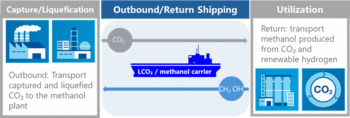
Technologies for converting CO2 into fuel or chemical products are attracting attention as a means of utilizing CO2 in CCUS (Carbon dioxide Capture, Utilization and Storage). One such approach is the ongoing study toward realizing a supply chain for producing synthetic methanol(Note3) from capturedCO2. Synthetic methanol is expected to serve as one of the marine fuels that will contribute to decarbonization in the maritime shipping industry.
The vessel for which Mitsubishi Shipbuilding and MOL acquired AiP is based on a low-pressure LCO2 carrier. It aims to transport CO2, which serves as raw material, on outward voyages and synthetic methanol on return voyages. Use of dedicated vessels for CO2 or methanol results in empty-cargo operation on half of their trips. If dual transport of CO2and methanol is achieved, empty-cargo trips can be eliminated, thereby improving overall transport efficiency. MOL and Mitsubishi Shipbuilding will move forward with the development of the LCO2 / methanol carrier, building on the findings and technical challenges identified during the concept study. The goal is to achieve commercialization of the LCO2 / methanol carrier through collaboration with relevant companies in the supply chain and other partners.
The MOL Group is currently working to build supply chains for synthetic fuel/methanol and CO2 through initiatives such as its investment in HIF Global LLC(Note4), a U.S.-based company that develop, produce and transport synthetic fuel/methanol across North and South America and Australia. LCO2 / methanol carrier is expected to enhance the overall economic viability of such supply chains and contribute significantly to their realization. In line with the “MOL Group Environmental Vision 2.2,” MOL is targeting net-zero emissions Groupwide by 2050. By further accelerating initiatives to transport CO2 as well as to develop and supply synthetic methanol, MOL aims to contribute to realization of a low-carbon or decarbonized society.
MHI Group is currently pursuing strategic measures to strengthen its business for the energy transition. In conjunction with this initiative, Mitsubishi Shipbuilding is making efforts to contribute to the advancement of the maritime industries in Japan and around the world by utilizing its shipbuilding-based marine engineering technologies in addition to conventional shipbuilding. The development of LCO2 / methanol carrier is one example of these efforts. Collaboration with MOL also demonstrates MHI Group’s commitment to partnerships. Moving forward, Mitsubishi Shipbuilding will continue to build strategic global partnerships both to incorporate external expertise and actively advance the development of a CCUS value chain. Through these efforts, the company aims to provide its technologies, products and services to ever more customers.



Related News.
Navigating the Multi-Orbit Era: In Conversation with Intellian’s Jon Harrison at SMM 2026
At SMM 2026 in Hamburg, the rapid evolution of maritime satellite communications took centre stage. Across the exhibition halls, discussions among…
Cyprus ports need joint energy and investment strategy, shipping agents chief says
Cyprus needs a coordinated strategy for shipping, energy and environmental protection to support port investment and modernisation, Cyprus shipping…

MASO Public Affairs introduces MASO Regulatory Intelligence
A new subscription service helping businesses understand what is changing and what it means for them MASO Public Affairs introduces MASO Regulatory…
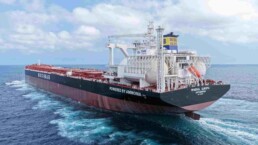
Anglo-Eastern helps turn CMBTECH’s ammonia ambition into an operational reality
From early feasibility study and risk-based design to newbuilding supervision, crew readiness and technical management, Anglo-Eastern drew on its…

Escalation of attacks threatens to derail recovery in Middle East oil exports
World oil demand is forecast to fall by 2.5 mb/d y-o-y in 4Q26 and 2.6 mb/d on average in 2026. As the Iran war manifests itself through restricted…
New study finds shipping pays twice its share to EU ETS earmarked revenues should triple to help build market for sustainable fuels and technologies
Shipping is responsible for around 10% of EU ETS emissions but pays almost 20% of the ETS bill. Unlike other sectors, it has never received free…
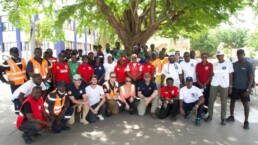
MSARC strengthens maritime mass rescue readiness through training and national live exercise off Dakar, Senegal
Joint MSARC–FHAS programme combines three days of SAR training with a national multi-agency live exercise The Maritime Search and Rescue Council ,…
Sogese report deliveries are still being delayed as container freight rates fluctuate
FOR IMPORTERS Spot rates into the Mediterranean are back at January levels, Far East to Europe reliability sits at pandemic lows, and nearly…
Glencore begins trading on Australian Securities Exchange
Glencore has begun trading on the Australian Securities Exchange under the ASX code GLC. Gary Nagle, Glencore’s CEO, said it was an exciting day for…
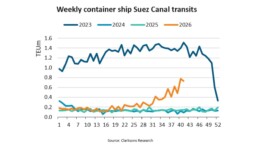
BIMCO Shipping Number of the Week
Suez Canal container ship transits exceed 50% of pre-disruption levels "During the first two weeks of October, weekly container ship capacity…
Subscribe to our newsletter!
if you dont want to swim alone in the ocean of news, sign up for the newsletter, and you will receive daily all the important news of world shipping!
