Nokia launches Autonomous Network Fabric to help customers accelerate network automation
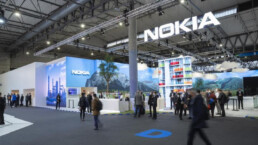

- Nokia Autonomous Network Fabric brings together all the capabilities required to accelerate the journey to full network automation in an open, cloud-native, multi-vendor environment.
- Key features include a library of cross-domain correlated data products, telco-trained models , integrated security, and AI apps for automation workflows.
- Nokia announces an expanded collaboration with Google Cloud that will make Nokia’s Autonomous Network Fabric available to deploy anywhere customers need it, on Google Cloud, on premises, and in hybrid cloud environments.
Nokia announced its Autonomous Networks Fabric, the industry’s first suite of telco-trained AI models, integrated security, and AI apps to accelerate network automation and enable operators to easily roll out new services. Autonomous Network Fabric is a unifying intelligence layer that weaves together observability, analytics, security, and automation across every network domain; allowing a network to behave as one adaptive system, regardless of vendor, architecture, or deployment model.
Additionally, Nokia is announcing an expanded collaboration with Google Cloud to enable customers to deploy Nokia’s Autonomous Network Fabric as a SaaS application running on Google Cloud, on-premises with Google Distributed Cloud, and in hybrid cloud environments.
Over the past few years, operators have started to move toward fully autonomous networks. However, they are held back by legacy systems, siloed processes, and fragmented data. With Nokia’s Autonomous Network Fabric, operators now have a fully integrated suite that features unified data management, 360-degree observability, and explainable AI. Nokia’s Autonomous Network Fabric enables automation at scale, reducing the complexity of automation while allowing operators to improve reliability and operational cost savings by quickly testing new ideas and integrating those that deliver desired benefits.
“As networks become more autonomous, they will require different forms of AI—from classical algorithms to language-based systems and intelligent agents—to each contribute distinct capabilities for operators. Nokia’s new tools can help operators to manage their infrastructure, services, and cyber risks by applying AI that is trained on industry-specific data and enriched with real-time situational awareness,” said Andy Hicks, Senior Principal Analyst, GlobalData.
Nokia’s Autonomous Networks Fabric will leverage Google Cloud’s generative AI, including Google Cloud’s Vertex AI and BigQuery, to deliver agentic-driven workflows for network operations. This includes real-time monitoring and visibility into network traffic patterns, improving subscriber experience, anomaly detection, zero-touch remediation of performance issues, and support for elastic scale-out and disaster recovery to the cloud.
Nokia and Google Cloud are making it easier for telecom companies to run Nokia’s 5G core network on Google’s cloud infrastructure. They are also joining forces with a major European operator to build a smarter, more automated network. By combining Nokia’s telecom data and automation capabilities with Google’s AI tools, they aim to create an environment where developers can innovate and rapidly scale network automation.
“In an era of increasingly complex and vulnerable networks, customers are eager for fully autonomous networks, which depend on good data. There is no good AI without good data. Nokia’s Autonomous Network Fabric lays the foundation and applies our deep network expertise and agentic AI-optimized workflows together with Google Cloud to accelerate customer outcomes,” said Kal De, SVP Product and Engineering, Cloud and Network Services, Nokia.
“This is another step in our deep partnership with Nokia to strengthen network reliability, proactively detect and resolve network issues, and turn data into value for predictable and high-performing networks. Nokia’s Autonomous Network Fabric taps Nokia’s deep telecom domain knowledge combined with Google Cloud’s AI tools to provide operators with a comprehensive approach for accelerating network automation,” said Muninder Singh Sambi, Vice President and General Manager, Networking and Security, Google Cloud.
With Nokia’s Autonomous Network Fabric, customer will benefit from the following capabilities:
Unified Data Management: All relevant network data is collected, curated, correlated, and published as data products leveraging a data mesh architecture. Data is virtually federated with the ability to design and construct new data products rapidly in a low-code/no-code environment. Operators can use logic or AI/ML to create cutting-edge data assets that can be used and reused to power automation.
360-degree Observability: The Autonomous Network Fabric federates the use and distribution of data and AI across the organization, monitoring chain of custody from end to end. This ensures quality and consistency in automation.
Explainable AI: Powerful telco-trained LLMs support all automation through a rich knowledge engine that gives a clear reasoning for how data is interpreted, how issues are analyzed, and why certain actions are recommended.
Visit Nokia at Booth 306 at Digital Transformation World to find out more about the future of autonomous networks and see a live demo of Nokia AN Fabric in action.



Related News.

Greece has the most to lose from delays in shipping’s green transition, new analysis finds
UCL and WWF Greece report finds the IMO Net-Zero Framework offers Greek ship owners the clarity they need, and the best protection against a…

Snow Land joins Cool Carriers as the world’s first reefer with a gate rudder, a new chapter for sustainable and efficient reefer shipping
Cool Carriers, the world’s largest operator of specialised reefer vessels, took delivery of Snow Land from Kitanihon Shipbuilding in Japan on 12…

IBIA launches Marine Energy Outlook Survey as Annual Convention in New York
IBIA - The International Bunker Industry Association officially launched its Marine Energy Outlook Survey during the IBIA Annual Convention in New…

Why did ITF staff vote to strike again?
Staff at the International Transport Workers’ Federation (ITF) headquarters in London have voted to give their union a strike mandate. According to…

Nearly half of maritime crew tickets booked a week ahead are cancelled
Two new C Teleport reports show when maritime and aircrew teams book crew flights, how often they cancel, and what late booking costs, with a…

Kpler completes $1.5bn+ Sixth Street investment and continues accelerating growth
Investment backs Kpler's bold ambition to shape the future of global trade intelligence. Kpler, a leading provider of global physical trade…

How SAL and DNV are strengthening heavy-lift shipping
From classification and newbuilding support to operational tools and advisory expertise, SAL and DNV have been collaborating for decades. The…

PSA Singapore breaks ground on Tuas Port Phase Two to strengthen Global Trade Connectivity
PSA Singapore marked the groundbreaking of Tuas Port Phase Two, a significant step in the development of the world’s largest fully automated…

 …

BIFA welcomes UK–EU trade progress and calls for clarity on implementation
The British International Freight Association (BIFA) has welcomed progress made at today's UK–EU Summit in Brussels, highlighting the potential…
Subscribe to our newsletter!
if you dont want to swim alone in the ocean of news, sign up for the newsletter, and you will receive daily all the important news of world shipping!
