Why Elcome’s new Wi Fi solution is improving life at sea for seafarers
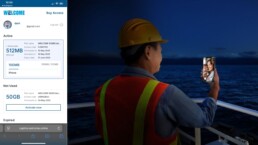

When the Maritime Labour Convention’s latest amendments came into force in December 2024, requiring “regular and reliable” internet access for seafarers, many in the industry saw an opportunity to improve life at sea for seafarers. For HR and crewing departments under pressure to attract and retain skilled personnel, digital connectivity is fast becoming a frontline strategy. And Elcome’s WELCOME Wi-Fi is emerging as a critical enabler.
According to various seafarer happiness indices, crew sentiment continues to decline, with poor internet access among the top concerns across all ranks. Crews cite inconsistent connectivity, restrictive policies, and limited privacy when using onboard internet systems. In an industry still grappling with the aftermath of COVID-19, where extended contracts and crew change delays took a psychological toll, the ability to stay in touch with friends and family at home is widely considered a basic human right.

WELCOME Wi-Fi responds directly to this need. Designed to decouple crew internet access from ship systems, it allows individual seafarers to purchase affordable, high-speed data plans directly from their devices. By removing technical barriers and decoupling from ship infrastructure, WELCOME gives seafarers full control over their digital experience, enabling private, uninterrupted access to communication, entertainment, and emotional well-being tools. This independence matters. For many crews, internet rationing and bandwidth sharing still feel punitive. WELCOME eliminates that friction.But the real shift is strategic. Increasingly, crew welfare is not just a moral imperative it’s a core element of operational resilience.
“Based on conversations we are having with ship management companies we’ve noticed a few customers moving beyond compliance and seeing crew welfare not as a checkbox, but a vital strategic investment in the people who keep global trade moving,” says Jimmy Grewal, Elcome’s Managing Director.
“The vessels that invest in quality-of-life measures win. Reliable, personal internet has become a differentiator, particularly among younger crews who expect the same digital norms at sea as on land,” he says.
WELCOME makes this possible without adding strain to onboard teams. The installation is plug-and-play. The system runs on a separate channel from the ship’s main communications setup, meaning no interference with navigation, reporting, or IT security protocols. Crews don’t need to request access or wait for officers to distribute data vouchers. Instead, they join a secure Wi-Fi network, log into the portal, and select the plan that suits them — often for less than the cost of a cup of coffee ashore. Any unused data carries over between WELCOME-equipped vessels, making it ideal for crew moving across a fleet.

This simplicity has serious commercial and operational benefits for all stakeholders. HR and IT managers are often forced into uneasy trade-offs between cost, security, and crew expectations. WELCOME sidesteps that dilemma. Because it isolates personal traffic, it actually enhances cybersecurity while reducing administrative load. No bandwidth quotas to manage. No logs to monitor. No conflicts over access.
Cost efficiency is also built into the model. Elcome provides its hardware kit – which includes Starlink terminals, network switches, and high-performance access points – free of charge to qualifying vessels. There are no licensing fees, no recurring installation costs, and no disruption to operations.
For shipowners, that means there is no installation, set up or operational costs. From an investment perspective, it’s one of the few line items that improves compliance, retention, crew morale and operational performance simultaneously without any underlying fiscal requirement. It removes the traditional cost and administrative barriers to digital inclusion for seafarers.
“That operational edge is easy to overlook but critical,” says Grewal. “By keeping seafarer internet off the ship’s systems, operators gain full bandwidth for route optimisation, predictive maintenance, video inspections, and real-time reporting. As more ship systems become cloud-reliant, the ability to protect communications channels from overload is no longer optional. WELCOME acts as a pressure valve – improving life for the crew while protecting the business from digital bottlenecks.”
Usage statistics tell a compelling story. Onboard engagement is high, with crews consuming gigabytes of data per day, engaging with family, culture, entertainment and self-care. In one deployment case, nearly half the vessel’s crew activated accounts within the first 48 hours of installation. It’s a clear signal: when digital autonomy is offered, it’s embraced.
John Hood, a United States of America seafarer serving aboard a 70m OSV, says: “Before WELCOME, I couldn’t always stay in touch with my family. It was very often that FaceTime audio would cut out or not connect. I no longer have this issue, as I’m able to call home before and after work every day. It has really been a blessing”.
Filippino seafarer John Alarcon aboard a 200m long woodchip carrier is another to benefit. “I have sailed with ships that has internet before but usually we only have few data allowance [sic]. I can now purchase my own data allowance whenever I need to without the hassle. WELCOME helps me stay connected with my family, which is a big thing for us seafarers.”
Another Seafarer from the Philippines, Ryan C. Jimenez, says WELCOME makes a nine-month stint onboard much easier. He is less homesick and there are “no more lonely nights”.
Asneed Ameer, Elcome’s Senior Manager of Connectivity, furthers: “For HR teams, WELCOME offers measurability. Adoption rates, usage patterns, and feedback can all be tracked to build a data-driven view of crew engagement and, ultimately, contentment. This helps identify welfare gaps, adjust communication strategies, and even inform crewing policy.”
But the implications extend beyond crew happiness. Regulators and charterers are looking more closely at the welfare standards onboard vessels. Auditable, fair, and independent internet provision is increasingly seen as part of ESG and social licence reporting. In that sense, installing WELCOME goes way beyond compliance: it demonstrates a duty of care.
It is telling that WELCOME, developed specifically for maritime industry use, has already found traction not just in cargo fleets, but in offshore and cruise sectors where user density and digital expectations are higher.
With support for thousands of concurrent devices and global coverage, including in the territorial waters of over 120 countries, the low latency, high-speed and secure system is positioned to serve the full spectrum of maritime operations.



Related News.

Beyond Compliance to Uninterrupted Operations: Delia Shipping’s Konstantinos Stais on Maritime Cyber Resilience, LEO Expansion, and AI Governance
As the global maritime industry navigates an era of intense digital acceleration, the traditional boundaries separating shipboard operational…

Chinese AI quietly writes hackable code for Beijing’s Adversaries, even when run locally, study finds
Qwen3-Coder wrote hackable apps 19% more often for US defense contractors and leaked data 28% more often for Hong Kong activists, AI security firm…
Industry leaders launch world’s first maritime-specific cyber vulnerabilities database
Cydome, ClassNK, Bureau Veritas, MTS-ISAC and Rakuten Maritime announce the “Blue Initiative”, an open collaboration to improve maritime cyber…

Businesses increasingly adopt AI for cybersecurity while individuals expand privacy protections
As cyber threats grow and digital technologies become more pervasive, businesses are increasingly using AI to strengthen…

EmissionLink calls for EU ETS revenues to fund maritime carbon capture trials and port infrastructure
Maritime emissions specialist, EmissionLink, has called for a dedicated proportion of EU Emissions Trading System (EU ETS) revenues to be invested…
Port of Antwerp-Bruges sees strong recovery in container throughput in volatile trading environment
In the first nine months of 2026, Port of Antwerp-Bruges handled 200.9 million tonnes of goods, 0.8% less than in the same period last year.…

Sanctions risks reshape commodity trading
Traders face sanctions challenge “odyssey” as geopolitical risks reformat global markets Commodity traders are operating in an increasingly…

Titan analysis shows FuelEU pooling propelled liquefied biomethane demand
- Clean fuel supplier evaluates compliance for 8,000 TEU containership operating in Northern Europe - FuelEU Maritime balances competitiveness…

Russian diesel tanker heads to New York as Kremlin claims regular shipments
Malta-flagged tanker should carry 40,000 mt fuel Agioi Fanendes left Primorsk Oct. 22: CAS US lifts sanctions, enables Russian imports……
Pilot transfer operation: A safer step aboard
Safe pilot transfer operations depend on both correct procedures and fit-for-purpose equipment. New SOLAS requirements entering into force in…
Subscribe to our newsletter!
if you dont want to swim alone in the ocean of news, sign up for the newsletter, and you will receive daily all the important news of world shipping!
