How could the EU ban Russian gas?
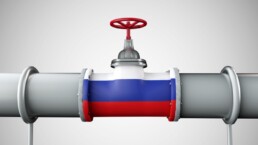

The European Commission will next month propose legal measures to fully phase out the EU’s Russian gas imports by the end of 2027, and ban spot contracts with Russia by the end of this year.
Here’s how that could work.
HOW WILL THE EU BAN RUSSIAN GAS?
Sanctions are legally the easiest route for the EU to ban Russian gas and liquefied gas imports. However, they require unanimous approval from all 27 EU countries.
Hungary and Slovakia, who want to maintain close political ties with Russia, have vowed to block gas sanctions. The two countries import it via the Turkstream pipeline, and say switching to alternatives would increase energy prices.
As a workaround, the European Commission will in June propose alternative measures that can be approved by a reinforced majority of countries – and which can only be blocked by a group of at least four countries.
In a closed-door meeting of EU countries’ ambassadors last week, all bar Hungary and Slovakia welcomed the plan to ban Russian gas, EU diplomats said. Still, some raised concerns about the legal certainty of the EU plan, and its impact on energy prices.
IF NOT SANCTIONS, THEN HOW?
The Commission has declined to specify the type of legal tools it’s working on. EU diplomats point to a few options.
One would be to impose tariffs on Russian gas and LNG imports. While not an outright ban, tariffs would aim to make new Russian gas deals economically unfeasible.
EU tariffs on Russian fertilisers offer an example of how this could work. There, the EU plans to impose a tariff that rises to 430 euros ($481.21) per ton within three years – a “prohibitive” level designed to effectively cut off imports.
Such tariffs could also allow European companies with long-term Russian gas contracts to argue that EU regulation has changed to such an extent that the terms of their contracts are unsustainable, and invoke “force majeure” to exit these deals.
Lawyers have warned, however, that companies could face financial penalties for doing this.
HOW CAN A BAN BE ENFORCED?
Governments say more transparency on Russian gas trades will be crucial. To achieve this, the EU could use the “Union Database”, a European Commission platform which tracks EU imports of biofuels.
That tool could be re-purposed to track Russian gas and reveal which companies are trading it, allowing officials to target suppliers or traders that breach the ban.
The Commission’s June proposals will also include obligations for companies to disclose information on their Russian gas deals.
WHO WILL BE MOST AFFECTED?
Around two-thirds of Europe’s Russian gas imports are under long-term contracts, which the EU plans to ban by end-2027. The rest is spot trades.
Russia supplied 19% of EU gas imports last year, through LNG and via the TurkStream pipeline supplying Hungary and Slovakia.
That is far below the roughly 45% of Europe’s gas that Russia supplied before its full-scale invasion of Ukraine in 2022. Russia’s share is expected to fall further, to 13% this year, after deliveries to Europe via Ukrainian pipelines stopped at the end of 2024.
Most EU countries that previously received Russian pipeline supplies have switched to alternatives. Austria, which received Russian gas via Ukraine until late 2024, now imports gas from routes including via Germany and Italy, typically from a mix of suppliers.
For Hungary and Slovakia, moving to alternatives will cost. Russian pipeline gas was sold at a 13-15% discount to other options last year, according to analysis by the Center for the Study of Democracy.
For LNG, the picture is different. Belgium, France and Spain import most of the Russian LNG entering Europe, and can more easily replace this with other supplies from other sources, such as the U.S., which the EU is under pressure from President Donald Trump to do.
However, some Russian LNG is under long-term contracts that, unless interrupted, would run until as late as 2041. Companies with these contracts include TotalEnergies, SEFE and Naturgy.
Source: Reuters



Related News.

OL Shipping Group in Tokyo: Capt. Eberhard Koch calls for realistic solutions to Maritime Decarbonisation
An intensive and engaging couple of days in Tokyo brought together leading figures from the international maritime community, providing a valuable…
Regatta for Peace one of the largest ever in Cyprus
Cyprus will host the first European stop on a global sailing journey leading up to the 2027 America’s Cup in Naples. More than 120 sailors…
The propulsion technology powering the marine energy transition
The marine industry is under increasing pressure to future-proof fleets, balancing the need to reduce emissions and improve efficiency. Propulsion…

Signal Ocean acquires Lgmar
Signal Ocean announced the acquisition of Lgmar, the Athens-based company behind Telix, a maritime email and communication platform in daily use…

Canada clean power push challenged by interprovincial grid limits, says GlobalData
Canada is entering a pivotal phase of power-sector expansion as federal tax credits, the phase-out of coal-fired generation, and accelerating…

Maritime safety depends on human factors and leadership, not procedures alone
Interim survey findings point to a gap between seafarers’ perceptions of risk and injury data Seafarers may misjudge when and where they are most at…

New BIMCO contracts tackle ship recycling and energy-saving retrofits
BIMCO adopted two new contractual solutions designed to help you manage important operational and regulatory challenges: the revised…
Stena Line to acquire vessel and make changes to its network
Stena Line has reached an agreement to acquire the RoRo vessel Somerset from CLdN. Subject to closure and transfer, the vessel would begin operating…
DORIC WEEKLY INSIGHT 16 OCTOBER 2026
Please find below the DORIC Market Insight for the week ending 16th October 2026. Weekly Report 16.10.2026
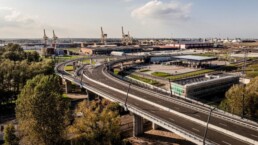
Important information for port clients and freight carriers effective November 1, a new traffic overpass and port checkpoint will open for traffic to the Port of Riga on Kundziņsala
Starting November 1 of this year, a new traffic overpass connecting Tvaika Street to Kundziņsala will open to facilitate traffic to and from the Port…
Subscribe to our newsletter!
if you dont want to swim alone in the ocean of news, sign up for the newsletter, and you will receive daily all the important news of world shipping!
