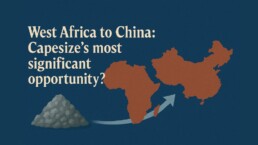

West Africa to China- Bauxite offers a growing opportunity for Capesize vesselsThe Chinese appetite for raw materials is well known, and a shift of emphasis to building greener infrastructure in the country is seeing a surge in imports of bauxite, the raw material used to manufacture aluminium. So far, West African ports, labelled as Africa Atlantic Coast (AAC) on our platform, have been the primary beneficiary, with increased capesize traffic, particularly at ports in Guinea. Given aluminium’s use in green technologies and high-end consumer goods, the need for bauxite will continue to grow, increasing the demand for capesize vessels loading in West Africa. |
|
Bauxite exports from Africa Atlantic Coast to China
|
Changing bauxite trade patterns from West Africa to ChinaAAC ports have always been important loading areas for bauxite heading to China. Guinea is the second-largest bauxite producer globally, behind Australia, and China is the largest consumer of bauxite. From 2022 to the end of 2023, AAC was the origin for 43% of the total bauxite China imported by sea. Since the beginning of 2024, this share has increased to 54%. |
|
|
|
Of all the origin countries in the AAC, Guinea accounts for the largest country of origin, marginally rising from 90% to 91% in the same period as above. Ghana has overtaken Gabon as the second largest source of export of bauxite in the AAC, most likely a result of heavy investment in the bauxite industry by the Ghanaian Bauxite Company in recent years, which has boosted production. |
|
|
|
In terms of vessel, Capesize is the most dominant class transporting this cargo. In the period from 2024 to now, 83% of the exported bauxite is carried on a Capesize vessel. |
|
|
China’s position in the bauxite and aluminium marketDespite being the third largest producer of bauxite, China relies on imports for around 70% of its bauxite needs and is by far the largest consumer of bauxite globally. The Chinese government invested heavily in aluminium smelting and refining in the early 2000s as the country’s rapid development caused a surge in demand and overtook the U.S. as the largest global producer in 2005. The country benefits from several factors that make it the largest producer, including low-cost power, electricity costs can account for up to 45% of total costs, lots of vertical integration, and strong government support in both the production and end-use sectors. The Evergrande crisis that first began in August 2021, and the later slowing of the Chinese construction sector, has cooled the rate of growth in aluminium consumption in China. Yet, production growth remains robust as other sectors have seen demand continue to grow, particularly in the electrification of the economy. Outlook for Africa Atlantic Coast to China trade flowsThe outlook for capesize demand for the AAC to China route will continue to be positive. China is set to progress with upgrades to its infrastructure to a more energy-efficient and electrified standard. This will require greater aluminium production and greater bauxite imports as a result. Running parallel to this, many nations in the Western African region are investing heavily in upgrading bauxite mining infrastructure to produce greater quantities of bauxite. This will result in the need for more vessels to deliver this cargo, and capesize vessels are the preferred choice. Furthermore, the vast Simandou iron ore mines in Guinea are expected to come online by the end of this year. These mines are reported to be the largest untapped iron ore deposits in the world and have a production guidance of 120 million tonnes per year when at full capacity. The mine itself is majority Chinese- owned with the remaining 25% belonging to Rio Tinto. Analyst expectations are for these mines to account for 10% of China’s seaborne ore imports, shifting focus from Brazil and Australia to the West Coast of Africa. Key takeaways Capesize vessel demand is set to accelerate on the Africa Atlantic Coast to China route, with Guinean ports being the most common origin. Chinese demand for bauxite to feed domestic aluminium production continues to be the main driver, with West African countries investing heavily to ramp up production to accommodate. This demand for vessels will likely accelerate further once the Simandou mines are operational. Given the expectation that Simandou will supply 10% of China’s seaborne iron ore imports, Capesize vessels are likely to see a surge in demand on the Guinea to China route. |


Source: Signal Ocean



Related News.

Intelligent Skies, Secure Seas: Navigating Connectivity, Cyber Resilience, and AI Liability at the 5th CSN Greece ICT Conference
The 5th CSN Greece ICT Conference, held on 19th November 2026 at the Ploes Floating Venue in Paleo Faliro, Athens, successfully convened maritime…

EU moves to ban tankers insured in Russia, repair services at Russian refineries
EU targets Russian-insured tankers, refineries Von der Leyen announces 22nd sanctions package All 27 member states must approve new…
IMO tackling fraudulent registries together
Strong national systems and international information sharing are crucial to tackling fraudulent registries and fraudulent ship registration…
Open letter on freedom of navigation and the protection of seafarers
Dear High Representative Kallas, Dear Foreign Affairs Ministers, European Shipowners | ECSA, BIMCO, the Cruise Lines International Association…
Davies Turner warns of Rising Asia-UK Container Disruption and European Port Congestion
Davies Turner, one of the UK’s largest independent freight forwarding and logistics companies, says that disruption to container shipments from Asia…
Disruptions still dominate tanker market outlook
"This year, tanker markets have been affected by disruption to transits through the Strait of Hormuz, the Houthi blockade of Saudi Arabian Red Sea…
Panama’s President called on to match COP31 Heroism with action at shipping climate talks
As a series of crucial meetings tasked with cutting greenhouse gas emissions from global shipping takes place this week and next, environmental NGOs…

Trafigura appoints Helio Cumbi as Executive Director, Mozambique
Trafigura has appointed Helio Cumbi as Executive Director, Mozambique, and Business Development Lead for East and Southern Africa Oil. Helio is a…

“K” LINE holds FY2026 Global Dry Bulk Meeting
Kawasaki Kisen Kaisha, announces that it held a global meeting for its dry bulk business at the company’s head office on November 9 and 10. The…
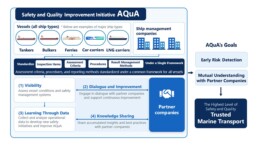
MOL launches ‘AQuA’ safety and quality improvement initiative
Standardizing Group-wide Safety and Quality Assessment Criteria to Enhance Vessel Safety and Quality Mitsui O.S.K. Lines, announced the launch of…
Subscribe to our newsletter!
if you dont want to swim alone in the ocean of news, sign up for the newsletter, and you will receive daily all the important news of world shipping!
