ILO explores how AI and digitalisation are transforming safety and health at work


A new report from the International Labour Organization (ILO) explores how artificial intelligence (AI), digitalization, robotics and automation are reshaping occupational safety and health (OSH) in workplaces worldwide.
The report, titled Revolutionizing Health and Safety: The Role of AI and Digitalization at Work, highlights how these emerging technologies are improving worker health and well-being while underscoring the need for proactive policies to address new risks.
By taking on hazardous tasks, assisting in surgeries, and optimizing logistics, robots help reduce risks and improve efficiency. AI-powered systems enhance safety and health monitoring, and streamline tasks and operations, easing workloads and driving innovation – even in traditionally low-tech sectors. However, the report stresses the need for proactive policies to ensure these technologies are implemented safely and equitably.
“Digitalization offers immense opportunities to enhance workplace safety. Robots can replace workers in hazardous ‘3D jobs’, which can be dirty, dangerous, and demeaning. Automation can reduce repetitive tasks, such as in factory production lines or in administrative work, allowing workers to take on more challenging tasks,” said Manal Azzi, Team Lead on OSH Policy at the ILO. “But for us to fully benefit from these technologies, we must ensure they are implemented without incurring new risks.”
Technology’s impact on safety and health
The report highlights that advanced robotics and automation, the use of virtual and extended reality, as well as new tools such as smart wearable devices that provide real-time risk detection or environmental sensors that track air quality, are transforming safety and health by preventing accidents and reducing hazardous exposures. Furthermore, digitalization is leading to the rise of hybrid and remote work arrangements that are creating flexibility and improving mental health.
However, these advancements may also bring in new risks. While robots effectively take on hazardous tasks, workers who maintain, repair, or collaborate with these machines may face new dangers. Unpredictable robotic behaviours, system failures, or cyber threats can compromise safety. Ergonomic risks may arise from human-robot interaction, as well as from the use of wearables and exoskeletons that lack proper fit, usability, or comfort.
The study highlights that over-reliance on AI and automation may reduce human oversight, which would, in turn, increase OSH risks, while algorithm-driven workloads and being continuously connected can contribute to stress, burnout, and mental health issues.
The report also exposes safety and health risks faced by workers across the digital supply chain, from those in extraction processes to those powering AI, as well as workers handling electronic waste.
Global policy response and the role of the ILO
The report highlights regulatory gaps in managing OSH risks linked to digitalization and calls for stronger global, regional, and national policies. The ILO’s OSH conventions (Nos. 155 and 187) provide a foundation for ensuring the right to a safe and healthy workplace in the digital era.
Ensuring that digitalization drives safety and health at work
Policies and regulations worldwide increasingly include new measures covering robotic safety and human-robot interaction, the right to disconnect, improved algorithmic management of work, and safe telework and platform work.
Worker’s involvement is essential at every stage of technology adoption. Training and awareness raising initiatives are key to ensuring safe use of new technologies. Further research will be needed to fully understand the long-term occupational safety and health impacts of digital transformation.



Related News.

Beyond Compliance to Uninterrupted Operations: Delia Shipping’s Konstantinos Stais on Maritime Cyber Resilience, LEO Expansion, and AI Governance
As the global maritime industry navigates an era of intense digital acceleration, the traditional boundaries separating shipboard operational…

Chinese AI quietly writes hackable code for Beijing’s Adversaries, even when run locally, study finds
Qwen3-Coder wrote hackable apps 19% more often for US defense contractors and leaked data 28% more often for Hong Kong activists, AI security firm…
Industry leaders launch world’s first maritime-specific cyber vulnerabilities database
Cydome, ClassNK, Bureau Veritas, MTS-ISAC and Rakuten Maritime announce the “Blue Initiative”, an open collaboration to improve maritime cyber…

Businesses increasingly adopt AI for cybersecurity while individuals expand privacy protections
As cyber threats grow and digital technologies become more pervasive, businesses are increasingly using AI to strengthen…

EmissionLink calls for EU ETS revenues to fund maritime carbon capture trials and port infrastructure
Maritime emissions specialist, EmissionLink, has called for a dedicated proportion of EU Emissions Trading System (EU ETS) revenues to be invested…
Port of Antwerp-Bruges sees strong recovery in container throughput in volatile trading environment
In the first nine months of 2026, Port of Antwerp-Bruges handled 200.9 million tonnes of goods, 0.8% less than in the same period last year.…

Sanctions risks reshape commodity trading
Traders face sanctions challenge “odyssey” as geopolitical risks reformat global markets Commodity traders are operating in an increasingly…
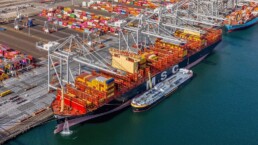
Titan analysis shows FuelEU pooling propelled liquefied biomethane demand
- Clean fuel supplier evaluates compliance for 8,000 TEU containership operating in Northern Europe - FuelEU Maritime balances competitiveness…
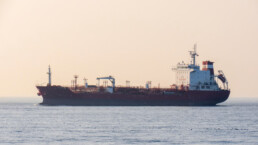
Russian diesel tanker heads to New York as Kremlin claims regular shipments
Malta-flagged tanker should carry 40,000 mt fuel Agioi Fanendes left Primorsk Oct. 22: CAS US lifts sanctions, enables Russian imports……
Pilot transfer operation: A safer step aboard
Safe pilot transfer operations depend on both correct procedures and fit-for-purpose equipment. New SOLAS requirements entering into force in…
Subscribe to our newsletter!
if you dont want to swim alone in the ocean of news, sign up for the newsletter, and you will receive daily all the important news of world shipping!
