Why isn’t methanol catching up (yet)

DNV’s latest vessel order tally shows a clear divide. Investments in LNG-capable vessels are rising, while methanol-capable orders have stalled. In February, 33 out of 34 alternative-fuel vessel orders were LNG-capable, marking a sharp jump from just 12 orders in January, said Kristian Hammer, senior analyst at DNV.
One key factor behind rising investments in LNG-capable vessels could be flexibility. While LNG is a fossil fuel, it is combusted in engines that can also run on bio-LNG and e-LNG. On a chemical level, these can be identical products – they are all methane. This means that LNG-capable dual-fuel vessels won’t be tied to fossil LNG forever, making the vessels a future-proof investment for shipowners.
With 685 LNG-capable vessels already in operation and another 634 on order for deliveries towards 2033, shipowners seem to be betting on this adaptability.
In contrast, methanol-capable vessel orders have hit a wall. DNV data shows that not a single methanol-capable vessel was ordered in February, raising questions about the industry’s appetite for the fuel.
A major challenge could be bunkering infrastructure. Dedicated methanol bunkering facilities remain scarce outside key regions like the ARA and select ports in Asia.
Only nine dedicated methanol bunker vessels are in operation today. They serve 57 methanol-capable ships, with nearly all of them deployed in Asia. Just six more bunker vessels are on order for delivery by 2026, when the methanol-capable fleet is expected to grow by another 173 vessels. The lack of dedicated methanol bunker vessels limits refueling options, often restricting bunkering to terminal-to-ship or tanker-to-ship operations.
Another drawback could be global availability.
The Methanol Institute’s database shows that most of the operational bio-methanol production plants today are concentrated in the US and Asia. Transporting bio-methanol from these locations to major bunkering hubs in Europe, the Middle East, Africa or South America could be a costly affair and complicate logistics, which could translate into a hefty price tag for bunker buyers.
On contrast, liquefied biomethane (LBM) – or bio-LNG – can leverage LNG’s well-established bunkering networks. Gaseous biomethane can be supplied to desired locations through existing gas pipelines using an accounting technique called mass-balancing and then liquefied near the point of bunkering. This eliminates the high costs of physically transporting the fuel between regions and could make LBM a more cost-effective and scalable option for shipowners.
Even where methanol bunkering is possible, the high cost of its greener variant presents another hurdle. A fuel cost calculator developed by the Maersk Mc-Kinney Center for Zero Carbon Shipping (MMMCZCS) estimates the VLSFO-equivalent cost of bio-methanol at $1,485/mt in the EU. In comparison, the VLSFO-equivalent cost of LBM is cheaper at $1,161/mt in Rotterdam.
Even with the IMO’s mid-term measures looming on the horizon, shipowners appear reluctant to invest in methanol-capable vessels, possibly due to infrastructure limitations, supply constraints and high costs. On the other hand, shipowners planning long-term strategies today may find LNG-capable vessels appealing because of the versatility of LNG-compatible engines to use more sustainable LBM.
In other news this week, Singapore-registered bunker vessels will be allowed to carry and deliver stems with up to 30% (B30) biofuel from tomorrow. The MPA has urged “shipowners, ship managers, operators and masters” of Singapore-registered conventional bunker carriers to comply with this circular. “There is no requirement to seek MPA’s separate approval,” the circular said.
US-based renewable energy firm StormFisher Hydrogen will produce 50,000 mt/year of e-methane at its proposed North American facility. The facility will use renewable energy input from wind and solar energy to produce green hydrogen via electrolysis and biogenic CO2 for feedstocks to then produce e-methane.
Hong Kong-based ship management firm Anglo-Eastern has launched a training skid for ammonia and LNG bunkering near Mumbai, India. The bunker station skid is equipped with cryogenic fuelling technology and safety systems, allowing for real-life simulations of ammonia and LNG bunkering operations.
The US Department of Energy (DoE) has modified a prior order issued to JAX LNG, removing regulatory barriers for LNG as marine fuel. The DoE will no longer exercise its Natural Gas Act jurisdiction over ship-to-ship LNG bunkering in US ports, US waters and international waters.
Source: ENGINE



Related News.

OL Shipping Group in Tokyo: Capt. Eberhard Koch calls for realistic solutions to Maritime Decarbonisation
An intensive and engaging couple of days in Tokyo brought together leading figures from the international maritime community, providing a valuable…
Regatta for Peace one of the largest ever in Cyprus
Cyprus will host the first European stop on a global sailing journey leading up to the 2027 America’s Cup in Naples. More than 120 sailors…
The propulsion technology powering the marine energy transition
The marine industry is under increasing pressure to future-proof fleets, balancing the need to reduce emissions and improve efficiency. Propulsion…
Signal Ocean acquires Lgmar
Signal Ocean announced the acquisition of Lgmar, the Athens-based company behind Telix, a maritime email and communication platform in daily use…

Canada clean power push challenged by interprovincial grid limits, says GlobalData
Canada is entering a pivotal phase of power-sector expansion as federal tax credits, the phase-out of coal-fired generation, and accelerating…

Maritime safety depends on human factors and leadership, not procedures alone
Interim survey findings point to a gap between seafarers’ perceptions of risk and injury data Seafarers may misjudge when and where they are most at…

New BIMCO contracts tackle ship recycling and energy-saving retrofits
BIMCO adopted two new contractual solutions designed to help you manage important operational and regulatory challenges: the revised…
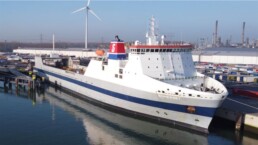
Stena Line to acquire vessel and make changes to its network
Stena Line has reached an agreement to acquire the RoRo vessel Somerset from CLdN. Subject to closure and transfer, the vessel would begin operating…
DORIC WEEKLY INSIGHT 16 OCTOBER 2026
Please find below the DORIC Market Insight for the week ending 16th October 2026. Weekly Report 16.10.2026
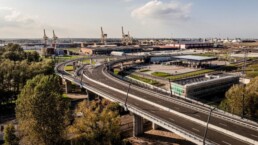
Important information for port clients and freight carriers effective November 1, a new traffic overpass and port checkpoint will open for traffic to the Port of Riga on Kundziņsala
Starting November 1 of this year, a new traffic overpass connecting Tvaika Street to Kundziņsala will open to facilitate traffic to and from the Port…
Subscribe to our newsletter!
if you dont want to swim alone in the ocean of news, sign up for the newsletter, and you will receive daily all the important news of world shipping!
