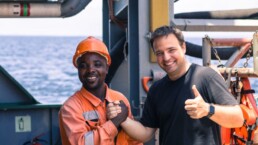

WiseStella, the Singapore-based maritime learning provider, has unveiled a pioneering crew wellbeing assessment tool that aims to change the way in which shipping companies address the increasing mental and physical health issues faced by seafarers.
Amidst growing concern about workplace harassment, bullying, stress and fatigue, the Wise Well-Being module has been developed in collaboration with HR experts and psychologists to identify and address a number of important issues, ultimately enhancing seafarer safety, contentment and retention.
“Seafarers often operate in isolated environments with limited access to mental health support,” said WiseStella’s Chief Executive Officer Ferhat Abul.
“Many seafarers are reluctant to speak out about their struggles, particularly in cases of bullying and harassment. They need a voice under a cloak of anonymity that helps them, and their employers, take appropriate action. It’s about creating a proactive approach to seafarer well being.”
The new Wise Well-Being module is unlike existing seafarer happiness or wellbeing indices in that it has been designed for direct use by shipping companies, rather than third parties, delivering more precise data that reflects their specific workplace conditions.
Through an interactive digital survey, with questions based on input from leading psychologists and health specialists, Wise Well-Being measures the physical, mental, social, and intellectual health of a company’s workforce.
“Responses enable HR teams to better identify problem areas and implement more targeted training and resources to foster a safer and more supportive, inclusive working environment. It provides shipping companies with an easy-to-use and anonymous platform to better understand the physical and mental wellbeing of their crews,” said Abul.
WiseStella Board Advisor Dr Rafet Emek Kurt, a renowned expert in maritime safety and risk, specialising in the role of human factors in shipping, furthered: “Bullying and harassment at sea are more common than many realise, but the hierarchical nature of the maritime sector makes it difficult for victims to report misconduct,” he said, referring to a case where a qualified and competent female crew member was refused permission to board her ship simply because of her gender.
Another incident involved a European officer called Emily who was sexually assaulted in her cabin. Emily’s case was reported in a presentation given at the recent International Maritime Human Factors Symposium by Deborah Layde, Chief Executive of The Seafarers’ Charity.
A 2022 WISTA Survey found that 60% of female respondents experienced gender-based discrimination onboard ship, two thirds said that they had experienced harassment and intimidation from male co-workers, and one-in-four reported that physical and sexual harassment was common, involving intrusions on their privacy.
“There are many cases where seafarers, male and female, experience verbal, psychological, sexual and physical abuse,” said Kurt. “This leads directly to poor mental health, potential lawsuits and reputational damage, and significantly increases the risk of accidents at sea.
“We need a safer, more inclusive industry, and have to address these problems head-on by integrating anonymous well-being assessments and anonymous reporting procedures into the overall safety management system. Shipowners have a duty of care to improve the wellbeing of their seafarers.”
Yaren Cemre Gulcek, Clinical Psychologist at Parla Consultancy, emphasised the importance of addressing psychological distress at sea: “Through my work with seafarers, I have witnessed firsthand how prolonged stress, isolation, and workplace harassment take a toll on mental health and overall performance. Psychological distress at sea doesn’t just affect individuals, it weakens team dynamics, increases the likelihood of human error, and compromises safety.”
Gulcek said the Wise Well-Being module is a “crucial step toward addressing these challenges”, empowering shipping companies with the tools they need to create a “culture of trust and psychological safety”.
Tineke Zoet, a Certified Transformational Coach specialising in maritime workplaces, furthered that effective leadership is paramount if the industry is to foster a safer, productive working environment.
“In my experience as a seafarer and now working closely with ship crews, I have seen how unmanaged conflict, cultural differences, and lack of psychological safety leads to frustration, stress, and even dangerous working conditions. It takes intentional human-centred leadership, clear communication, proactive listening, and support to create a more positive, inclusive environment where people can thrive. This will ultimately make shipping safer and more attractive to new entrants.”
WiseStella’s Wise Well-being module is currently available to shipping companies worldwide, with a growing number of early adopters benefitting from the solution.
Future developments will include direct access to mental health professionals, awareness training programmes, and personalised wellbeing recommendations based on survey responses. The company is also working with academic institutions to ensure that the platform is continuously updated and improved to meet seafarer and industry needs.



Related News.
Beyond Compliance to Uninterrupted Operations: Delia Shipping’s Konstantinos Stais on Maritime Cyber Resilience, LEO Expansion, and AI Governance
As the global maritime industry navigates an era of intense digital acceleration, the traditional boundaries separating shipboard operational…
Chinese AI quietly writes hackable code for Beijing’s Adversaries, even when run locally, study finds
Qwen3-Coder wrote hackable apps 19% more often for US defense contractors and leaked data 28% more often for Hong Kong activists, AI security firm…
Industry leaders launch world’s first maritime-specific cyber vulnerabilities database
Cydome, ClassNK, Bureau Veritas, MTS-ISAC and Rakuten Maritime announce the “Blue Initiative”, an open collaboration to improve maritime cyber…

Businesses increasingly adopt AI for cybersecurity while individuals expand privacy protections
As cyber threats grow and digital technologies become more pervasive, businesses are increasingly using AI to strengthen…
EmissionLink calls for EU ETS revenues to fund maritime carbon capture trials and port infrastructure
Maritime emissions specialist, EmissionLink, has called for a dedicated proportion of EU Emissions Trading System (EU ETS) revenues to be invested…
Port of Antwerp-Bruges sees strong recovery in container throughput in volatile trading environment
In the first nine months of 2026, Port of Antwerp-Bruges handled 200.9 million tonnes of goods, 0.8% less than in the same period last year.…
Sanctions risks reshape commodity trading
Traders face sanctions challenge “odyssey” as geopolitical risks reformat global markets Commodity traders are operating in an increasingly…
Titan analysis shows FuelEU pooling propelled liquefied biomethane demand
- Clean fuel supplier evaluates compliance for 8,000 TEU containership operating in Northern Europe - FuelEU Maritime balances competitiveness…
Russian diesel tanker heads to New York as Kremlin claims regular shipments
Malta-flagged tanker should carry 40,000 mt fuel Agioi Fanendes left Primorsk Oct. 22: CAS US lifts sanctions, enables Russian imports……
Pilot transfer operation: A safer step aboard
Safe pilot transfer operations depend on both correct procedures and fit-for-purpose equipment. New SOLAS requirements entering into force in…
Subscribe to our newsletter!
if you dont want to swim alone in the ocean of news, sign up for the newsletter, and you will receive daily all the important news of world shipping!
