Shipowners encouraged to shield against accidents by better learning from human factors
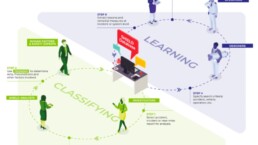

The University of Strathclyde is encouraging ship operators, safety professionals and accident investigators to use the Safety Human Incident & Error Learning Database to better understand the underlying root cause of human-factor related issues in maritime incidents.
SHIELD, developed by a consortium of partners across the aviation and maritime spheres as part of the European Union’s SAFEMODE project, was launched in 2022 and is now being used by major cruise lines, a UK-based ferry operator, safety agencies in Europe and Asia, and a number of accident investigation boards.
But more data is required if SHIELD is to have a material benefit on future maritime safety and policy, says Dr Rafet Emek Kurt, the head of the University’s Maritime Human Factors Centre, who led the SHIELD development for maritime.
“Human factors have long been recognized as a critical element in shipping safety, yet whenever there is an accident, in reaction to the lessons learnt we continue to overload the seafarer with more safety procedures, more checklists, more training. This is largely ineffective in reducing human factor incidents and increases the cognitive load on the seafarer. We need to address the root cause of an accident to have any meaningful impact.”
Kurt said that the SHIELD platform provides invaluable feedback to shipmanagers, policymakers, accident investigators, and ship and system builders to better quantify the human components in safety risk models, resulting in positive changes in ship design, operations and rules.
“So far, in the absence of high-quality data, the maritime sector has failed to include human factor considerations in critical decision making. As a result, envisaged safety improvements from the sector have been ineffective, with accidents continuing to occur at a steady rate after.”
Dr Kurt emphasised that through industry-wide collaboration and use of SHIELD, stakeholders can better understand underlying human factor contributors. The data can also serve to develop new accident and risk models as well as tailor research to address any shortcomings.
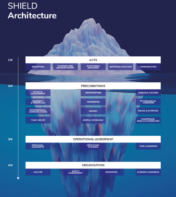
Using an iceberg analogy, where the visible part represents human factors, and the submerged part represents underlying conditions, Kurt said it is what’s beneath the waterline that is important.
“At the tip of the iceberg, it may be relatively easy to see what happened, when it happened and who did what. But the reasons why it happened are not uncovered. SHIELD allows us to take a deeper dive,” he said.
The SHIELD taxonomy assesses input data against a range of extenuating factors affecting human performance, such as workload, situation awareness, stress and fatigue, human system interfaces, and teamwork. But it goes further by providing insight into how organisational and leadership structures, strategies, cultures and socioeconomics play a part.
“It’s an effective safety learning platform but we need more companies to upload their data to allow the maritime industry to better capture and learn from the underlying human factor-issues in incidents. By aggregating anonymized data from participants, SHIELD researchers can identify emerging trends and patterns across the industry. It also helps ship operators by helping them address and identify the major accident contributors not typically picked up in an accident investigation report.”
Insights gleaned can also directly inform the work of naval architects, equipment manufacturers, and regulators. By understanding the human factors challenges faced by operators, these stakeholders can design safer, more user-friendly systems and implement targeted policies to address systemic problems.
“SHIELD represents a paradigm shift in how the shipping industry approaches safety,” said Kurt. “By empowering shipowners to deeply analyse their accident data, we can move beyond the traditional ‘human error’ narrative and uncover the true drivers of incidents. This knowledge is invaluable in creating a safer, more efficient, and more sustainable maritime sector.”
Shipowners interested in leveraging the power of SHIELD are encouraged to contact the University of Strathclyde’s Maritime Human Factors Centre.



Related News.

Greece has the most to lose from delays in shipping’s green transition, new analysis finds
UCL and WWF Greece report finds the IMO Net-Zero Framework offers Greek ship owners the clarity they need, and the best protection against a…

Snow Land joins Cool Carriers as the world’s first reefer with a gate rudder, a new chapter for sustainable and efficient reefer shipping
Cool Carriers, the world’s largest operator of specialised reefer vessels, took delivery of Snow Land from Kitanihon Shipbuilding in Japan on 12…

IBIA launches Marine Energy Outlook Survey as Annual Convention in New York
IBIA - The International Bunker Industry Association officially launched its Marine Energy Outlook Survey during the IBIA Annual Convention in New…

Why did ITF staff vote to strike again?
Staff at the International Transport Workers’ Federation (ITF) headquarters in London have voted to give their union a strike mandate. According to…

Nearly half of maritime crew tickets booked a week ahead are cancelled
Two new C Teleport reports show when maritime and aircrew teams book crew flights, how often they cancel, and what late booking costs, with a…

Kpler completes $1.5bn+ Sixth Street investment and continues accelerating growth
Investment backs Kpler's bold ambition to shape the future of global trade intelligence. Kpler, a leading provider of global physical trade…

How SAL and DNV are strengthening heavy-lift shipping
From classification and newbuilding support to operational tools and advisory expertise, SAL and DNV have been collaborating for decades. The…

PSA Singapore breaks ground on Tuas Port Phase Two to strengthen Global Trade Connectivity
PSA Singapore marked the groundbreaking of Tuas Port Phase Two, a significant step in the development of the world’s largest fully automated…

 …

BIFA welcomes UK–EU trade progress and calls for clarity on implementation
The British International Freight Association (BIFA) has welcomed progress made at today's UK–EU Summit in Brussels, highlighting the potential…
Subscribe to our newsletter!
if you dont want to swim alone in the ocean of news, sign up for the newsletter, and you will receive daily all the important news of world shipping!
