Wind Propulsion a Keystone Technology for Shipping as new report reveals 400bn USD Premature Scrapping Crisis
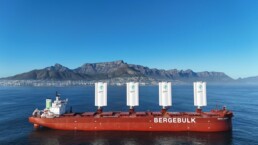

A new report from the UCL Energy Institute has highlighted the looming risk of maritime asset stranding, stating that a rapid energy transition could “lead to ‘premature scrapping’ of over a third of the fleet, valued at over 400bn USD, unless they undergo costly retrofits to remain competitive in the wake of new GHG policies and wider energy transition.”
The report reveals that existing vessels and new builds on order will produce double the emissions permissible under a 1.5°C-aligned carbon budget, precipitating a slew of supply-side obsolescence and demand-side oversupply risks. However, wind propulsion provides an alternative pathway, delivering immediate efficiency gains that align with carbon intensity indicator (CII) benchmarks.
BAR Technologies, a pioneer in sustainable maritime innovation, underscores the critical role wind propulsion can play in de-risking the shipping industry’s decarbonisation challenge. This comes amid mounting evidence that progress towards the IMO’s GHG reduction targets is intensely inadequate and doubts continue to linger around the price and availability of lower-carbon fuels. BAR Technologies urges shipping to recognise wind’s immense untapped potential as a self-sufficient, zero-emission and readily available energy source.
Shipping faces compounding challenges around decarbonisation as emerging competition for cleaner fuels sets maritime fuel demand against other more homogenised sectors like aviation. New demand is expected to drive higher premiums, leaving operators vulnerable to a double-edged sword of rising fuel costs and unavoidable penalties for failing to meet reduction targets.
This is made worse by the limited purchasing power of smaller fleet operators. For example, current Alphaliner data shows that among the top 100 largest container lines in operation, 76 lines operate fewer than 50 vessels, and 28 of those operate just 10 ships or fewer. Considering the further dilutive effect of a multi-fuel future for maritime, there is now a significant risk that operators are placing too much hope on biofuels and other lower-carbon grades alone.
The shipping industry must look urgently at wind propulsion to solve these issues. Wind Assisted Propulsion System (WAPS) technologies offer a unique hedge against energy market volatility and other supply chain risks. Unlike manufactured fuels, wind is infinitely abundant, harvested on board, free at the point of use, and not subjected to the same technological, economic, and market-based disruptions.
Also, the misconception that wind propulsion is complex to operate and unreliable ignores a wealth of data that shows otherwise. Averaged over time, many of the most popular voyage routes demonstrate predictable and consistent wind availability in hindcast. Wind can deliver immediate and sustained reductions in fuel dependency regardless of the accompanying bunker fuel type.
“We’re at a pivotal moment,” said John Cooper, CEO at BAR Technologies. “The shipping industry must now take wind propulsion seriously as a keystone resource and engage more deliberately to debunk concerns around operational complexity and reliability. As a natural resource, the amount of wind available for harvesting on each voyage will fluctuate, but the data is very clear: when averaged out over time, wind represents a steady, reliable, and highly abundant resource which can be effectively ‘bunkered’ along many trade routes.”
Also, last week, at the RINA conference, the wind sessions identified new techniques for maximising wind bunkering yields by applying course and speed corrections. Mr. Cooper added; “The digital technology exists to support officers and crew to apply effective harvesting techniques and operate WAPS safely and with ease. By leveraging decades of meteorological data and modern routing technology and with our WindWings, we are confident that shipping can achieve a self-sourced fuel advantage that other industries simply cannot replicate.”



Related News.

Navigating the Multi-Orbit Era: In Conversation with Intellian’s Jon Harrison at SMM 2026
At SMM 2026 in Hamburg, the rapid evolution of maritime satellite communications took centre stage. Across the exhibition halls, discussions among…

Cyprus ports need joint energy and investment strategy, shipping agents chief says
Cyprus needs a coordinated strategy for shipping, energy and environmental protection to support port investment and modernisation, Cyprus shipping…

MASO Public Affairs introduces MASO Regulatory Intelligence
A new subscription service helping businesses understand what is changing and what it means for them MASO Public Affairs introduces MASO Regulatory…

Anglo-Eastern helps turn CMBTECH’s ammonia ambition into an operational reality
From early feasibility study and risk-based design to newbuilding supervision, crew readiness and technical management, Anglo-Eastern drew on its…

Escalation of attacks threatens to derail recovery in Middle East oil exports
World oil demand is forecast to fall by 2.5 mb/d y-o-y in 4Q26 and 2.6 mb/d on average in 2026. As the Iran war manifests itself through restricted…

New study finds shipping pays twice its share to EU ETS earmarked revenues should triple to help build market for sustainable fuels and technologies
Shipping is responsible for around 10% of EU ETS emissions but pays almost 20% of the ETS bill. Unlike other sectors, it has never received free…

MSARC strengthens maritime mass rescue readiness through training and national live exercise off Dakar, Senegal
Joint MSARC–FHAS programme combines three days of SAR training with a national multi-agency live exercise The Maritime Search and Rescue Council ,…

Sogese report deliveries are still being delayed as container freight rates fluctuate
FOR IMPORTERS Spot rates into the Mediterranean are back at January levels, Far East to Europe reliability sits at pandemic lows, and nearly…

Glencore begins trading on Australian Securities Exchange
Glencore has begun trading on the Australian Securities Exchange under the ASX code GLC. Gary Nagle, Glencore’s CEO, said it was an exciting day for…

BIMCO Shipping Number of the Week
Suez Canal container ship transits exceed 50% of pre-disruption levels "During the first two weeks of October, weekly container ship capacity…
Subscribe to our newsletter!
if you dont want to swim alone in the ocean of news, sign up for the newsletter, and you will receive daily all the important news of world shipping!
