

This surge has been primarily driven by the container and car carrier sectors, which accounted for 62% of all alternative fuel orders. In 2024, 69% of all container ship orders were for ships capable of being powered by alternative fuels, AFI’s data confirmed.
While LNG fuel remained a popular choice, with 67% of container ships opting for this fuel, the industry demonstrated a growing appetite for diversification with 166 methanol orders added – 32% of the AFI orderbook.
Ammonia also gained traction, with 27 orders placed in 2024 compared with just eight in 2023. Notably, the first non-gas carrier ammonia-fuelled vessel orders were placed, primarily in the bulk carrier segment, signalling the fuel’s growing prominence in the alternative fuel market.
‘’While recent figures are promising, we must keep pushing forward,” said Knut Ørbeck-Nilssen, CEO Maritime at DNV, underscoring the growing pressure from cargo owners and the need for liner companies to replace older, less efficient vessels. “The technological transition is underway, but supply of alternative fuel is still low. As an industry we need to work with fuel suppliers and other stakeholders to ensure that shipping has access to its share of alternative fuels in the future.”
Bunkering infrastructure
DNV reported that the number of LNG-fuelled ships in operation doubled between 2021 and 2024, with a record 169 deliveries in 2024. By the end of the year, 641 LNG-powered ships were in operation, a number expected to double by the end of the decade based on current orderbooks.
However, while LNG bunkering infrastructure is maturing, with the number of LNG bunker vessels growing from 52 to 64 over the past year, a significant gap remains between supply and demand.
“Addressing this challenge by developing the appropriate infrastructure for alternative fuels – both for vessels and bunkering – can create demand signals to stimulate long-term fuel production,” DNV said.
It expects the EU’s Fit for 55 package, which mandates LNG bunkering infrastructure in a large network of ports, to significantly boost LNG availability.
The fluctuating trends in LNG and methanol orders this year might also be attributed to the slow development of green methanol production, according to Jason Stefanatos, global decarbonisation director at DNV. “In the long run, green methanol has potential to be part of the energy mix along with ammonia. In parallel, LNG offers a vital bridging fuel option benefiting from existing infrastructure and short-term emissions reductions while being capable of acting as a long-term solution as well, assuming RNG (Renewable Natural Gas) will be available and provided at a competitive price,” he said.
Carbon pricing mechanism
DNV’s findings come as a global shipping coalition published its proposal for a global carbon pricing mechanism to accelerate the adoption of zero-emission fuels. Last week, 47 governments, including major maritime nations and flag states, joined forces with the International Chamber of Shipping (ICS) to publicly propose the mechanism.
A joint submission outlining amendments to the IMO MARPOL Convention aims to accelerate the adoption of zero-emission fuels by incentivising their production and use.
The proposed mechanism would require shipping companies to contribute to a new “IMO GHG Strategy Implementation Fund” based on their annual CO2 emissions. These funds will be used to support the development and deployment of zero/near-zero emission fuels like green methanol, ammonia, and hydrogen, while also assisting developing countries in their decarbonisation efforts.
“The industry fully supports the adoption by IMO of a GHG pricing mechanism for global application to shipping,”
said Guy Platten, secretary general of the ICS. “The joint text put forward by this broad coalition is a pragmatic solution and the most effective way to incentivise a rapid energy transition in shipping to achieve the agreed IMO goal of net zero emissions by or close to 2050.”
This collaborative effort, involving major shipping nations such as Greece, Japan, Korea, the UK, and major flag States, represents a crucial step towards achieving net-zero emissions by 2050. The ICS said that while a significant number of governments support this approach, ongoing discussions will focus on addressing the concerns of remaining stakeholders. “Working in co-operation with all IMO Member States we will do our best to allay such concerns during the final stages of these critical negotiations about regulatory text,” said Platten.
The proposed MARPOL amendments will be reviewed at an IMO meeting in February. If approved by IMO Member States in April 2025, the global carbon pricing mechanism is expected to come into force in early 2027, with the collection of annual GHG contributions from ships commencing in 2028.
Source: Baltic Exchange



Related News.
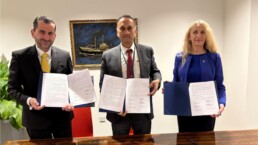
India joins ISF Verify, bringing trusted digital certification within reach of 30 per cent of the global seafarer workforce
Agreement with the world’s second-largest seafarer supply country marks a major milestone for global digital certification. The Directorate General…
OpenGate Capital to acquire Maersk Training, the Global Safety Training and Gas-Safety Services Business of Maersk
OpenGate Capital, a global private equity firm, announced today that it has signed a definitive agreement to acquire Maersk Training and its…

Can AI Save the Planet? Planet Classroom examines AI’s Climate Impact, Energy Demands and Clean Energy Solutions
C. M. (Cathy) Rubin and The Nest Campus CEO Peter Gilmer explore AI's growing environmental footprint, billions in climate investment, and the…
Smart Port Market Size to be valued at USD 23.10 Billion by 2034; Increasing Volume of International Maritime Trade to Boost Market Development: Fortune Business Insights™
The global smart port market size was valued at USD 3.4 billion in 2025 and is expected to be worth USD 4.2 billion in 2026. The market is projected…
Closer cooperation with India can strengthen Danish shipping
Minister of Business and Competitiveness Martin Lidegaard is leading a Danish business delegation to India. Green shipping is among the…
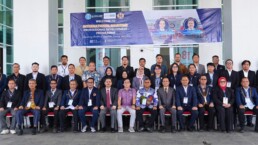
IRClass Academy and PIP Makassar strengthen Executive Maritime Capability through IMPDP 2026
Indian Register of Shipping , through its professional training and development arm IRClass Academy, has further strengthened its engagement in…

MOL, Sharp, IOM Implement Solar Panel Donation Project
Move Will Enhance Living Conditions in Power-short Areas of Kenya Mitsui O.S.K. Lines, announced the donation of solar power panels to communities in…
Intermodal Report Week 44 2026
Pls find below the Intermodal Report - Week 44 2026 Intermodal Report Week 44 2026
Allied Weekly Market Review Week 44
Pls find below the Allied - Weekly Market Review - Week 44 ALLIED - Weekly Market Report- Week 44

Nor-Shipping partners with Marketing in Maritime to deliver Marketing & Communications day and awards in 2027
Nor-Shipping is partnering with Marketing in Maritime to deliver a dedicated Marketing & Communications Day and awards initiative at the 2027…
Subscribe to our newsletter!
if you dont want to swim alone in the ocean of news, sign up for the newsletter, and you will receive daily all the important news of world shipping!
