Study finds LNG dual-fuel vessels lowest cost compliance solution to decarbonise shipping
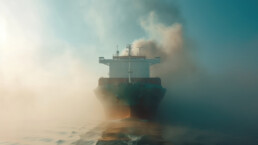

The analysis focuses on the LNG, methanol, and ammonia fuel pathways and compares their compliance costs against the default of using VLSFO (very low sulphur fuel oil). The analysis uses the specifications for main and auxiliary engines published by the main marine engine manufacturers MAN ES, Wärtsilä and WinDG.
The study indicates that LNG, methanol, and ammonia dual-fuel engine technologies can reduce compliance costs compared with VLSFO, with LNG dual-fuel vessels providing a significantly lower cost compliance solution. The basis for this is that the LNG pathway offers immediate greenhouse gas reductions now and in the future compared with the other fuel choices. The use of LNG also dramatically reduces SOx, NOx and Particulate Matter (PM), thereby avoiding the use of relatively expensive MGO (marine gas oil) for ECA (Emission Control Area) compliance.
In terms of fleet operations, for an eight-vessel fleet with two alternatively fuelled “balancing vessels,” the overall cost of compliance with LNG will be between $5 million and $17 million per annum lower than other alternative fuels such as methanol and ammonia. Further, as FuelEU Maritime is implemented from 2025 onwards, fleet operators using ammonia and methanol dual-fuel vessels are likely to need significant quantities of expensive green fuels in an effort to avoid very high penalty charges.

SEA-LNG COO Steve Esau Credit: SEA-LNG
Commenting on the analysis, Steve Esau, Chief Operating Officer at SEA-LNG, said, “It’s our mission to provide objective data and analysis to support owners and operators in decision-making at this critical juncture for shipping. As greenhouse gas emissions become subject to increasingly stringent regulation, the industry needs cost-effective solutions to meet its decarbonisation goals. Today, this study clearly illustrates that the LNG pathway is a cost-effective way to meet regulatory compliance targets now and in the future.”
Fernando Alvarez, Founder of Z-Joule, said, “Intuition and simple rules of thumb are no longer sufficient when developing optimal regulatory compliance strategies. Sophisticated decision-support tools are needed to model the complex interaction between recent and forthcoming regulations, vessel operations, and commercial drivers. Z-Joule’s software provides the industry with a robust platform to explore and optimise their decarbonisation journey.
”POOL.FM is a fuel-agnostic model which utilises an advanced optimisation algorithm to determine the optimal fuel mix, pooling strategy, and target speed for each vessel in a fleet (or vessel pool). The regulations currently modelled include CII, ECAs, EU ETS, FuelEU Maritime and Onshore Power Supply (OPS) mandates. Functionality to model possible IMO Market Based Measures (MBM)s is already in place and will be refined as more details about the forthcoming regulations emerge.”
Source: SEA-LNG



Related News.

Navigating the Multi-Orbit Era: In Conversation with Intellian’s Jon Harrison at SMM 2026
At SMM 2026 in Hamburg, the rapid evolution of maritime satellite communications took centre stage. Across the exhibition halls, discussions among…
Cyprus ports need joint energy and investment strategy, shipping agents chief says
Cyprus needs a coordinated strategy for shipping, energy and environmental protection to support port investment and modernisation, Cyprus shipping…

MASO Public Affairs introduces MASO Regulatory Intelligence
A new subscription service helping businesses understand what is changing and what it means for them MASO Public Affairs introduces MASO Regulatory…
Anglo-Eastern helps turn CMBTECH’s ammonia ambition into an operational reality
From early feasibility study and risk-based design to newbuilding supervision, crew readiness and technical management, Anglo-Eastern drew on its…
Escalation of attacks threatens to derail recovery in Middle East oil exports
World oil demand is forecast to fall by 2.5 mb/d y-o-y in 4Q26 and 2.6 mb/d on average in 2026. As the Iran war manifests itself through restricted…
New study finds shipping pays twice its share to EU ETS earmarked revenues should triple to help build market for sustainable fuels and technologies
Shipping is responsible for around 10% of EU ETS emissions but pays almost 20% of the ETS bill. Unlike other sectors, it has never received free…

MSARC strengthens maritime mass rescue readiness through training and national live exercise off Dakar, Senegal
Joint MSARC–FHAS programme combines three days of SAR training with a national multi-agency live exercise The Maritime Search and Rescue Council ,…
Sogese report deliveries are still being delayed as container freight rates fluctuate
FOR IMPORTERS Spot rates into the Mediterranean are back at January levels, Far East to Europe reliability sits at pandemic lows, and nearly…
Glencore begins trading on Australian Securities Exchange
Glencore has begun trading on the Australian Securities Exchange under the ASX code GLC. Gary Nagle, Glencore’s CEO, said it was an exciting day for…
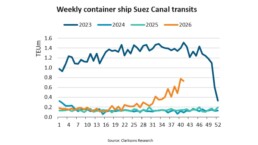
BIMCO Shipping Number of the Week
Suez Canal container ship transits exceed 50% of pre-disruption levels "During the first two weeks of October, weekly container ship capacity…
Subscribe to our newsletter!
if you dont want to swim alone in the ocean of news, sign up for the newsletter, and you will receive daily all the important news of world shipping!
