AI commission delivers urgent roadmap to Swedish Government


The Swedish Government must boost safe and sustainable artificial intelligence (AI) education, innovation and ecosystem initiatives by SEK 12.5 billion over the next five years if the country is to be a serious player in the field – a high-ranking government-appointed commission has concluded. Ericsson President and CEO, Börje Ekholm, serves as an expert on the Swedish AI Commission, which is chaired by former Ericsson CEO, Carl-Henric Svanberg.
The AI Commission presented its Roadmap for Sweden report to the Swedish Minister of Civil Affairs, Erik Slottner, today – November 26. Börje Ekholm is one of the report’s signatories.
Telecoms, research, energy, computing, data, security, competence, innovation, and the public sector are among the areas identified as priorities.
The Commission proposes 75 measures to address AI needs, which it recommends be overseen by a task force reporting directly to the Swedish Prime Minister. The Commission estimates costs to be about SEK 2.5 billion per-year for the first five years.
On telecoms, the Commission said fast and stable mobile connectivity is a pre-requisite to realizing the potential of AI in Sweden.
The fragmented telecoms market and regulation, including EU regulation, were highlighted as industry challenges.
But the Commission also welcomed Swedish Government recognition that action is needed on connectivity.
”The AI Commission sees the government’s decision to appoint an inquiry to accelerate the deployment of 5G and fiber in Sweden as an important step in the right direction,” the report reads. ”The investigation must propose additions and adaptations to meet the requirements of the EU gigabit infrastructure regulation. This EU regulation aims to reduce the costs of the expansion of high-speed networks for electronic communication.”
Writing in a related November 26 opinion piece in the Swedish daily newspaper, Dagens Nyheter, Commission Chair Carl-Henric Svanberg says the urgency for political-led action is underlined by the Commission completing its remit more than six months before it was scheduled to.
“Sweden is lagging behind and the need for political action is urgent,” Svanberg says. “The measures we propose are therefore designed to be taken quickly. Many are concrete, costed and possible for the Government to launch immediately.”
While other proposed measures require further investigation, the Commissions says it is crucial that such investigation is not delayed unnecessarily.
Svanberg says Sweden has already dropped significantly in international AI capability benchmark rankings in recent years.
“The roadmap’s ambition is to contribute to a long-term consensus on the efforts required for an increased use of AI in society in a safe and sustainable way,” he says.
“The government should quickly point out a clear direction by adopting an AI strategy, based on the Roadmap. Long-term consensus is central, but action must also be taken here and now. There is danger in delay,” he adds.
However, with the appropriate political support, Svanberg said Sweden could achieve what is needed to compete in AI.
“Fortunately, Sweden has all the conditions to improve the situation,” he says. “Our positive attitude towards new technology, our willingness to change and our ability to collaborate have served us well in the past and can do so even today.”
More than 150 organizations spanning business, politics and the public sector were consulted by the Commission as part of its research.
The report highlights a consistent eagerness to embrace AI among respondents, hindered by frustration at the related lack of political action.
The report’s main recommendations are:
- The establishment of a task force directly under the Prime Minister. Since AI affects the whole of society, effective central political governance and management is required for AI-related issues.
- For the same reason, an increase in knowledge is required for everyone, with investments in public education, further training of teachers as well as competence development and support to facilitate adjustment in the labor market. AI is a societal issue, not just a technology issue.
- A common AI infrastructure for the entire public sector, a so-called AI workshop, led by the Swedish Tax Agency and the Swedish Social Insurance Agency. Here, common solutions can be developed for better and more efficient public service – from the smallest municipality to the largest authority.
- Investments in world-class research, including investments in very powerful computers and increased cooperation between academia, business and the public sector. We also propose special investments in cyber security research and the establishment of an institute for AI security.
Svanberg says: “The list of suggestions is not a smorgasbord. The proposals reinforce each other and contribute to an ecosystem for the development and use of AI in society. All parts are needed.”
The formation of the AI Commission was announced by the Swedish Government on December 8, 2023, with Carl-Henric Svanberg as Chairman. Its remit was to strengthen Swedish competitiveness. Börje Ekholm was announced in January 2024 among a group of experts added to the Commission.



Related News.

ISLAND OIL: Unveiling of the Sculpture “Cyprus’s Journey Through the Ages” in Protaras – A Tribute and Landmark to Cyprus’s Historical Memory and Cultural Heritage
In a modest ceremony marked by a moving atmosphere, the sculpture “Cyprus’s Journey Through the Ages”, created by acclaimed Cypriot sculptor…

World Maritime Day 2026 from Policy to Practice – powering Maritime Excellence
Global regulations will deliver safer, more resilient shipping when they are implemented worldwide. The international maritime community marks…

Diana Shipping announces Time Charter Contract for m/v DSI Polaris with Dai An Ocean Shipping
Diana Shipping , a global shipping company specializing in the ownership and bareboat charter-in of dry bulk vessels, announced that, through a…

Chief Economists Expect Global Economy to Stabilize, but Fiscal Constraints, Rising Living Costs and AI Investment Uncertainty Threaten Growth
The global economy is stabilizing, but the fiscal support that cushioned successive shocks since 2020 is unlikely to play the same role in the year…
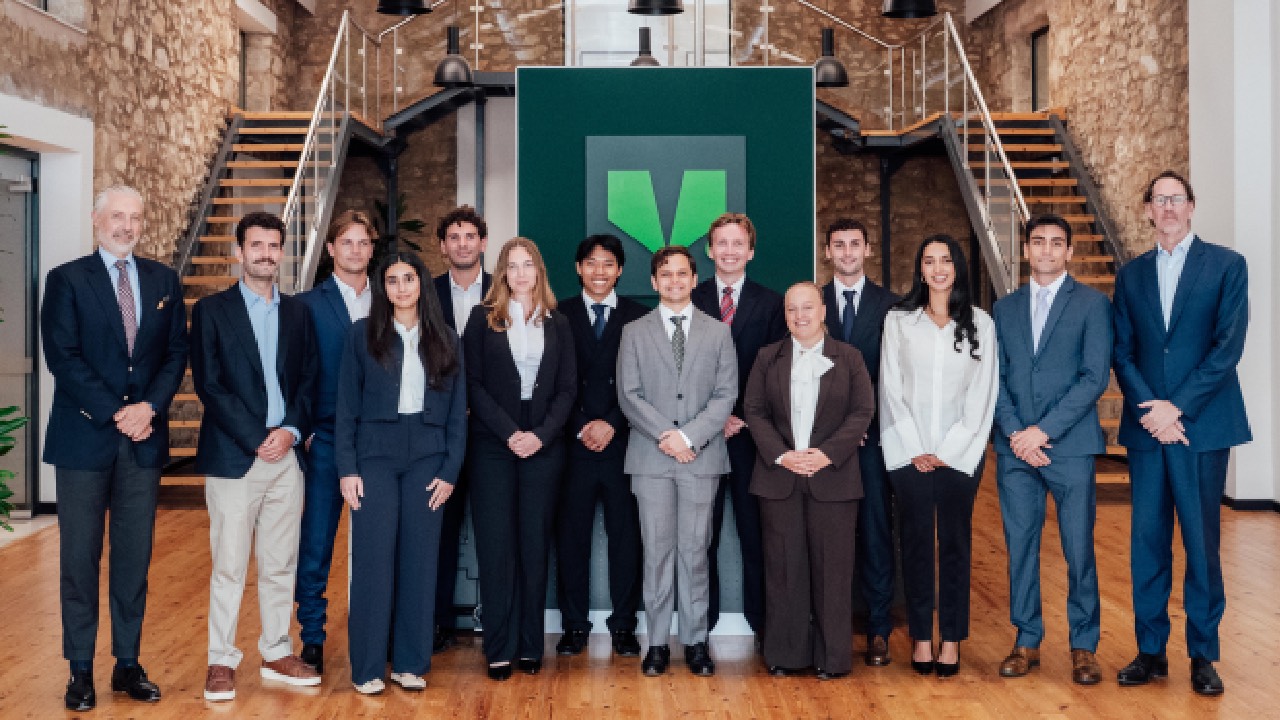
V. welcomes its new graduate cohort as programme expands across the group
Twelve graduates from nine nationalities join 11th year of V.’s expanded international management programme. V., the global ship manager and marine…

From Policy to Practice: Why Seafarers Are the Key to Maritime Excellence
The shipping industry is no stranger to regulation. Seafarers and ship operators work within a vast framework of international conventions, national…

Intermodal Report – Week 38 2026
Please find below the Intermodal market report for week 38 2026. Intermodal Report Week 38 2026 Market Insight By Nikos Tagoulis, Head of…

Allied – Weekly Market Review – Week 38
Please find below the Allied Weekly Report for Week 38 | 2026 ALLIED - Weekly Market Report- Week 38
Record year on the Northeast Passage but Arctic shipping remains very limited
In 2025, a record 103 transit voyages were made via the Northeast Passage. However, this is still equivalent to only around a day and a half of…

[xclusiv] S&P Report 21th September 2026
Please find below the [xclusiv] latest Weekly S&P Report [xclusiv] 2026_09_21 Market Commentary: VLCCs: Freight Boom Reprices the Fleet The VLCC…
Subscribe to our newsletter!
if you dont want to swim alone in the ocean of news, sign up for the newsletter, and you will receive daily all the important news of world shipping!
