Marine fuel problems persist five years on from IMO 2020 sulphur cap rules

As the fifth anniversary of the IMO 2020 Sulphur Cap approaches, fuel compatibility and viscosity problems continue to result in marine engine component damage and high cat fines.
“We expected fuel incompatibility problems and high levels of cat fines to diminish with the introduction of the IMO 2020 Sulphur Cap in January 2020. But despite new fuels and advanced engine technologies, problems persist. Cat fines remain a major problem for marine engine operators,” said Matthias Winkler, Managing Director of CM Technologies.
Catalytic fines are the byproduct of catalysts used in the fuel refining process. It is the accumulation of these very hard, abrasive aluminium and silicon particles that can severely damage cylinder liners, fuel injection valves, piston crowns and rings, potentially damaging the engine beyond repair.

Winkler said cat fines levels are exceeding ISO8217:2017 specifications in fuel being bunkered in some areas, including the ARA region. But more common is that accumulated cat fines in tank sediments are being dispersed back into the tank and engine during operations, particularly in rough seas.

With higher viscosity IFO 380cst or IFO 180cst fuels, cat fines tend to be suspended in the denser liquid and are removed more easily by fuel separators. Low sulphur fuels have an average viscosity of 105cst, though it can be as low as 10cst. And this is resulting in cat fines sinking to the settling tank, where they can often undetected.
“Engine builders recommend no more than 10ppm of cat fines in the fuel before it enters the engine, in reality, it is about 30ppm but sediment levels are much higher,” Winkler said.
While some ship operators are opting for additives that can improve Total Sediment Potential (TSP), sediment tests have shown samples significantly exceeding the maximum cat fines limit of 0.10%.
Historically, more frequent use of fuel separators was the best way of removing cat fines from HFO before the fuel enters the engine, but with LSF “cat fines content before the fuel oil separators and consequently before entering the engine is usually unknown,” said Winkler.
CMT also found that, since January 2020, more paraffinic blends are being used but there is incompatibility between an aromatic and a paraffinic fuel, which can lead to fuel degradation and instability.
David Fuhlbrügge, CMT’s Operations Manager, furthered: “Mixing two types of fuels increases the risk of incompatibility, particularly when mixing heavy fuel and low sulphur distillate fuels. This can result in clogged fuel filters, separators and fuel injection pumps, all of which can lead to loss of power or even shut down of the propulsion plant, putting the ship at risk.
CMT is also seeing increasing levels of asphaltene, another consequence of fuel blending, and which also results in increased sediment formation. And although the rate of sediment formation is not easily predicted (it changes with conditions such as temperature and storage time) it is resulting in an increase in fuel system blockages.
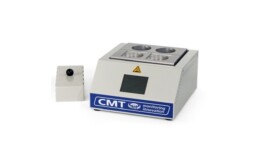
Aside from the manual removal of sludge from tanks, which is both time-consuming and costly, CMT advocates more frequent monitoring of the fuel for compatibility. “Our Electronic Compatibility Tester can save operators from the costly consequences of having an incompatible fuel mix in the tank,” said Fuhlbrügge.
Measuring the actual accumulated concentration of cat fines meanwhile has until now been largely impossible.
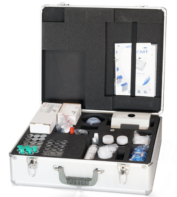
In a significant development for LSF users, CMT has introduced a test kit that allows crews to quickly and easily determine the cat fines content of fuel during and after bunkering, and before injection. The CMT Cat Fines II Test Kit not only helps protect the engine and its component parts against excessive wear, but it also helps verify the efficiency of the fuel treatment plant – separators, fuel filters and settling tanks.
Winkler said: “Engines running on low sulphur fuels are at an elevated risk of damage, but we can now measure cat fines and verify the quality, grade and compatibility of the fuel delivered, detecting potential fuel and engine problems before they happen.”



Related News.

Navigating the Multi-Orbit Era: In Conversation with Intellian’s Jon Harrison at SMM 2026
At SMM 2026 in Hamburg, the rapid evolution of maritime satellite communications took centre stage. Across the exhibition halls, discussions among…
Cyprus ports need joint energy and investment strategy, shipping agents chief says
Cyprus needs a coordinated strategy for shipping, energy and environmental protection to support port investment and modernisation, Cyprus shipping…

MASO Public Affairs introduces MASO Regulatory Intelligence
A new subscription service helping businesses understand what is changing and what it means for them MASO Public Affairs introduces MASO Regulatory…
Anglo-Eastern helps turn CMBTECH’s ammonia ambition into an operational reality
From early feasibility study and risk-based design to newbuilding supervision, crew readiness and technical management, Anglo-Eastern drew on its…
Escalation of attacks threatens to derail recovery in Middle East oil exports
World oil demand is forecast to fall by 2.5 mb/d y-o-y in 4Q26 and 2.6 mb/d on average in 2026. As the Iran war manifests itself through restricted…
New study finds shipping pays twice its share to EU ETS earmarked revenues should triple to help build market for sustainable fuels and technologies
Shipping is responsible for around 10% of EU ETS emissions but pays almost 20% of the ETS bill. Unlike other sectors, it has never received free…

MSARC strengthens maritime mass rescue readiness through training and national live exercise off Dakar, Senegal
Joint MSARC–FHAS programme combines three days of SAR training with a national multi-agency live exercise The Maritime Search and Rescue Council ,…
Sogese report deliveries are still being delayed as container freight rates fluctuate
FOR IMPORTERS Spot rates into the Mediterranean are back at January levels, Far East to Europe reliability sits at pandemic lows, and nearly…
Glencore begins trading on Australian Securities Exchange
Glencore has begun trading on the Australian Securities Exchange under the ASX code GLC. Gary Nagle, Glencore’s CEO, said it was an exciting day for…
BIMCO Shipping Number of the Week
Suez Canal container ship transits exceed 50% of pre-disruption levels "During the first two weeks of October, weekly container ship capacity…
Subscribe to our newsletter!
if you dont want to swim alone in the ocean of news, sign up for the newsletter, and you will receive daily all the important news of world shipping!
