Global Port leaders unite on decarbonisation insights in new white paper, highlighting digitalisation’s immediate impact
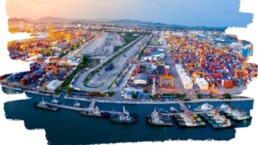

Powered by PortXchange and endorsed by Green Marine, PortXchange has released a new white paper, Collaborative Partnerships for Effective Maritime Decarbonization – A White Paper for Global Port Leaders, authored by Professor Dr. Beatriz Canamary. This publication marks a significant advancement in the pursuit of maritime decarbonization, bringing together the insights and experiences of industry leaders committed to reducing emissions in port operations. The white paper explores best practices, potential collaborations, and pitfalls encountered by port leaders on their journey to a decarbonized future.
The white paper draws from discussions at the Collaborative Partnerships for Effective Maritime Decarbonization Leadership two roundtable. These exclusive events gathered U.S. port leaders to share strategies for meeting decarbonization targets. Moderated by Dr. Canamary, an established expert in maritime sustainability, this roundtable has become a cornerstone for cooperative engagement within the U.S. port sector, setting the bar for collaborative approaches to complex sustainability goals. Through PortXchange’s innovative support and Green Marine’s endorsement, the white paper emerges as a vital resource for port authorities, policymakers, and industry stakeholders who seek practical pathways to zero-emission operations.

Dr. Beatriz Canamary emphasized the urgency of collaboration, stating, “To achieve a truly sustainable and decarbonized maritime sector, we must take immediate action, leveraging digitalization and proven strategies across ports, terminals, and operators. The success of our industry’s transformation depends on our willingness to act together, share insights, and adopt practical, scalable solutions. That’s why resources like this white paper are essential to guide our shared path forward.”

Sjoerd de Jager, CEO of PortXchange, echoed this sentiment, highlighting the importance of collaboration through roundtables and white papers. “Our goal is to empower ports and their partners to accelerate emissions reduction through innovative, cost-effective digital solutions. Digitalization offers an immediate impact at a fraction of the cost of new infrastructure, enabling ports to meet their decarbonization targets and create a cleaner, more resilient industry for the future. That’s why we are keen to support initiatives like this white paper and roundtables — collaboration is the key to meaningful change.”
As the maritime sector targets net-zero emissions by 2050, a comprehensive innovation strategy is required, encompassing new technologies, alternative fuels, and infrastructure. With the U.S. government backing initiatives like the Department of Energy (DoE), Department of Transportation (DoT), and the Environmental Protection Agency’s (EPA) Port Initiative—and further supported by the Inflation Reduction Act (IRA)—U.S. ports are positioned as key enablers in this transformation. The nation’s ambitious milestones, including the scale-up of zero-emission fuel production and infrastructure, are propelling the industry toward its goals.
Among the key findings of the white paper is the immediate, significant impact of digitalization on emissions reduction. While ports are advancing electrification, energy-saving technologies, shore power solutions, and alternative fuels, the paper underscores that digitalization offers a powerful, cost-effective method for reducing CO2 emissions without the need for extensive new infrastructure. The two roundtable discussions highlighted that the emission-reducing potential of digitalization is significant and replicable across ports. PortXchange is actively collaborating with ports, terminals, and shipping lines to adopt proven digital solutions, offering immediate tools like Just-in-Time arrivals and real-time emissions monitoring.
The white paper’s conclusion stresses the urgency of taking immediate action rather than waiting for consensus on the ideal fuel or infrastructure. Through digitalization, ports can make tangible strides toward their decarbonization targets now. PortXchange’s commitment to social responsibility and ethical practices strengthens transparency and resilience across the port value chain, ensuring that as U.S. ports progress toward national carbon neutrality, they do so with efficiency, accountability, and a focus on long-term sustainability.
Collaborative Partnerships for Effective Maritime Decarbonization serves as a roadmap for leaders navigating this transformative journey, exemplifying the power of collective action to achieve environmental goals in the global maritime industry.



Related News.

Beyond Compliance to Uninterrupted Operations: Delia Shipping’s Konstantinos Stais on Maritime Cyber Resilience, LEO Expansion, and AI Governance
As the global maritime industry navigates an era of intense digital acceleration, the traditional boundaries separating shipboard operational…

Chinese AI quietly writes hackable code for Beijing’s Adversaries, even when run locally, study finds
Qwen3-Coder wrote hackable apps 19% more often for US defense contractors and leaked data 28% more often for Hong Kong activists, AI security firm…
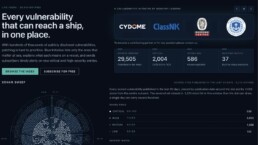
Industry leaders launch world’s first maritime-specific cyber vulnerabilities database
Cydome, ClassNK, Bureau Veritas, MTS-ISAC and Rakuten Maritime announce the “Blue Initiative”, an open collaboration to improve maritime cyber…

Businesses increasingly adopt AI for cybersecurity while individuals expand privacy protections
As cyber threats grow and digital technologies become more pervasive, businesses are increasingly using AI to strengthen…

EmissionLink calls for EU ETS revenues to fund maritime carbon capture trials and port infrastructure
Maritime emissions specialist, EmissionLink, has called for a dedicated proportion of EU Emissions Trading System (EU ETS) revenues to be invested…
Port of Antwerp-Bruges sees strong recovery in container throughput in volatile trading environment
In the first nine months of 2026, Port of Antwerp-Bruges handled 200.9 million tonnes of goods, 0.8% less than in the same period last year.…

Sanctions risks reshape commodity trading
Traders face sanctions challenge “odyssey” as geopolitical risks reformat global markets Commodity traders are operating in an increasingly…
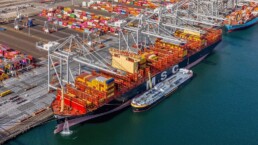
Titan analysis shows FuelEU pooling propelled liquefied biomethane demand
- Clean fuel supplier evaluates compliance for 8,000 TEU containership operating in Northern Europe - FuelEU Maritime balances competitiveness…
Russian diesel tanker heads to New York as Kremlin claims regular shipments
Malta-flagged tanker should carry 40,000 mt fuel Agioi Fanendes left Primorsk Oct. 22: CAS US lifts sanctions, enables Russian imports……
Pilot transfer operation: A safer step aboard
Safe pilot transfer operations depend on both correct procedures and fit-for-purpose equipment. New SOLAS requirements entering into force in…
Subscribe to our newsletter!
if you dont want to swim alone in the ocean of news, sign up for the newsletter, and you will receive daily all the important news of world shipping!
