Bureau Veritas calls for greater regulatory clarity on wind propulsion technology
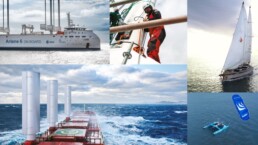

A new technology report from Bureau Veritas highlights the role that wind propulsion systems (WPS) will play in decarbonizing the maritime industry, but more is needed in order to unlock its full potential.
Bureau Veritas Marine & Offshore, a global leader in testing, inspection, and certification , announced the publication of their latest technology report, Wind Propulsion Technology Report, which details the technology systems that are available, their viability, as well as the various challenges that inhibit the adoption of wind propulsion systems at scale.
The report underscores the significant growth potential within the sector and the important role that wind propulsion technologies will play in the shipping industry’s decarbonization transition. With safety measures representing a clear concern for widespread adoption of the technology, BV already leads the space in developing Rules for wind propulsion (NR 206 wind propulsion system) and notations (WIND PROPULSION-1 & WIND PROPULSION-2). Also, joint industry projects such as WISP3 are working to develop standardization of performance predictions to provide assurance to shipowners and operators that wind propulsion systems won’t impact vessel’s performance.
As owners and operators seek alternatives to reduce their carbon emissions and comply with current regulations, the report emphasizes the need for international regulatory bodies to recognize and support wind propulsion as a credible means of reducing carbon emissions.
However, the IMO has yet to define specific regulations or guidelines on the use of wind propulsion systems on ships. Installation and operation of wind propulsion systems remains subject to the same rules and regulations as engine-based propulsions systems, which means that there is a lack of clarity surrounding wind propulsion technologies contribution to reducing carbon emissions on ships.
This inconsistency represents a significant barrier to integrating wind propulsion technology at scale, as owners and operators are not provided with the clarity or assurance that investment in such systems will contribute to their compliance efforts.
Aude Leblanc, Technology Leader Sustainable Shipping, Bureau Veritas Marine & Offshore, said: “Current international regulations do not cater for propulsion systems that don’t burn fuels. The inclusion of wind propulsion in FuelEU Maritime is an important step in recognising wind propulsion technologies as a form of propulsion. However, without international regulation, there is little incentive for industry actors to invest in wind propulsion technology. Collaboration between industry players and regulatory bodies is crucial for the advancement of this technology.”



Related News.

Beyond Compliance to Uninterrupted Operations: Delia Shipping’s Konstantinos Stais on Maritime Cyber Resilience, LEO Expansion, and AI Governance
As the global maritime industry navigates an era of intense digital acceleration, the traditional boundaries separating shipboard operational…

Chinese AI quietly writes hackable code for Beijing’s Adversaries, even when run locally, study finds
Qwen3-Coder wrote hackable apps 19% more often for US defense contractors and leaked data 28% more often for Hong Kong activists, AI security firm…
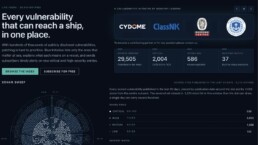
Industry leaders launch world’s first maritime-specific cyber vulnerabilities database
Cydome, ClassNK, Bureau Veritas, MTS-ISAC and Rakuten Maritime announce the “Blue Initiative”, an open collaboration to improve maritime cyber…

Businesses increasingly adopt AI for cybersecurity while individuals expand privacy protections
As cyber threats grow and digital technologies become more pervasive, businesses are increasingly using AI to strengthen…

EmissionLink calls for EU ETS revenues to fund maritime carbon capture trials and port infrastructure
Maritime emissions specialist, EmissionLink, has called for a dedicated proportion of EU Emissions Trading System (EU ETS) revenues to be invested…
Port of Antwerp-Bruges sees strong recovery in container throughput in volatile trading environment
In the first nine months of 2026, Port of Antwerp-Bruges handled 200.9 million tonnes of goods, 0.8% less than in the same period last year.…

Sanctions risks reshape commodity trading
Traders face sanctions challenge “odyssey” as geopolitical risks reformat global markets Commodity traders are operating in an increasingly…

Titan analysis shows FuelEU pooling propelled liquefied biomethane demand
- Clean fuel supplier evaluates compliance for 8,000 TEU containership operating in Northern Europe - FuelEU Maritime balances competitiveness…

Russian diesel tanker heads to New York as Kremlin claims regular shipments
Malta-flagged tanker should carry 40,000 mt fuel Agioi Fanendes left Primorsk Oct. 22: CAS US lifts sanctions, enables Russian imports……
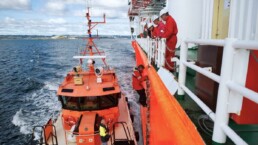
Pilot transfer operation: A safer step aboard
Safe pilot transfer operations depend on both correct procedures and fit-for-purpose equipment. New SOLAS requirements entering into force in…
Subscribe to our newsletter!
if you dont want to swim alone in the ocean of news, sign up for the newsletter, and you will receive daily all the important news of world shipping!
