Stronger regulations needed to protect our Oceans
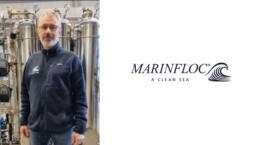

Every ship leaving a shipyard with a substandard water treatment system will pollute the oceans for the next 25 years.
By Peter Lanzén, Co-founder of Marinfloc
This is a hidden crisis that fails to reach the public even though it is pretty established among those ever sailed on a commercial vessel and even some regulatory bodies, yet its impact on our marine ecosystems is devastating.
The MARPOL Convention, which governs ship pollution, is simply not enough. The regulations allow ships to meet minimal standards, enabling them to operate with wastewater treatment systems that fail to properly handle harmful substances. These ships continue to release pollutants such as black, grey and
oily water into the oceans for decades, contributing to long-term environmental degradation.
Weak regulations weak Solutions
One might point out that there are fewer detentions related to MARPOL Annex I violations today than in the past. However, this does not mean that the equipment being used is any better than it was 20 years ago. The reality is that even Port State Control seems to have lost focus in addressing the issue. They no longer prioritize these inspections or hold ships accountable for failing wastewater systems. A quick look at SkyTruth reveals just how serious the problem still is.
The issue lies in the weakness of the current regulations. MARPOL sets the bar too low. Shipowners comply with the bare minimum instead of investing in advanced technologies that were already available 30 years ago and remain so today. Systems capable of reducing pollutants far beyond current regulatory standards.
As it stands, there’s no incentive to adopt these technologies. Instead, loopholes allow ships to legally pollute, with no accountability for the damage they cause. Every vessel equipped with outdated systems continues to discharge waste into our seas, while we turn a blind eye to the real environmental cost.
The solution is simple
We need to close the gaps and enforce stricter requirements that mandate the use of advanced water treatment technologies from day one. The shipping industry must be held accountable for its environmental footprint, and wastewater treatment must become a priority in maritime regulations.
This problem cannot remain hidden from the public any longer. The future of our oceans depends on immediate action. If we continue to allow ships to leave shipyards with substandard systems, we will be paying the environmental price for decades to come.



Related News.

Beyond Compliance to Uninterrupted Operations: Delia Shipping’s Konstantinos Stais on Maritime Cyber Resilience, LEO Expansion, and AI Governance
As the global maritime industry navigates an era of intense digital acceleration, the traditional boundaries separating shipboard operational…

Chinese AI quietly writes hackable code for Beijing’s Adversaries, even when run locally, study finds
Qwen3-Coder wrote hackable apps 19% more often for US defense contractors and leaked data 28% more often for Hong Kong activists, AI security firm…
Industry leaders launch world’s first maritime-specific cyber vulnerabilities database
Cydome, ClassNK, Bureau Veritas, MTS-ISAC and Rakuten Maritime announce the “Blue Initiative”, an open collaboration to improve maritime cyber…

Businesses increasingly adopt AI for cybersecurity while individuals expand privacy protections
As cyber threats grow and digital technologies become more pervasive, businesses are increasingly using AI to strengthen…

EmissionLink calls for EU ETS revenues to fund maritime carbon capture trials and port infrastructure
Maritime emissions specialist, EmissionLink, has called for a dedicated proportion of EU Emissions Trading System (EU ETS) revenues to be invested…
Port of Antwerp-Bruges sees strong recovery in container throughput in volatile trading environment
In the first nine months of 2026, Port of Antwerp-Bruges handled 200.9 million tonnes of goods, 0.8% less than in the same period last year.…

Sanctions risks reshape commodity trading
Traders face sanctions challenge “odyssey” as geopolitical risks reformat global markets Commodity traders are operating in an increasingly…
Titan analysis shows FuelEU pooling propelled liquefied biomethane demand
- Clean fuel supplier evaluates compliance for 8,000 TEU containership operating in Northern Europe - FuelEU Maritime balances competitiveness…
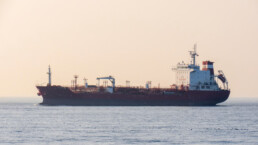
Russian diesel tanker heads to New York as Kremlin claims regular shipments
Malta-flagged tanker should carry 40,000 mt fuel Agioi Fanendes left Primorsk Oct. 22: CAS US lifts sanctions, enables Russian imports……
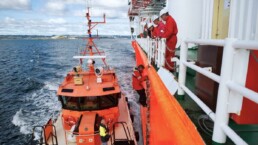
Pilot transfer operation: A safer step aboard
Safe pilot transfer operations depend on both correct procedures and fit-for-purpose equipment. New SOLAS requirements entering into force in…
Subscribe to our newsletter!
if you dont want to swim alone in the ocean of news, sign up for the newsletter, and you will receive daily all the important news of world shipping!
