Avia Solutions Group building a fleet capable of global expansion
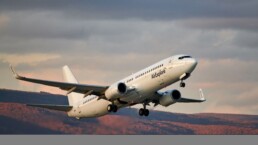

With almost 12,000 having been built since the start of production in the late 1960s, the Boeing 737’s popularity and capability have made the acquisition of each one a milestone for any airline. The ability to fly 189 passengers at speeds as high as 827 km/h for a range of 5,185 km makes these narrowbody aircraft a high-value asset. AirExplore, Slovakia’s premier airline, has expanded and updated its fleet massively since its acquisition by Avia Solutions Group last June. As AirExplore CEO Martin Stulajter explains, the capabilities and value that have been added to the airline are helping to build a fleet that is capable of global expansion.
In October 2024, 14 years after the airline’s founding, AirExplore’s fleet consists of 17 aircraft, including both passenger and cargo variants of Boeing’s 737-800. These next-generation aircraft are upgrades of the 737-400s that were originally in the airline’s fleet at launch. Stulajter says that the first difference between these two variants is the capacity.
“The maximum capacity of the 737-400 is 168-170 economy class seats, while the 737-800 has a maximum of 189 economy class seats,” he says. “It may not seem so, but those extra dozen seats make a big difference in revenues given the scale of operations of each aircraft.”
According to Stulajter, the extra seats of the next-generation 737 can result in millions of additional revenue.
“For example, a decent yearly utilization of such aircraft is about 3,000 flight hours. If the average flight length is 3 hours, it means an airline does about 1,000 flights per year,” he explains. “If the average ticket price of €250 for those 20 extra seats is achieved across those 1,000 flights, the addition of 20,000 passengers amounts to €5 million of revenue.”
Apart from the revenue advantage of the extra seating capacity, the 737-800 also offers the airline an increased range. According to Stulajter, the type can fly an additional 1.5 hours compared to the 737-400, which increases the potential routes and interested customer base the jet can serve. With the retirement of the five 737 Classics in the airline’s fleet completed in 2015, the 737-800 was an easy transition for AirExplore.
Both additional revenue and increased range were essential for the transition to the aircraft type, as these features would be vital to paying for the expansion. Stulajter remembers when the cost of the 737-800 was double that of the Classics.
“The most significant change had to happen in the mindset of the people responsible for the airline’s economics, as we had to cover the cost by using the aircraft more than the Classics,” he says. “We paid for the difference by flying more, and this required us to bring more staff to the company, which then meant we had to grow bigger than before.”
AirExplore did exactly that. The airline became the largest in Slovakia and has added a total of eight 737s in 2024 while increasing its regulatory approvals and safety certifications. One area of growth for AirExplore has been cargo, with the carrier adding seven more 737 freighters, with the latest addition as recent as June 2024. After these additions, the fleet now consists of eight 737-800 freighter aircraft that previously flew passengers before conversion by both Boeing and US-based Aeronautical Engineers Inc.
“The converted 737-800 freighter flies the same as its passenger version and has the same avionics, but our pilots go through additional training for operation of the cargo door and load distribution,” Stulajter says. “We operate these cargo aircraft in the EU market for major integrators like DHL and UPS, and we are also very active in the ad-hoc market where we help to move cargo of all types to many different places.”
Becoming a narrowbody freighter operator comes with unique challenges, as the cargo market experienced several shocks during the COVID-19 pandemic that to this day have large impacts on the economics of the logistics industry. To become ready for this airline market segment, AirExplore increased its capabilities to handle every task.
“It has almost been three years since we started operating cargo aircraft. It is a bit of a different business because it does not require as heavy utilization of the aircraft as with the passenger ones, but on the other hand, it is very vulnerable to the GDP performance of the global economy with fewer seasonal fluctuations than pax ops,” Stulajter says. “To become a carrier, we had to dig deeper into the compliance, handling of dangerous goods and load management from the perspective of flight operations engineering.”
Equipped with both 737-800 passenger and cargo variants, AirExplore benefits from the simplicity of single-type operations, as well as the uniqueness of that type in the ACMI market.
“Fewer ACMI operators are offering the Boeing product in the European ACMI segment compared to Airbus aircraft, which gives us a slight competitive advantage,” Stulajter says.
With the 737 offering a unique capability, and the increased capacity compounding more revenue, the airline is mulling the addition of the 737 MAX, according to reporting by Ch-Aviation. While a decision on future aircraft types could potentially be on the horizon, AirExplore continues to earn the necessary regulatory approvals to further expand its operations around the globe.



Related News.

Greece has the most to lose from delays in shipping’s green transition, new analysis finds
UCL and WWF Greece report finds the IMO Net-Zero Framework offers Greek ship owners the clarity they need, and the best protection against a…

Snow Land joins Cool Carriers as the world’s first reefer with a gate rudder, a new chapter for sustainable and efficient reefer shipping
Cool Carriers, the world’s largest operator of specialised reefer vessels, took delivery of Snow Land from Kitanihon Shipbuilding in Japan on 12…

IBIA launches Marine Energy Outlook Survey as Annual Convention in New York
IBIA - The International Bunker Industry Association officially launched its Marine Energy Outlook Survey during the IBIA Annual Convention in New…

Why did ITF staff vote to strike again?
Staff at the International Transport Workers’ Federation (ITF) headquarters in London have voted to give their union a strike mandate. According to…

Nearly half of maritime crew tickets booked a week ahead are cancelled
Two new C Teleport reports show when maritime and aircrew teams book crew flights, how often they cancel, and what late booking costs, with a…

Kpler completes $1.5bn+ Sixth Street investment and continues accelerating growth
Investment backs Kpler's bold ambition to shape the future of global trade intelligence. Kpler, a leading provider of global physical trade…

How SAL and DNV are strengthening heavy-lift shipping
From classification and newbuilding support to operational tools and advisory expertise, SAL and DNV have been collaborating for decades. The…

PSA Singapore breaks ground on Tuas Port Phase Two to strengthen Global Trade Connectivity
PSA Singapore marked the groundbreaking of Tuas Port Phase Two, a significant step in the development of the world’s largest fully automated…

 …

BIFA welcomes UK–EU trade progress and calls for clarity on implementation
The British International Freight Association (BIFA) has welcomed progress made at today's UK–EU Summit in Brussels, highlighting the potential…
Subscribe to our newsletter!
if you dont want to swim alone in the ocean of news, sign up for the newsletter, and you will receive daily all the important news of world shipping!
