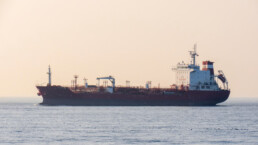

The United States expanded sanctions against Iran’s petroleum and petrochemical sectors on Friday in response to an Iranian missile attack on Israel, the administration of President Joe Biden said.
The U.S. move adds petroleum and petrochemicals to an executive order that targets key sectors of Iran’s economy with the aim of denying the government funds to support its nuclear and missile programs.
“The new designations today also include measures against the ‘Ghost Fleet’ that carries Iran’s illicit oil to buyers around the world,” Jake Sullivan, the national security adviser, said in a statement. “These measures will help further deny Iran financial resources used to support its missile programs and provide support for terrorist groups that threaten the United States, its allies, and partners.”
Israel is vowing to respond to Iran’s Oct. 1 missile attack, launched in retaliation for Israeli strikes in Lebanon and Gaza and the killing of a Hamas leader in Iran.
The U.S. Treasury can now “impose sanctions on any person determined to operate in the petroleum and petrochemical sectors of the Iranian economy,” it said in a statement.
Biden has said Israel should seek alternatives to attacking Iran’s oil fields. Gulf states are lobbying Washington to stop Israel from attacking oil sites because they are concerned their own facilities could come under fire from Tehran’s proxies if the conflict escalates, three Gulf sources told Reuters.
The Treasury Department also said it was designating 16 entities and identifying 17 vessels as blocked property, citing their involvement in shipments of petroleum and petrochemical products in support of the National Iranian Oil Company.
Concurrently, the State Department took steps to disrupt the money flow into Iran’s weapons programs and support for “terrorist proxies and partners.”
It imposed sanctions on six entities involved in Tehran’s petroleum trade and identified six ships as blocked property.
Iran’s oil exports have risen under Biden’s tenure as Iran succeeds in evading sanctions and as China has become Iran’s major oil buyer.
The Eurasia Group risk consultancy said on Friday the U.S. could cut Iran’s oil exports through tighter enforcement of previously imposed sanctions, for instance through satellite imaging for stricter monitoring of tankers that have turned off transponders.
The U.S. could also pressure countries to support enforcement efforts such as Malaysia, Singapore and the United Arab Emirates, it said. But that approach “would require strong diplomatic pressure on two partners, Malaysia and UAE, which are both reluctant to support efforts favoring Israel,” it said. Tougher enforcement of sanctions would likely require targeting Chinese firms shipping Iranian crude, it said, as China buys nearly 90% of Iran’s crude-oil exports.
Source: Reuters reported by Timothy Gardner, Ismail Shakil and Doina Chiacu; written by Susan Heavey and edited by David Ljunggren and Rod Nickel



Related News.
India joins ISF Verify, bringing trusted digital certification within reach of 30 per cent of the global seafarer workforce
Agreement with the world’s second-largest seafarer supply country marks a major milestone for global digital certification. The Directorate General…

OpenGate Capital to acquire Maersk Training, the Global Safety Training and Gas-Safety Services Business of Maersk
OpenGate Capital, a global private equity firm, announced today that it has signed a definitive agreement to acquire Maersk Training and its…

Can AI Save the Planet? Planet Classroom examines AI’s Climate Impact, Energy Demands and Clean Energy Solutions
C. M. (Cathy) Rubin and The Nest Campus CEO Peter Gilmer explore AI's growing environmental footprint, billions in climate investment, and the…

Smart Port Market Size to be valued at USD 23.10 Billion by 2034; Increasing Volume of International Maritime Trade to Boost Market Development: Fortune Business Insights™
The global smart port market size was valued at USD 3.4 billion in 2025 and is expected to be worth USD 4.2 billion in 2026. The market is projected…
Closer cooperation with India can strengthen Danish shipping
Minister of Business and Competitiveness Martin Lidegaard is leading a Danish business delegation to India. Green shipping is among the…

IRClass Academy and PIP Makassar strengthen Executive Maritime Capability through IMPDP 2026
Indian Register of Shipping , through its professional training and development arm IRClass Academy, has further strengthened its engagement in…

MOL, Sharp, IOM Implement Solar Panel Donation Project
Move Will Enhance Living Conditions in Power-short Areas of Kenya Mitsui O.S.K. Lines, announced the donation of solar power panels to communities in…

Intermodal Report Week 44 2026
Pls find below the Intermodal Report - Week 44 2026 Intermodal Report Week 44 2026
Allied Weekly Market Review Week 44
Pls find below the Allied - Weekly Market Review - Week 44 ALLIED - Weekly Market Report- Week 44

Nor-Shipping partners with Marketing in Maritime to deliver Marketing & Communications day and awards in 2027
Nor-Shipping is partnering with Marketing in Maritime to deliver a dedicated Marketing & Communications Day and awards initiative at the 2027…
Subscribe to our newsletter!
if you dont want to swim alone in the ocean of news, sign up for the newsletter, and you will receive daily all the important news of world shipping!
