Former Panama Canal administrator reflects on sovereignty milestone, national growth
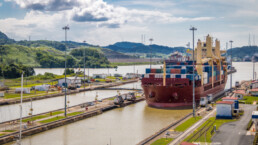

Jorge Luis Quijano, former Panama Canal administrator from 2012 to 2019, vividly recalled the historic moment in December 1999 when the United States handed over control of the canal to Panama. For Panamanians, it marked a new chapter of independence and national growth.
“For the world, it was just another day, but for Panamanians, it was monumental,” Quijano told Xinhua, reflecting on the country’s long fight for sovereignty over the canal as a vital waterway. “I was there, witnessing the official handover — it was a deeply emotional moment.”
He said General Omar Torrijos, former president of Panama, played a crucial role in advocating for the nation’s right to control the canal at the United Nations in the 1970s, condemning the U.S. presence as unjust and bringing international attention to Panama’s cause.
It was a rainy day. On Dec. 30, 1999, the U.S. flag was lowered for the last time, replaced by Panama’s flag — a powerful symbol of national sovereignty. The transfer, made official on Dec. 31 under the Torrijos-Carter Treaties, marked the start of a new era for Panama. “And then, after the transition, only the Panamanian flag, and a huge flag, went up,” Quijano said.
Beyond the canal itself, Panamanian control allowed the country to develop other key infrastructure, including ports and railways. These projects gradually gained momentum, particularly after 1993. By the late 1990s, Panama was “taking off” with major port developments on both the Atlantic and Pacific coasts, Quijano said.
Under Panama’s administration, significant efforts were made to expand the canal to accommodate modern shipping needs, especially as older locks struggled to handle larger vessels. The canal’s expansion, completed in 2016, was pivotal in positioning Panama as a key player in global trade.
Quijano highlighted the impact of China joining the World Trade Organization in 2001, which brought a boom in international container shipping. “By 2002, container shipping, especially from China, became our primary revenue stream,” he explained. “The expansion of the Canal was vital to keeping up with this demand.”
The Panama Canal plays a critical role in the national economy, accounting for 4 percent of the gross domestic product (GDP) and supporting surrounding industries, such as ports and logistics, which contribute up to 31 percent of the economy. The handover also spurred significant infrastructure development, boosting Panama’s economic potential.
However, challenges remain, particularly the ability to store water, as the canal relies on sufficient water levels to operate efficiently. In 2023, a drought led to long delays, with around 160 to 170 ships waiting up to 20 days to transit the Canal due to low water levels. Despite these hurdles, Quijano expressed optimism about the canal’s future.
Today, the canal contributes nearly 9 billion U.S. dollars annually to Panama’s economy, almost double the cost of the canal’s expansion. Surrounding industries like ports and logistics have become integral to the country’s growth.
“The Panama Canal is committed to serving the world and responding to global needs. We are always open to feedback and ready to address concerns,” he said.
Source: Xinhua



Related News.
Global study finds Cyprus ranks SEVENTH and set for $1.1 billion AI GDP boost
Cyprus beats India and New Zealand to come SEVENTH in major AI study – with potential €1.1 billion GDP boost and youth jobs opportunity Some 86% of…

Global shipping’s trillion dollar climate bill according to Zero Carbon Analytics
A new study by Zero Carbon Analytics finds that emissions from international shipping cost the global economy around USD 963 billion between 1990…

Keeping Children Safe Online at Sea Seafy® earns friendly WiFi Certification across 26 vessels
Seafy becomes Friendly WiFi’s first partner in the maritime sector, helping protect kids from harmful content online. Friendly WiFi is delighted…
ShipManager joins Star Information Systems to accelerate the maritime industry’s transition to cloud
CFARER, a DNV Company selects Star Information Systems as the longterm home for ShipManager and its cloud future Star Information Systems (Star)…

Seafarer experience must shape maritime technology, initial STEER Project report finds
New research finds technology can shift rather than remove risk as The Nautical Institute, with support from Lloyd’s Register Foundation, calls for…

New LR service targets cargo disruption when trade routes fail
New LR Advisory service helps ports, governments and logistics operators respond to disruption, protect critical cargo flows and strengthen trade…

DORIC WEEKLY INSIGHT 06 NOVEMBER 2026
Please find below the DORIC Market Insight for the week ending 06th November 2026. Weekly Report 06.11.2026
BIMCO Shipping Number of the Week
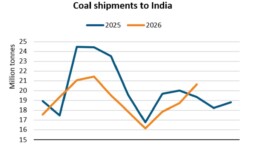
Coal shipments to India drop 7%, but limited recovery may lie ahead "Between January and October, coal shipments to India dropped 7% y/y due to the…
Hapag-Lloyd marks 20 years in South Africa and targets further growth
South Africa has become a cornerstone of Hapag-Lloyd's business in Africa Hapag-Lloyd surpasses 1 million TEU in Africa for the first time in its…
Subscribe to our newsletter!
if you dont want to swim alone in the ocean of news, sign up for the newsletter, and you will receive daily all the important news of world shipping!
