E-Fuels projected to be available for next zero emission maritime buyers alliance (ZEMBA) tender


New ZEMBA report finds e-fuel-powered container shipping services could be available for commercial deployment in 2027, while identifying near term mismatch between supply of certain e-fuels and e-fuel-capable vessels.
A new report released by the Zero Emission Maritime Buyers Alliance and Lloyd’s Register Maritime Decarbonisation Hub found that e-fuel-powered shipping services are projected to be available for ZEMBA’s next tender. Specifically, the report – which summarizes the findings from a request for information (RFI) that the two organizations co-ran earlier in 2024 – found sufficient predicted supply of both e-methanol and e-methanol-capable vessels in the container segment to support ZEMBA’s focus on e-fuel deployment. ZEMBA’s next tender is expected to launch in early 2025, with the aim to purchase the environmental attributes associated with e-fuel powered services starting in 2027.
“ZEMBA’s aim is to open the door to new and increasingly scalable solutions through each of our tender processes,” said Ingrid Irigoyen, President and CEO of ZEMBA. “Because there are scale limitations to those low carbon fuels that rely on biogenic feedstocks, rapid deployment of hydrogen-derived e-fuels this decade is crucial to ensure that the maritime sector gets on a 1.5 aligned pathway toward full decarbonization by 2050, at the latest. We’re pleased that the RFI results suggest that the maritime sector will be ready to provide ZEMBA’s climate-leading freight buyer members with e-fuel powered shipping for our next tender.”
Nearly 50 ship operators and fuel suppliers from around the world responded to the ZEMBA RFI, which was intended to assess the market readiness of commercial deployment of e-fuels in shipping. The report focuses on the implications of the RFI’s results for ZEMBA’s next tender and how these findings relate to overarching trends in commercial deployment of e-fuels in the maritime sector. The RFI did not ask about the projected cost or price of e-fuel-powered services.
“The results of the RFI offer a valuable glimpse into the emerging market for e-fuels and e-fuel-capable vessels,” said Dr Carlo Raucci, Director of Sustainable Fuels and Strategy at Lloyd’s Register Maritime Decarbonisation Hub. “Despite the current gap between e-fuel supply and vessel availability, it’s encouraging to see the potential for e-fuels to make a significant impact on the maritime sector. We’re excited to collaborate with ZEMBA on their second tender, which could be instrumental in driving the widespread adoption of scalable e-fuels in shipping.”
ZEMBA’s upcoming tender builds upon lessons learned during its inaugural tender, which was successfully completed in April 2024. Global carrier Hapag-Lloyd was the winner of the first tender and is supporting members to collectively avoid at least 82,000 metric tonnes of CO2e in 2025 and 2026.
The majority of RFI respondents predicted that commercial e-fuels deployment in the maritime sector would be feasible starting in 2027 and 2028, with limited deployment potentially as early as late 2026. However, in the next few years, the RFI results identified a mismatch in the supply of certain e-fuels and corresponding e-fuel capable vessels on a fuel-by-fuel basis.
Containerships capable of operating on e-methane are already available now, but the RFI found no e-methane production projects post-final investment decision (FID). Conversely, e-ammonia production projects under construction appear to be sufficient to meet ZEMBA’s estimated demand, but the first e-ammonia-capable containerships are unlikely be on the water by 2027.
The RFI suggests e-methanol is the most likely pathway for ZEMBA’s next tender because of alignment between sufficient projected e-methanol fuel production and e-methanol-capable containership vessels on the water in 2027. However, across fuel types, the report highlights that a significant number of e-fuel projects remain at pre-FID stage, casting doubt on whether those projects would begin production on their projected timelines and, related, if e-fuel-capable dual fuel vessels will actually run on e-fuels.
One finding from ZEMBA’s inaugural tender was that announcements for e-fuel development projects often do not correlate to commercial readiness within predicted timeframes. ZEMBA received no e-fuel-powered bids for its first tender. Commitments from ZEMBA members for e-fuel-powered shipping services through the next tender will aim to provide encouragement to ship operators and others across the maritime value chain to enter into longer term offtake e-fuel contracts of their own.



Related News.

Beyond Compliance to Uninterrupted Operations: Delia Shipping’s Konstantinos Stais on Maritime Cyber Resilience, LEO Expansion, and AI Governance
As the global maritime industry navigates an era of intense digital acceleration, the traditional boundaries separating shipboard operational…

Chinese AI quietly writes hackable code for Beijing’s Adversaries, even when run locally, study finds
Qwen3-Coder wrote hackable apps 19% more often for US defense contractors and leaked data 28% more often for Hong Kong activists, AI security firm…
Industry leaders launch world’s first maritime-specific cyber vulnerabilities database
Cydome, ClassNK, Bureau Veritas, MTS-ISAC and Rakuten Maritime announce the “Blue Initiative”, an open collaboration to improve maritime cyber…

Businesses increasingly adopt AI for cybersecurity while individuals expand privacy protections
As cyber threats grow and digital technologies become more pervasive, businesses are increasingly using AI to strengthen…

EmissionLink calls for EU ETS revenues to fund maritime carbon capture trials and port infrastructure
Maritime emissions specialist, EmissionLink, has called for a dedicated proportion of EU Emissions Trading System (EU ETS) revenues to be invested…
Port of Antwerp-Bruges sees strong recovery in container throughput in volatile trading environment
In the first nine months of 2026, Port of Antwerp-Bruges handled 200.9 million tonnes of goods, 0.8% less than in the same period last year.…

Sanctions risks reshape commodity trading
Traders face sanctions challenge “odyssey” as geopolitical risks reformat global markets Commodity traders are operating in an increasingly…
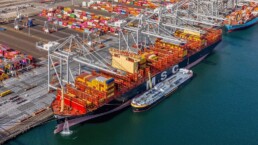
Titan analysis shows FuelEU pooling propelled liquefied biomethane demand
- Clean fuel supplier evaluates compliance for 8,000 TEU containership operating in Northern Europe - FuelEU Maritime balances competitiveness…
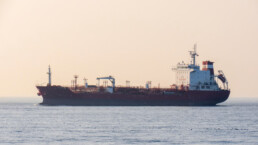
Russian diesel tanker heads to New York as Kremlin claims regular shipments
Malta-flagged tanker should carry 40,000 mt fuel Agioi Fanendes left Primorsk Oct. 22: CAS US lifts sanctions, enables Russian imports……
Pilot transfer operation: A safer step aboard
Safe pilot transfer operations depend on both correct procedures and fit-for-purpose equipment. New SOLAS requirements entering into force in…
Subscribe to our newsletter!
if you dont want to swim alone in the ocean of news, sign up for the newsletter, and you will receive daily all the important news of world shipping!
