
Sustainable, hydrogen-based aviation fuels are expected to make a significant contribution to the decarbonisation of the aviation industry in the medium term. However, uncertainties regarding technologies and business models are currently holding back urgently needed private investment. Appropriate framework conditions and intelligent solutions to limit risks can help to untie this knot.
“A joint voluntary commitment made by major market participants in 2021 aims to make global air traffic CO2 -neutral by 2050.”
The aviation industry has set itself numerous targets when it comes to climate protection. A joint voluntary commitment made by major market participants in 2021 aims to make global air traffic CO2 -neutral by 2050. This ambition correlates with the goals of the EU regulation “RE Fuel EU Aviation”, which stipulates the blending of alternative fuels – so-called “Sustainable Aviation Fuels”, or SAF for short – in aircraft refueling. According to this directive, their share will initially be 2% from next year, increasing to 6% in 2030 and reaching the 70% mark in 2050.
In principle, SAF can be produced from biogenic raw materials such as food waste, oils, fats, sugar, starch, wood and straw (BioSAF) as well as by electrolysis from green electricity and hydrogen (eSAF).
However, not all SAFs are equally sustainable. For example, biomass used for the production of BioSAF has to be imported from third countries to a considerable extent due to its limited availability within the EU. In addition, there is the widely discussed competition with food production, for example through the large-scale cultivation of maize as a monoculture. Nevertheless, this variant currently dominates the project pipeline.
On the other hand, it is estimated that up to 75% of global SAF demand will have to be covered by eSAF by 2050. Consequently, the German aviation industry is also supporting eSAF projects in particular: According to BDL President Peter Gerber, as part of an initiative involving representatives of the aviation and petroleum industries as well as several federal ministries, the aim is to put 200,000 tonnes of synthetic kerosene produced from hydrogen into fuel tanks every year by 2030.
BROAD ESTABLISHMENT OF ESAF REQUIRES EXTENSIVE INVESTMENT
“Hydrogen-based, sustainable aviation fuel will play a decisive role in the decarbonisation of aviation. An initiative to promote eSAF projects assumes that the global eSAF market could reach a volume of around €250bn by 2050.”
It is therefore clear that hydrogen-based, sustainable aviation fuel will play a decisive role in the decarbonisation of aviation. An initiative to promote eSAF projects assumes that the global eSAF market could reach a volume of around €250bn by 2050 and create 90,000 direct jobs as well as other jobs in related industries. The fact that around two thirds of active eSAF projects are located in Europe also offers general opportunities for energy security and a future technological leadership role for the continent.
However, there is far less clarity on the question of where the necessary investment will come from. The financial requirements for the realisation of a large-scale eSAF project could well reach €2bn, although reliable, scalable production processes and resilient business models still need to be established. At the same time, even the EU estimates that the price of eSAF will be significantly higher than that of traditional kerosene for the foreseeable future. Such a mixture of technological and economic uncertainty combined with high investment requirements limit the bankability of such projects, i.e. their attractiveness for institutional investors.
Time is of the essence: in order to provide the quantities required by 2050, technologies for synthesising eSAF must reach industrial scale by 2030. As the realisation of an eSAF project takes around five years from start to stable operation, corresponding investment decisions (so-called “FID” – Final Investment Decisions) are required by the end of 2025 at the latest. However, no large-scale plant in Europe has yet reached this stage. To achieve the target, it is also essential that a functioning commercial market develops in the 2030s.
In view of these risks, which are difficult to calculate, a highly dynamic, economically attractive and politically and socially desirable future market is currently facing a lack of available capital.
RISK LIMITATION IS ESSENTIAL
Potential investors are particularly concerned about four factors. Firstly, it is difficult to predict what quantities of green energy will be available in the future, at what time and at what prices. Secondly, there is a lack of long-term purchase agreements that would allow a profitability forecast for planned eSAF plants, whereby – thirdly – the significantly higher costs for eSAF compared to fossil fuels (“green premium”) have a prohibitive effect. Finally, there is the pronounced technological risk profile that is always associated with “first-of-a-kind” plants for the realisation of a new technology.
Among other things, intelligent risk minimisation strategies are needed to untangle this knot. The fact that such an approach promises success is demonstrated, among other things, by the fact that the first (infrastructure) private equity funds are taking on the role of enablers in eSAF projects despite the hurdles described above and are building trust with other investors through their involvement.
“In view of risks, which are difficult to calculate, a highly dynamic, economically attractive and politically and socially desirable future market is currently facing a lack of available capital.”
One example of this is provided by Grünwald-based investment management company KGAL with a special fund focussing on the development of green hydrogen projects, which invested extensively in an eSAF project in the Danish coastal town of Vordingborg at the beginning of the year. The plant, which is being developed by US specialist supplier Arcadia eFuels, is set to produce around 68,000 tonnes of synthetic kerosene per year from its own green hydrogen production from mid-2026. With this volume, an Airbus A320 could cover the distance between Munich and London around 15,000 times.
GOVERNMENT AND INDUSTRY MUST CREATE SUITABLE FRAMEWORK CONDITIONS
In order to encourage other investors to take similar steps, the following approaches currently appear particularly promising at the macro level of the framework conditions:
- firstly, it is important to ensure long-term access to affordable green energy with acceptable price volatility. For example, tenders for wind and solar parks that exclusively supply eSAF projects with green energy would be conceivable;
- binding purchase commitments from the public and private sectors play a key role. The first energy companies have already declared their willingness to do so, but unfortunately this is not yet the rule;
- the state is also called upon to ensure greater security for investors. In view of the serious cost disadvantages compared to fossil fuels, the creation of special, long-term eSAF subsidies should be considered, for example; and
- the uncertainties associated with new technologies in their early stages generally deter investors. TÜV certificates for eSAF production facilities, for example, could build trust here. This instrument, which derives its intrinsic value not least from a state guarantee, is already established in the field of renewable energies.
SUITABLE CONTRACTUAL SOLUTIONS ARE AVAILABLE AT PROJECT LEVEL
Investors are also confronted with numerous uncertainties at the micro level of individual projects, which can lead to serious deviations from the project plans. These range from incorrect estimates of the project value at the time of entry or FID to delays in implementation and the departure of key personnel who are crucial to the success of the project. However, a number of contractual mechanisms are already available today to minimise risk.
“A number of contractual mechanisms are already available today to minimise risk.”
Three examples are briefly presented here, which have their origins in traditional private equity transactions, but have also increasingly found their way into infrastructure-related transactions and projects in recent years. Ultimately, it is crucial that the contractual agreements and obligations of the partners are customised to the specific project and its particularities.
REVENUE EQUALISATION FOR INVESTORS IN THE EVENT OF WEAK PERFORMANCE
A key decision-making factor for investors is the expected proceeds in the event of a later exit from the project. To this end, comprehensive financial models first determine the company value at the time of entry – and thus the number of shares that an investor receives in return for their investment – and then, on the basis of key economic indicators, its forecast development.
The fact that these calculations are (or have to be) largely based on the knowledge and experience of the project developer often leads to disputes if the shares are worth less than forecast when they are later sold. The financier may then assume that the originally assumed company value was too high and that he received too few shares in the project company in return.
The shareholder agreement can provide for an adjustment mechanism for such situations, which promises the investor additional shares in the project company under defined conditions and thus higher exit proceeds, whereby a maximum adjustment amount is usually agreed.
“eSAFs undoubtedly have the potential to revolutionise aviation.”
PROFIT INCENTIVES FOR DEVELOPERS WITH STRONG PERFORMANCE
On the opposite side, if the project and therefore the exit proceeds develop better than assumed, so-called “earn-out” structures can incentivise the project developer. Corresponding agreements regulate how the shareholders divide the profit amount that is above the assumed revenue threshold. The higher this revenue is, the more the project developer benefits in relation to the investor.
RESCUE ANCHOR FOR PROBLEMATIC PROJECT PROGRESS
Put or call options are probably the sharpest sword, which is usually only used in precarious situations. If the project development deviates significantly from the original business basis, they allow for the forced transfer of one’s own shares to the co-partner (put) or alternatively the takeover of the co-partner’s shares (call) in order to drive the project forward with another partner who is more likely to realise the project successfully.
For such a major step, the exercise conditions and the basis for a current valuation of the shares must be very clearly defined. It must also be clarified in advance how the monetary consideration due in each case can be secured.
Tax aspects must of course be examined in detail for all scenarios.
CONCUSION
eSAFs undoubtedly have the potential to revolutionise aviation. This revolution will not happen on its own, but will require the active, creative involvement of all stakeholders. If the ambitious goals are to be achieved by 2050, traditional structures will have to be scrutinised and new, innovative solutions created – and soon, because the industry does not have much time left.
Source: WFW



Related News.
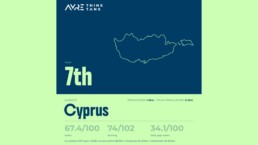
Global study finds Cyprus ranks SEVENTH and set for $1.1 billion AI GDP boost
Cyprus beats India and New Zealand to come SEVENTH in major AI study – with potential €1.1 billion GDP boost and youth jobs opportunity Some 86% of…

Global shipping’s trillion dollar climate bill according to Zero Carbon Analytics
A new study by Zero Carbon Analytics finds that emissions from international shipping cost the global economy around USD 963 billion between 1990…

Keeping Children Safe Online at Sea Seafy® earns friendly WiFi Certification across 26 vessels
Seafy becomes Friendly WiFi’s first partner in the maritime sector, helping protect kids from harmful content online. Friendly WiFi is delighted…

ShipManager joins Star Information Systems to accelerate the maritime industry’s transition to cloud
CFARER, a DNV Company selects Star Information Systems as the longterm home for ShipManager and its cloud future Star Information Systems (Star)…

Seafarer experience must shape maritime technology, initial STEER Project report finds
New research finds technology can shift rather than remove risk as The Nautical Institute, with support from Lloyd’s Register Foundation, calls for…
New LR service targets cargo disruption when trade routes fail
New LR Advisory service helps ports, governments and logistics operators respond to disruption, protect critical cargo flows and strengthen trade…

DORIC WEEKLY INSIGHT 06 NOVEMBER 2026
Please find below the DORIC Market Insight for the week ending 06th November 2026. Weekly Report 06.11.2026
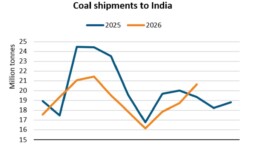
BIMCO Shipping Number of the Week
Coal shipments to India drop 7%, but limited recovery may lie ahead "Between January and October, coal shipments to India dropped 7% y/y due to the…
Hapag-Lloyd marks 20 years in South Africa and targets further growth
South Africa has become a cornerstone of Hapag-Lloyd's business in Africa Hapag-Lloyd surpasses 1 million TEU in Africa for the first time in its…
Subscribe to our newsletter!
if you dont want to swim alone in the ocean of news, sign up for the newsletter, and you will receive daily all the important news of world shipping!
