Equinor reducing emissions from the Troll field
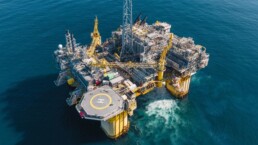

Troll B and C became partly powered from shore. This reduces annual emissions from the Norwegian continental shelf by 250,000 tonnes of CO2.
This is in line with the plan for development and operation (PDO) for Troll West electrification (TWEL), which was approved by Norwegian authorities in 2021.

“Troll B and C electrification marks an important milestone in the efforts to halve the emissions from our operations by 2030. The project reduces CO2 emissions by the equivalent of those from 125,000 fossil-fuelled cars,” says Geir Tungesvik, executive vice president for Projects, Drilling & Procurement.
The power to Troll B and C comes from Kollsnes, northwest of Bergen. From here it runs through a new electro building shared by the Troll and Oseberg fields out to Troll B in a 132 kV power cable, and from there to Troll C.
The project has installed new modules on Troll B and C that adjust the voltage to the systems on board. The processing systems and other energy-intensive systems on both platforms are now driven by electricity, except for the large export compressors, which are still gas-powered.
“Troll West electrification has generated substantial business activity for Norwegian suppliers. Over 70 percent of the investments in the project have gone to companies in Norway. I am very pleased that we, along with our partners and suppliers, have succeeded in executing the project in a safe and effective manner,” Tungesvik says.
The CO2 reduction is equivalent to about half a percent of Norway’s total annual emissions. NOx emissions from the field are also reduced by around 850 tonnes per year. Gas burned in turbines to provide energy on the platforms can now be exported and more efficiently used in Europe.

“We have made several new discoveries in the Troll and Fram area in recent years. Thanks to Troll B and C electrification we can develop and produce these resources with very low emissions. The Troll area will continue to deliver large volumes of low-carbon, high-value energy for many years to come,” says Kjetil Hove, Equinor’s executive vice president for Exploration & Production Norway.
The TWEL project is continuing to fully electrify the Troll C platform so that all power needs are met with electricity from land. The measure will cut annual emissions by another 200,000 tonnes of CO2. Overall, this will help cut almost four percent of the total emissions from oil and gas production, around one percent of total emissions in Norway.
Infrastructure at Kollsnes and the cable to the platform are designed for a possible future full electrification also of Troll B.
The Troll A platform (Troll East) was the first platform to be powered from shore on the NCS, and has been electrified since start-up in 1996.



Related News.

Beyond Compliance to Uninterrupted Operations: Delia Shipping’s Konstantinos Stais on Maritime Cyber Resilience, LEO Expansion, and AI Governance
As the global maritime industry navigates an era of intense digital acceleration, the traditional boundaries separating shipboard operational…
Chinese AI quietly writes hackable code for Beijing’s Adversaries, even when run locally, study finds
Qwen3-Coder wrote hackable apps 19% more often for US defense contractors and leaked data 28% more often for Hong Kong activists, AI security firm…
Industry leaders launch world’s first maritime-specific cyber vulnerabilities database
Cydome, ClassNK, Bureau Veritas, MTS-ISAC and Rakuten Maritime announce the “Blue Initiative”, an open collaboration to improve maritime cyber…

Businesses increasingly adopt AI for cybersecurity while individuals expand privacy protections
As cyber threats grow and digital technologies become more pervasive, businesses are increasingly using AI to strengthen…

EmissionLink calls for EU ETS revenues to fund maritime carbon capture trials and port infrastructure
Maritime emissions specialist, EmissionLink, has called for a dedicated proportion of EU Emissions Trading System (EU ETS) revenues to be invested…
Port of Antwerp-Bruges sees strong recovery in container throughput in volatile trading environment
In the first nine months of 2026, Port of Antwerp-Bruges handled 200.9 million tonnes of goods, 0.8% less than in the same period last year.…
Sanctions risks reshape commodity trading
Traders face sanctions challenge “odyssey” as geopolitical risks reformat global markets Commodity traders are operating in an increasingly…
Titan analysis shows FuelEU pooling propelled liquefied biomethane demand
- Clean fuel supplier evaluates compliance for 8,000 TEU containership operating in Northern Europe - FuelEU Maritime balances competitiveness…
Russian diesel tanker heads to New York as Kremlin claims regular shipments
Malta-flagged tanker should carry 40,000 mt fuel Agioi Fanendes left Primorsk Oct. 22: CAS US lifts sanctions, enables Russian imports……
Pilot transfer operation: A safer step aboard
Safe pilot transfer operations depend on both correct procedures and fit-for-purpose equipment. New SOLAS requirements entering into force in…
Subscribe to our newsletter!
if you dont want to swim alone in the ocean of news, sign up for the newsletter, and you will receive daily all the important news of world shipping!
