

A long standing problem is once again attracting management attention, writes Gurinder Singh, Director of Solutions Engineering, ABS Wavesight
Global shipping markets are booming as a combination of market drivers and geopolitics conspires to push the maritime industry to the limits of its operational capacity.
Trade lane disruption, vessel re-routing, increased safety risks and port congestion are focussing minds on efficiency, even as near-term earnings remain strong.
The strain on global supply chains is contributing to a familiar problem for shipping companies. Is the spare part inventory they need to keep moving safely in the right place at the right time?
In fact, with markets so tight the issue of inventory availability that can keep ships operating is more important than ever. A low market might mean operators can take their time on repairs or updates; tight markets mean the opposite. In addition, in this active sale and purchase market, inventory adjustments for vessels leaving or joining the fleet can create opportunities for shortfall or oversupply.
The issue of inventory management has long vexed crews as they work to keep the vessel sailing. Now it is attracting management attention as operators look to manage costs and maximise utilization.
Despite the various initiatives put in place to streamline front-end purchasing of spare parts, feedback from research conducted for ABS suggests that they can still end up sitting in the supplier’s warehouse or onboard ships for months or even years due to lack of visibility.
After all, online procurement doesn’t, in general, provide a lifecycle solution after you click ‘buy now’. Like any online marketplace, it’s about lower front end prices and shipping the stuff to your chosen destination.
What begins as valuable inventory can quickly become obsolete or damaged stock, destroying value and creating waste that can be complex to manage. Estimates suggest that inventory levels can be between $0.5m and $1.5m per vessel and even greater depending on fleet complexity and procurement practices. Multiply that across a medium-sized fleet and the numbers climb very quickly.
Not managing inventory properly creates significant OpEx risk and can tie up working capital which has impacts beyond operational inefficiency. Even in strong markets, the cost of capital is on the minds of owners looking to take advantage of the market opportunities.
So why, in a digitalising, globally networked shipping industry is spare parts inventory still a problem? Aside from black swan effects, supply chain consultant Peter Schellenberger identifies a lack of management focus on the issue and the challenge of implementation as reasons the problem persists.
A smart and user-friendly Planned Maintenance System (PMS) that supports the crew in maintaining good data standards should be a given, but Schellenberger thinks decisions on system evaluation and implementation don’t always receive the priority they deserve.
He notes that in discussions with clients around new PMS systems, a similar topic arises: what to do with the existing vessel inventory databases.
Schellenberger estimates that as much as 70-80% of common data sets do not reflect reality or are not properly structured. It most cases, however, companies decide – in the cause of lowering decision time – to simply transfer whatever data exists in legacy systems to the new PMS.
Whether for a new or existing system, the processes around inventory control rely on good data to deliver the expected returns. In a recent case study, performed by ABS Wavesight, an operator with a fleet of 40+ vessels was able to save over $3m annually by optimizing their spare parts program starting with a focus on re-baselining their inventory.
Fundamental issues related to data structure and hierarchies, as well as cross-referencing between vessels were solved. This allowed analysis and insights to be generated that were previously impossible or unreliable.
Ongoing training and dedicated specialists maintain the data quality and process controls that provide level of inventory transparency that many desire but are yet to commit the needed time and resources.
By putting their inventory management process onto a sound and sustainable footing, shipping companies can embrace ‘just in time inventory’ as they aim to achieve just in time shipping. Focussing on the millions of dollars in inventory sitting unused onboard a fleet of ships or in a warehouse can create value for shipping companies – and have a positive net impact on fleet operations.
Tying together maintenance and inventory management across the organisation can create efficiencies that don’t just enable savings; they put assets and people in the optimum position to capture commercial opportunity.



Related News.

Global study finds Cyprus ranks SEVENTH and set for $1.1 billion AI GDP boost
Cyprus beats India and New Zealand to come SEVENTH in major AI study – with potential €1.1 billion GDP boost and youth jobs opportunity Some 86% of…

Global shipping’s trillion dollar climate bill according to Zero Carbon Analytics
A new study by Zero Carbon Analytics finds that emissions from international shipping cost the global economy around USD 963 billion between 1990…

Keeping Children Safe Online at Sea Seafy® earns friendly WiFi Certification across 26 vessels
Seafy becomes Friendly WiFi’s first partner in the maritime sector, helping protect kids from harmful content online. Friendly WiFi is delighted…

ShipManager joins Star Information Systems to accelerate the maritime industry’s transition to cloud
CFARER, a DNV Company selects Star Information Systems as the longterm home for ShipManager and its cloud future Star Information Systems (Star)…

Seafarer experience must shape maritime technology, initial STEER Project report finds
New research finds technology can shift rather than remove risk as The Nautical Institute, with support from Lloyd’s Register Foundation, calls for…

New LR service targets cargo disruption when trade routes fail
New LR Advisory service helps ports, governments and logistics operators respond to disruption, protect critical cargo flows and strengthen trade…

DORIC WEEKLY INSIGHT 06 NOVEMBER 2026
Please find below the DORIC Market Insight for the week ending 06th November 2026. Weekly Report 06.11.2026
BIMCO Shipping Number of the Week
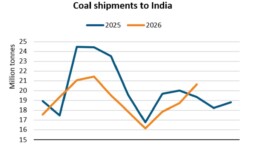
Coal shipments to India drop 7%, but limited recovery may lie ahead "Between January and October, coal shipments to India dropped 7% y/y due to the…

Hapag-Lloyd marks 20 years in South Africa and targets further growth
South Africa has become a cornerstone of Hapag-Lloyd's business in Africa Hapag-Lloyd surpasses 1 million TEU in Africa for the first time in its…
Subscribe to our newsletter!
if you dont want to swim alone in the ocean of news, sign up for the newsletter, and you will receive daily all the important news of world shipping!
