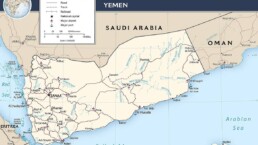

On January 19, armed Houthi rebels seized the car carrier “Galaxy Leader” on the coast of Al Salif, Yemen, marking a significant escalation in the ongoing conflict in the region. The incident has had far-reaching implications, particularly for global shipping routes and costs. On February 5, the rebels were seen disembarking from a small boat on the same coast, with the Galaxy Leader in the background, further highlighting the precarious situation.
The geopolitical instability in Yemen, especially involving the Houthi rebels, has long been a source of concern for global maritime trade. The Red Sea, and specifically the Bab el-Mandeb Strait, is a critical chokepoint for shipping routes between Europe and Asia. The seizure of the Galaxy Leader underscores the vulnerability of these routes to regional conflicts and security threats.
In the months following the seizure, the impact on shipping costs has been profound. In May, shipping costs for sea exports from South Korea to the European Union (EU) increased by 8.1%. This trend continued in June with a 44.6% rise, and by July, costs had surged nearly 40% compared to the previous month. According to the Korea Customs Service’s “Status of Export and Import Transportation Costs for July 2024,” the average shipping cost per 2TEU for sea exports from Korea to the EU last month was 8,086,000 won (approximately $5,989).
The increase in shipping costs is not limited to the EU. Last month, costs also rose for routes to the Eastern U.S. (28.1%), Western U.S. (20.0%), Vietnam (56.0%), China (27.2%), and Japan (1.5%). The Western U.S. route has seen rising costs for four consecutive months, reflecting broader disruptions in global shipping.
The surge in shipping costs can be attributed to several factors, including increased cargo volume from China, particularly affecting routes to Vietnam. The geopolitical risks in the Red Sea region have also led to rerouting and heightened security measures, further driving up costs.
Conversely, the average shipping cost for sea imports from the EU to Korea in July was 1,617,000 won, a 7.9% decrease from the previous month. However, costs for sea imports from the Eastern U.S. (3.5%), China (12.8%), and Vietnam (62.7%) increased. Air import shipping costs also rose for the EU (18.1%), China (3.0%), and Vietnam (4.4%), while they decreased for the U.S. (-1.1%) and Japan (-3.2%).
Source : Businesskorea



Related News.

Global study finds Cyprus ranks SEVENTH and set for $1.1 billion AI GDP boost
Cyprus beats India and New Zealand to come SEVENTH in major AI study – with potential €1.1 billion GDP boost and youth jobs opportunity Some 86% of…

Global shipping’s trillion dollar climate bill according to Zero Carbon Analytics
A new study by Zero Carbon Analytics finds that emissions from international shipping cost the global economy around USD 963 billion between 1990…

Keeping Children Safe Online at Sea Seafy® earns friendly WiFi Certification across 26 vessels
Seafy becomes Friendly WiFi’s first partner in the maritime sector, helping protect kids from harmful content online. Friendly WiFi is delighted…

ShipManager joins Star Information Systems to accelerate the maritime industry’s transition to cloud
CFARER, a DNV Company selects Star Information Systems as the longterm home for ShipManager and its cloud future Star Information Systems (Star)…

Seafarer experience must shape maritime technology, initial STEER Project report finds
New research finds technology can shift rather than remove risk as The Nautical Institute, with support from Lloyd’s Register Foundation, calls for…

New LR service targets cargo disruption when trade routes fail
New LR Advisory service helps ports, governments and logistics operators respond to disruption, protect critical cargo flows and strengthen trade…

DORIC WEEKLY INSIGHT 06 NOVEMBER 2026
Please find below the DORIC Market Insight for the week ending 06th November 2026. Weekly Report 06.11.2026
BIMCO Shipping Number of the Week
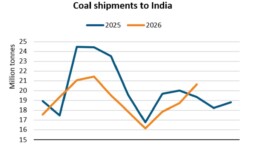
Coal shipments to India drop 7%, but limited recovery may lie ahead "Between January and October, coal shipments to India dropped 7% y/y due to the…
Hapag-Lloyd marks 20 years in South Africa and targets further growth
South Africa has become a cornerstone of Hapag-Lloyd's business in Africa Hapag-Lloyd surpasses 1 million TEU in Africa for the first time in its…
Subscribe to our newsletter!
if you dont want to swim alone in the ocean of news, sign up for the newsletter, and you will receive daily all the important news of world shipping!
