Five things we can do today to decarbonise shipping

As one of the world’s largest charterers of tankers, we recognise the importance of supporting the decarbonisation of shipping.
To that end, we recently ordered four gas carriers capable of running on low-carbon ammonia. We expect to take delivery of the first vessel in the second half of 2027.
While we continue to advocate for the implementation of a carbon levy and a ‘feebate‘ system to drive long-term decarbonisation in shipping, we also recognise the significance of reducing carbon emissions today given that the industry is responsible for around three percent of global greenhouse gas emissions (GHGs).
It is all the more important because the current disruption to global trade from ships not being able to use the Red Sea is leading to much longer voyages and a dramatic increase in emissions.

We estimate an extra 200,000 barrels of fuel oil will be consumed by oil tankers alone this year as they are diverted around the Cape of Good Hope. This equates to a 4.5% increase in annual emissions from oil tankers alone.
When container ships and other vessels are considered we think an additional 500,000 barrels of fuel will be consumed by the shipping industry this year because of the disruptions.
Like the time value of money – one of the fundamental concepts of finance –it is also helpful to consider the time value of GHG emissions.
A tonne of CO₂ reduced today is worth more than a tonne of CO₂ reduced in the future.

The good news is that there are numerous actions we can implement quickly to reduce emissions from shipping.
These include:

Biofuels

One option is the use of biofuels. There are several types of biofuels on the market including biodiesel, also known as fatty acid methyl esters (FAME). This is produced from vegetable oil, animal fats or used cooking oils through a process known as transesterification. Although there are feedstock constraints, biofuels are attractive because they can be used with virtually no retrofitting to vessels and infrastructure.
They can also be blended with traditional marine fuels such as very low sulphur fuel oil (VLSFO), to achieve emissions reduction. B30 – a blend of 30% FAME and 70% VLSFO – is expected to be a popular choice and is set to play a significant role in the near term, while the industry transitions to low or zero carbon fuel sources. Trafigura already supplies B30 through our bunkering joint-venture TFG Marine and we are set to become a major producer of biodiesel via our recent purchase of the European assets of fuel supply company Greenergy.
Energy efficiency

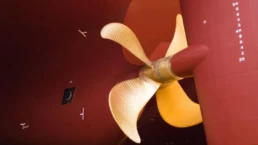
Technical measures such as silicone hull coatings, wake equalising ducts (WED), ultrasonic propeller antifouling technology, and continuous underwater hull cleaning and propeller polishing are another way to quickly reduce emissions.
Indeed, we have already retrofitted a number of our owned vessels with silicon hull coatings and WED.
Slow-steaming

One of the fastest and most cost-effective ways to reduce CO₂ emission is slow-steaming – the practice of operating ships at lower speeds. By travelling more slowly, vessels consume less fuel, which not only reduces operational costs but also reduces GHG emissions.
To be sure, slow-steaming is not an option open to everyone – some vessels are not designed to move slowly while others may need to pick up speed to compensate for lost time if disruptions have forced them to take longer routes. Moreover, by significantly reducing the speed of the fleet, more ships are needed to cover demand. But even when the additional emissions from building and operating new ships are taken into consideration, slow-steaming still leads to CO₂ savings.
According to Transport & Environment, a non-government organisation focused on decarbonising transport in the EU, reducing fleet speeds by an average of 10% leads to overall CO₂ savings of 19%.
Data and digitalisation

In order to reduce emissions, it is vital that the shipping industry is able to measure them on a vessel-by-vessel basis. We cannot rely on industry averages because these estimates may not be an accurate reflection of real world emissions. That is one of the reasons why we have invested in a company called Daphne Technology. The Swiss-based group has developed a system called PureMetrics™ that can measure and report greenhouse gas emissions (GHGs) from onboard a vessel in real time.
We also need to be able to accurately measure marine fuel supply, which is why TFG Marine has been promoting the use of mass flow meters. When fitted to ships, MFMs can provide computerised records of exact volumes delivered in real time. When all this data is combined with the route and voyage optimisation tools, it can help maximise vessel efficiency and reduce emissions.
Emissions capture

The use of on-board emission capture to sequester CO₂ and other GHGs such as methane, is another step that can be taken to reduce the environmental impact of shipping. Daphne Technology is developing a cleaning system that targets specifically “methane slip” from engine exhausts. This is particularly relevant as many shipowners and operators have placed orders for LNG-fuelled vessels – from containerships and cruise liners, to LNG carriers themselves.
In the final analysis, there is no simple solution when it comes to the decarbonisation of shipping and we will need a range of options to reduce emissions now and in the future. For example, fuel cells and batteries charged with renewable energy are zero-emission sources of propulsion, although they are currently only an option for ships making short or near-shore journeys such passenger ferries. For larger, ocean-going vessels large solid wind assisted ship propulsion (WASP) systems have the potential to reduce fuel consumption and therefore emissions.
To be clear, these near-term measures are not a substitute for the transition to low-emissions shipping fuels. Looking forward, we think low-emission ammonia and methanol will eventually become the primary shipping fuels of the future. In the meantime, we must take every possible measure to reduce, avoid, or mitigate greenhouse gas emissions today to prevent making climate change even more challenging to address in the future. There is no time to lose.
*Trafigura estimates



Related News.
RINA’s Hellenic Technical Committee puts energy-efficient newbuilding design and AI in focus
Project Mermaid, battery integration and practical AI applications highlight opportunities for more efficient ship design and fleet operations…
From mine to market – NORDEN connects Comilog’s manganese ore with global markets
NORDEN’s dedicated transhipment operation in Gabon, run under a long term contract with long-standing customer Comilog, has loaded more than 54…
Oldendorff reflags two capesize vessels to Germany
Oldendorff Carriers is reflagging two of its Capesize bulk carriers to Germany, underlining the company’s long standing ties to the country and its…

AskChief surpasses 100-vessel milestone in under a year and opens its specialised maritime AI to the wider market
Putting each company’s own knowledge to work for maritime Technical and HSQE teams. AskChief, Specialised AI for maritime Technical and HSQE…

Dalian Maritime University’s Yu Jiajia receive 2027 IMO Gender Equality Award
From the bridge to the classroom, Ms Yu has helped build a more inclusive maritime sector in China, serving as a role model for the global maritime…
“K” LINE releases video update on forecasts for FY2026 and progress of the medium-term management plan
Kawasaki Kisen Kaisha, has released a video on its official website explaining its forecasts for FY2026 and progress of its Medium-Term Management…
 …
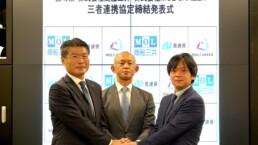
MOL and MOL CAREER sign 3-way deal with Nagasaki Prefecture to promote recruitment and retention of foreign workers
Mitsui O.S.K. Lines, and MOL CAREER, have entered into a tripartite partnership agreement with Nagasaki Prefecture to promote the revitalization of…
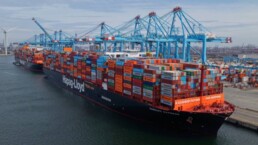
Hapag-Lloyd completes acquisition of 25% stake in APM Terminals Maasvlakte II
Transaction successfully completed following antitrust approval Investment strengthens Hapag-Lloyd’s terminal portfolio and position in Rotterdam…
11th chainPORT annual meeting at Tanger Med Focuses on scaling AI in ports
Representatives from leading ports around the world gathered in Tangier, Morocco, on 29 and 30 October for the 11th chainPORT Annual Meeting, hosted…
Subscribe to our newsletter!
if you dont want to swim alone in the ocean of news, sign up for the newsletter, and you will receive daily all the important news of world shipping!
