Enhancing boating safety with AI technology
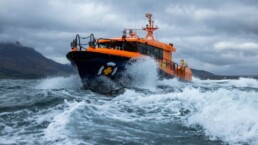

Top 5 boating incidents
The U.S. Coast Guard has published the 2023 statistics for recreational boating incidents, showing a decline in both fatalities and overall incidents, and highlighting the primary causes of these accidents. The report identifies the top five contributing factors as;
-
Operator inattention
-
Improper lookout
-
Operator inexperience
-
Excessive speed
-
Machinery failure
Despite an overall decline in fatalities and incidents, alcohol remains the leading cause of fatal accidents, responsible for 79 deaths, or 17% of the total. The fatality rate dropped to 4.9 deaths per 100,000 registered recreational vessels, down from 5.4 the previous year, with property damage amounting to $63 million. Most deaths involved operators without boating safety instruction and occurred on open motorboats, personal watercraft, and cabin motorboats. Drowning was the cause of 75% of deaths, with 87% of victims not wearing life jackets. The Coast Guard emphasises the importance of vigilance, proper lookout, safe navigation speeds, and adherence to safety rules.
Technology to empower the operator to improve safety
The Maritime industry is witnessing a technology renaissance, with new innovations aimed at enhancing safety onboard vessels and changing the way operators work daily. There are a selection of key advantages which are making notable changes and are at the forefront for the future of the maritime industry.
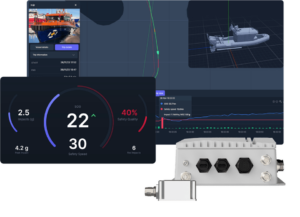
The rise of autonomous ships and AI technology: The use of autonomous ships are becoming increasingly more popular, with drones being used to facilitate inspections and surveillance, enhancing search and rescue operations. AI technology and navigation systems are helping to reduce human error on board vessels and improving overall safety.
Advanced communication systems: Satellite communication systems ensure reliable, high-speed internet for better coordination and emergency response. IoT (Internet Of Things) devices enable real-time monitoring, enhancing decision-making and safety.
Enhanced navigation and collision avoidance systems: Modern ships use advanced radar, sonar, and Automatic Identification Systems (AIS) for better situational awareness and collision avoidance, leveraging AI and machine learning for early warnings.
Cybersecurity measures: As operations digitise, advanced cybersecurity technologies, including firewalls and encryption, protect against cyber threats. Industry standards and crew training are helping to bolster these defences and ensure maximum protection against outside threats.
Remote maintenance and predictive analytics: IoT sensors and predictive analytics enable early detection of issues and proactive maintenance, enhancing reliability and reducing downtime.
Training and simulation technologies: VR and AR simulations offer realistic training environments, improving crew preparedness and reducing human error.
These innovations demonstrate the maritime industry’s commitment to safety and sustainability, paving the way for a safer and more efficient future. There are a number of companies who are leveraging this advanced technology, to lead the way in offering solutions for issues like those presented in the US Coast Guard Report.
Example of an organisation solving maritime issues
The Hefring Marine Intelligent Marine Assistance System (IMAS) is an advanced safety and navigation solution designed to enhance maritime operations.IMAS uses real-time data and machine learning to monitor and analyse vessel performance, providing guidance on optimal speed and routing to improve safety and efficiency. It helps to reduce the risk of accidents by alerting operators to potential hazards and ensuring compliance with maritime regulations.
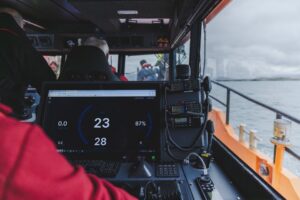
The system also offers detailed reports and analytics, enabling operators to make informed decisions and maintain high safety standards. IMAS is particularly beneficial for commercial vessels, recreational boats, and maritime training programs, aiming to create a safer and more efficient marine environment. The IMAS Helm, an onboard digital assistant powered by Artificial Intelligence, stands as a beacon of maritime advancement. Its hardware-enabled Software-as-a-Service (SAAS) model boasts a multitude of benefits, including:
-
Real-time decision-making support for enhanced safety and navigation
-
Remarkable reductions in fuel usage and CO2 emissions by up to 20%
-
Reduction of wave slamming impacts by an impressive 70%
-
Substantial reductions in insurance premiums, averaging around 20%
-
Increases vessel lifespan through continuous monitoring and condition assessments
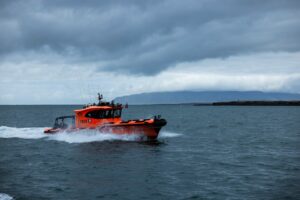
The IMAS Console offers an innovative solution for comprehensive vessel fleet management and analytics. Crafted to empower owners, operators, and managers with cutting-edge tools, this platform ensures efficient fleet operations, real-time monitoring, and data-driven decision-making. The IMAS system’s seamless integration is facilitated by the Control Unit and Sensor unit, making installation a breeze for most professional vessels.
IMAS’s solution to the problem
When considering the US Coast Guards report, a link can be made between the problems identified and the solutions that the IMAS system has to offer. Each problem highlighted can be fully rectified and solved, via the implementation of the IMAS System on board the vessels, through the following;
-
Operator inattention and improper lookout: IMAS enhances situational awareness by providing real-time data and alerts, ensuring operators remain attentive and vigilant.
-
Operator inexperience: The system offers guidance and training support, helping novice boaters navigate safely and confidently.
-
Excessive speed: IMAS monitors and advises on safe speeds based on conditions, preventing accidents caused by speeding.
-
Machinery failure: By continuously monitoring engine and system health, IMAS can predict and alert operators to potential mechanical issues before they lead to accidents.
Through the use of its AI-driven technology, Hefring Marine stands at the forefront of the solutions needed for the current issues presented in the maritime industry. With the system’s frequent updates and ever growing features, the IMAS is always in the know with the latest offerings, ensuring the safety of all owners.



Related News.

Navigating the Multi-Orbit Era: In Conversation with Intellian’s Jon Harrison at SMM 2026
At SMM 2026 in Hamburg, the rapid evolution of maritime satellite communications took centre stage. Across the exhibition halls, discussions among…

Cyprus ports need joint energy and investment strategy, shipping agents chief says
Cyprus needs a coordinated strategy for shipping, energy and environmental protection to support port investment and modernisation, Cyprus shipping…

MASO Public Affairs introduces MASO Regulatory Intelligence
A new subscription service helping businesses understand what is changing and what it means for them MASO Public Affairs introduces MASO Regulatory…

Anglo-Eastern helps turn CMBTECH’s ammonia ambition into an operational reality
From early feasibility study and risk-based design to newbuilding supervision, crew readiness and technical management, Anglo-Eastern drew on its…

Escalation of attacks threatens to derail recovery in Middle East oil exports
World oil demand is forecast to fall by 2.5 mb/d y-o-y in 4Q26 and 2.6 mb/d on average in 2026. As the Iran war manifests itself through restricted…

New study finds shipping pays twice its share to EU ETS earmarked revenues should triple to help build market for sustainable fuels and technologies
Shipping is responsible for around 10% of EU ETS emissions but pays almost 20% of the ETS bill. Unlike other sectors, it has never received free…

MSARC strengthens maritime mass rescue readiness through training and national live exercise off Dakar, Senegal
Joint MSARC–FHAS programme combines three days of SAR training with a national multi-agency live exercise The Maritime Search and Rescue Council ,…

Sogese report deliveries are still being delayed as container freight rates fluctuate
FOR IMPORTERS Spot rates into the Mediterranean are back at January levels, Far East to Europe reliability sits at pandemic lows, and nearly…

Glencore begins trading on Australian Securities Exchange
Glencore has begun trading on the Australian Securities Exchange under the ASX code GLC. Gary Nagle, Glencore’s CEO, said it was an exciting day for…

BIMCO Shipping Number of the Week
Suez Canal container ship transits exceed 50% of pre-disruption levels "During the first two weeks of October, weekly container ship capacity…
Subscribe to our newsletter!
if you dont want to swim alone in the ocean of news, sign up for the newsletter, and you will receive daily all the important news of world shipping!
