Shipping’s readiness to adopt nuclear is advancing as new technology progresses and stakeholder momentum builds


Zero Carbon Fuel Monitor shows an upwards trend in the readiness of all nuclear technology types and the interventions required to improve maritime’s nuclear investment case.
New nuclear technologies are increasingly being considered and developed for shipping as defence and civil offshore applications underpin the case for their adoption.
In its most recent expert-led assessment of nuclear solutions in the Zero-Carbon Fuel Monitor, the Lloyd’s Register Maritime Decarbonisation Hub, a joint initiative between Lloyd’s Register and Lloyd’s Register Foundation, points to improvements in nuclear-power technology readiness levels with offshore applications increasingly being proven.
To reflect growing maritime industry focus, the Monitor now evaluates five nuclear technology categories up from three in 2023 with high temperature gas reactors and liquid metal cooled reactors joining pressurized water reactors (PWRS) micro-reactors (heat pipes), and molten salt reactors in this year’s assessment.
According to the Monitor, the advent of enhances the inherent level of safety in designs of onboard ship energy systems, helping to address public safety concerns. Further, technologies that can recycle the “spent fuel” from PWRs reduce the potential environmental impact of spent fuel disposal and the practicality of offshore refuelling has also been showcased with the first refuelling of a floating nuclear power station took place at the Akademik Lomonosov platform in November 2023.
However, despite these technological advancements, community readiness levels (CRLs) remain affected by public perception of the nuclear industry and investment readiness levels (IRL) are low due to uncertainties around the wider uptake of nuclear technologies in commercial shipping.
As more evidence from testbed technological solutions becomes available, uncertainties in operation, costs and safety aspects will diminish. Development of regulations have now also been initiated to facilitate the adoption of nuclear technologies in offshore application, further supporting advancement of investment and community readiness.
Amelia Hipwell, Decarbonisation Innovation Manager for the LR Maritime Decarbonisation Hub, said: “An inherent advantage of nuclear power as marine energy source is that nuclear-powered ships are able operate for many years without bunkering and could potentially even supply power to ports whilst docked. Commercial shipping has the opportunity to leverage an existing land-based nuclear production supply chain and decades of experience in nuclear power for deployment.”
“Therefore, from the technological perspective, the industry is making faster progress. It is now essential for the nuclear and maritime industries to collaborate in addressing issues that impact community and investment readiness, including regulatory uncertainties and overall negative public perception of security risk and safety of nuclear deployment in commercial shipping.”
Chirayu Batra, Chief Technology Officer, Lucid Catalyst, who contributed to the ZCFM nuclear assessment, said, “Nuclear power is a zero-carbon, reliable, and mature technology that has been in use for more than 60 years and has undergone testing and deployment in both commercial and defense applications within the maritime domain. We have therefore rated nuclear’s technology readiness level on the upper range for Pressurized Water Reactors (PWRs), as both the fuel and technology are already being used in floating nuclear power stations for supplying electricity offshore. The key challenge is to take that further step to develop nuclear solutions specifically for large scale commercial shipping.”
“We now have the opportunity to create an enabling regulatory framework to decarbonise maritime shipping with the help of nuclear, classification societies like LR have a key role to play in this process. The ZCFM is a great platform to enable more widespread public understanding of the readiness, benefits and challenges of adopting nuclear as a zero-carbon energy option in shipping.”



Related News.

Global study finds Cyprus ranks SEVENTH and set for $1.1 billion AI GDP boost
Cyprus beats India and New Zealand to come SEVENTH in major AI study – with potential €1.1 billion GDP boost and youth jobs opportunity Some 86% of…

Global shipping’s trillion dollar climate bill according to Zero Carbon Analytics
A new study by Zero Carbon Analytics finds that emissions from international shipping cost the global economy around USD 963 billion between 1990…

Keeping Children Safe Online at Sea Seafy® earns friendly WiFi Certification across 26 vessels
Seafy becomes Friendly WiFi’s first partner in the maritime sector, helping protect kids from harmful content online. Friendly WiFi is delighted…
ShipManager joins Star Information Systems to accelerate the maritime industry’s transition to cloud
CFARER, a DNV Company selects Star Information Systems as the longterm home for ShipManager and its cloud future Star Information Systems (Star)…

Seafarer experience must shape maritime technology, initial STEER Project report finds
New research finds technology can shift rather than remove risk as The Nautical Institute, with support from Lloyd’s Register Foundation, calls for…

New LR service targets cargo disruption when trade routes fail
New LR Advisory service helps ports, governments and logistics operators respond to disruption, protect critical cargo flows and strengthen trade…
DORIC WEEKLY INSIGHT 06 NOVEMBER 2026
Please find below the DORIC Market Insight for the week ending 06th November 2026. Weekly Report 06.11.2026
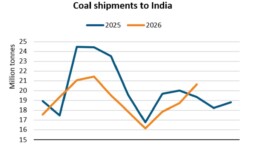
BIMCO Shipping Number of the Week
Coal shipments to India drop 7%, but limited recovery may lie ahead "Between January and October, coal shipments to India dropped 7% y/y due to the…
Hapag-Lloyd marks 20 years in South Africa and targets further growth
South Africa has become a cornerstone of Hapag-Lloyd's business in Africa Hapag-Lloyd surpasses 1 million TEU in Africa for the first time in its…
Subscribe to our newsletter!
if you dont want to swim alone in the ocean of news, sign up for the newsletter, and you will receive daily all the important news of world shipping!
