

The first week of July began on a positive note for the Capesize dry freight market, with rates for Brazil to North China reaching one of the highest points for the year, surpassing the previous peak recorded in week 10. This rise is particularly noteworthy as it coincides with a decreasing trend in the number of Capesize ballasters in Southeast Africa, which fell below the annual average at the end of June.
In our previous Weekly Market Monitor, we illustrated the relationship between the number of ballasters and the strengthening of the freight market on the C3 route. This analysis was supported by the Capesize Insights market report, which confirmed the firmness of the market in early July. The report highlighted how a reduction in the number of ballasters led to tighter vessel availability, which in turn drove up freight rates.
This relationship underscores the importance of supply dynamics in the Capesize segment. As fewer ballasters head to loading areas, the reduced supply can cause freight rates to climb, reflecting the supply-demand balance. Our data showed a noticeable decline in ballasters in the South Atlantic, aligning with the observed increase in freight rates on the C3 route from Brazil to China.
Additionally, there was an upswing in tonne-days demand growth just before the end of June. The improved supply-demand balance is now being reflected in the freight market with stronger momentum, although it remains to be seen how long this will last in the coming weeks of July.
Furthermore, improved factory output in China and hopes for more stimulus measures have supported a firmer market for iron ore prices. Last week, Beijing introduced measures to reduce the cost of buying homes, including cutting mortgage interest rates and lowering the minimum down payment ratio. As a result, iron ore futures prices rose on Monday to their highest levels in nearly two weeks, buoyed by better-than-expected factory data from China and expectations of additional stimulus measures in the world’s second-largest economy later this month.
The most-traded September iron ore contract on China’s Dalian Commodity Exchange (DCE) ended daytime trading 2.5% higher at 840 yuan ($115.58) per metric ton, the highest level since June 18. The benchmark August iron ore on the Singapore Exchange was nearly 1.7% higher at $108.4 per ton as of 0707 GMT, marking the highest point since June 20.
In June, the Caixin/S&P Global manufacturing purchasing managers’ index (PMI) rose to 51.8 from 51.7 in May, marking the fastest pace since May 2021 and surpassing analysts’ forecasts of 51.2. This positive manufacturing data, coupled with the anticipated economic measures, suggests continued strength in the market for the near term.
SECTION 1/ FREIGHT – Market Rates ($/t) Mixed
‘The Big Picture’ – Capesize and Panamax Bulkers and Smaller Ship Sizes
In the first week of July, the dry bulk freight market experienced gains, driven by a significant boost in Capesize rates for the Brazil to North China route. Meanwhile, the sentiment in the smaller vessel size categories remained relatively steady.
Capesize vessel freight rates shipments from Brazil to North China remained rose $32 per ton, reflecting a notable 35% increase from a comparable week a month ago.
Panamax vessel freight rates from the Continent to the Far East dropped to $40 per ton. Despite this decline, recent data shows these rates are still 29% higher than those recorded a year ago.
Supramax vessel freight rates on the Indo-ECI route remained steady at around $11 per ton throughout June and the first days of July. This represents a 37% increase compared to the same period last year.
Handysize freight rates for the NOPAC Far East route have remained consistent over the past seven weeks, holding steady at approximately $36 per ton. This marks a notable 36% increase compared to rates observed one year ago.
SECTION 2/ SUPPLY – Ballasters (# vessels) Decreasing
Supply Trend Lines for Key Load Areas
In early July, there has been a notable decrease in the number of ballast ships in the Cape SE Africa segment, while signs of an increase have been observed in the Panamax segment. In contrast, for the smaller vessel size segments, this week’s indications show a decrease in Supramax SE Asia and Handy NOPAC.
Capesize SE Africa: The number of ballast ships has dropped to nearly 90, down approximately 50 from the peak observed nearly six weeks ago.
Panamax SE Africa: The number of ballast ships has fetched the annual average of 138 , approximately 16 vessels more than two weeks ago and about 40 vessels lower than the peak observed in week 20.
Supramax SE Asia: The count of ballast ships has consistently remained below the annual average of 103 since the end of week 24. The lowest point was recorded in week 21, with the number standing at 94. Recent figures show the count dropping to 98, with a trend suggesting a further decrease in the coming days of July.
Handysize NOPAC: Following a decline noted in week 25, there has been a modest upward trend in the number of ballast vessels, approaching 70. This marks an increase of about 9 compared to the previous week, yet still nearly 10 vessels fewer than the annual average.
SECTION 3/ DEMAND – Tonne Days Increasing
Summary of Dry Bulk Demand, per Ship Size
In the first week of July, the outlook for dry tonne days has shown significant improvement across all vessel size categories. Particularly notable is the increase in the Capesize segment, which stands out compared to the lows recorded six weeks ago.
Capesize: Recent estimates of tonne-day growth have validated the optimism seen since the end of June, reaching levels not seen since the peak observed in week 14.
Panamax: Although tonne-day growth appeared to plateau before the end of June, recent developments have shown a renewed increase, signaling optimism for July regarding tonne-day growth.
Supramax: The growth rate continued the upward trend observed in the previous two weeks, improving from the low point recorded at the end of week 21.
Handysize: The upward trend in the Handysize vessel segment has continued since the end of week 22, reaching a new peak that appears to be one of the highest points since the end of week 13.
SECTION 4/ PORT CONGESTION – No of Vessels Decreasing
Dry bulk ships congested at Chinese ports
In the first week of July, Chinese dry bulk port congestion levels showed signs of decreasing, with a more pronounced decline observed in the smaller vessel size segments compared to the larger categories.
Capesize: Capesize ship congestion has decreased to 111, marking a drop of nearly 10 compared to levels observed just a week ago.
Panamax: The number of Panamax vessels dropped below the 230 mark, nearly 14 fewer than the previous week.
Supramax: Congestion levels remained steady at the 270 mark, consistent with the previous week. This represents an increase of about 20 compared to six weeks ago.
Handysize: Congestion levels continued their upward trend from the previous week, settling nearly below 190. This marks an increase of 7 compared to levels observed one week ago.
Source: Signal Group, By Maria Bertzeletou, Signal Group,



Related News.
Global study finds Cyprus ranks SEVENTH and set for $1.1 billion AI GDP boost
Cyprus beats India and New Zealand to come SEVENTH in major AI study – with potential €1.1 billion GDP boost and youth jobs opportunity Some 86% of…

Global shipping’s trillion dollar climate bill according to Zero Carbon Analytics
A new study by Zero Carbon Analytics finds that emissions from international shipping cost the global economy around USD 963 billion between 1990…

Keeping Children Safe Online at Sea Seafy® earns friendly WiFi Certification across 26 vessels
Seafy becomes Friendly WiFi’s first partner in the maritime sector, helping protect kids from harmful content online. Friendly WiFi is delighted…

ShipManager joins Star Information Systems to accelerate the maritime industry’s transition to cloud
CFARER, a DNV Company selects Star Information Systems as the longterm home for ShipManager and its cloud future Star Information Systems (Star)…

Seafarer experience must shape maritime technology, initial STEER Project report finds
New research finds technology can shift rather than remove risk as The Nautical Institute, with support from Lloyd’s Register Foundation, calls for…

New LR service targets cargo disruption when trade routes fail
New LR Advisory service helps ports, governments and logistics operators respond to disruption, protect critical cargo flows and strengthen trade…

DORIC WEEKLY INSIGHT 06 NOVEMBER 2026
Please find below the DORIC Market Insight for the week ending 06th November 2026. Weekly Report 06.11.2026
BIMCO Shipping Number of the Week
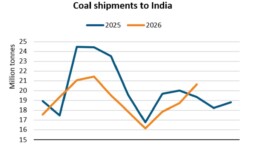
Coal shipments to India drop 7%, but limited recovery may lie ahead "Between January and October, coal shipments to India dropped 7% y/y due to the…

Hapag-Lloyd marks 20 years in South Africa and targets further growth
South Africa has become a cornerstone of Hapag-Lloyd's business in Africa Hapag-Lloyd surpasses 1 million TEU in Africa for the first time in its…
Subscribe to our newsletter!
if you dont want to swim alone in the ocean of news, sign up for the newsletter, and you will receive daily all the important news of world shipping!
