Trauma from Red Sea attacks adds to seafarer shortage

When a missile fired by Yemen’s Houthi Islamists landed near his ship in the Red Sea, Costas Rassias vowed to stop sailing through the perilous waters.
“I froze,” said the Greek 34-year-old second class marine engineer, describing the close call. “I weighed what was more important – my life, or a better income?”
As attacks on merchant ships by the Iran-backed Houthis persist, traumatised seafarers are refusing to sail through the Red Sea, according to interviews with more than 15 crew members and shipping industry officials.
That’s another staffing headache for an industry already facing a shortage of seafarers worldwide, with ranks having shrunk after COVID kept seafarers on board for months and the war in Ukraine posed dangers in the Black Sea.
“Seafarers are less and less keen to willingly sail through that region and it is becoming a bigger challenge now,” an industry source with knowledge of the crisis said.
Houthis first launched drone and missile strikes in the key waterway in November in what they say is solidarity with Palestinian militants in Gaza. In over 70 attacks, they have sunk two vessels, seized another and killed at least three seafarers.
The Greek-owned Tutor coal carrier attacked in the Red Sea on June 12 has sunk, salvagers confirmed on Wednesday. The UK-owned Rubymar sank on March 2.
Container ship sailings through the Red Sea dropped 78% in May compared with a year ago, analysis from logistics platform project44 shows, as companies choose to go around Africa, raising costs and extending voyages.
“My answer is very clear: No,” said Rassias, when asked if he would go back again. He is a member of Greece’s marine engineers’ union PEMEN.
“We urge our members not to give in to pressure, to put their safety and lives first and demand not to work in war zones at any cost.”
ROCKETS FLY
Charles Watkins, CEO and clinical psychologist at Mental Health Support Solutions, has met 40 seafarers from two ships that sailed through the Red Sea. Many have experienced trauma and some are considering leaving the trade.
“There can be sleep disturbances, nightmares, they can be easily startled, they can be stressed, they can develop a sudden urge not to eat anything anymore,” Watkins said.
Most ships have deployed armed guards on board to help defend crew during potential attacks, but crew themselves are rarely trained or equipped for conflict.
“The majority of merchant ship crews have no military training whatsoever,” said John Pavlopoulos, head of Sea Guardian, whose armed guards have made thousands of crossings through the area. “The slightest explosion disconcerts them, stresses them out.”
Boris Basenko, Ukrainian captain of the Greek-owned bulk carrier Zografia which was struck by a rocket this year near Yemen, said he doubts he will sail again through the region.
“Rockets fly into my home city every day but I was caught by a rocket a few hundred miles away” from Ukraine, he said. “Almost everyone from my crew at that time did not want to return to the Red Sea.”
Johnrhez Balboa, a 26-year-old engine cadet from the Philippines on his first nine-month stint at sea, was aboard the first vessel to pass through the Red Sea last December after another ship, the Galaxy Leader, was hijacked. His crew maintained a “pirate watch”, scanning the water for hijackers.
“We were afraid and anxious,” he said “Guarding our ship was scary.”
Mariners have support if they choose not to go, said John Canias, head of maritime operations with the International Transport Workers’ Federation (ITF), the leading seafarer’s union.
The nearly 360,000 seafarers covered by an ITF agreement worldwide have the contractual right to refuse to sail in designated war zones and demand repatriation at the shipowner’s expense. In April, one such zone in the Red Sea, known as a “warlike operations area”, was expanded at ITF’s request, Canias said.
“Many shipowners are now more reluctant to sail through the area as they simply don’t want to put seafarers’ lives on the line,” he said.
GROWING DEMAND
Over 80% of global trade is shipped by sea and an estimated 1.8 million seafarers service ships, with growing shortages of qualified mariners.
Some 18,000 additional officers would need to join each year to meet demand, according to the most recent seafarer workforce report published in 2021. Thousands of higher level officers are needed to service the 80,000-strong ocean-going fleet.
Some Greek captains have already requested to be transferred to other vessels to avoid the Red Sea, a union official said. At least four Greek companies have in recent months decided not to cross the area, company officials said.
“We don’t like to profit off the pain of others. We won’t send our ships there,” said George Logothetis, executive chairman of privately owned U.S.-headquarteredLibra Group.
Other companies are reviewing each case separately, weighing the risks for crews and vessels.
Rene Kofod-Olsen, CEO of V.Group, one of the world’s biggest ship management and crewing companies, said their managed fleet’s crossings have declined since the beginning of the conflict.
He said in the instances where their ship owner clients have opted to sail through, “we give our seafarers the opportunity to not proceed and we can change crew.”
Source: Reuters reported by Renee Maltezou and Jonathan Saul, additional reporting by Neil Jerome Morales in Manila and Yannis Souliotis in Athens and edited by Edward McAllister and Peter Graff



Related News.

Global study finds Cyprus ranks SEVENTH and set for $1.1 billion AI GDP boost
Cyprus beats India and New Zealand to come SEVENTH in major AI study – with potential €1.1 billion GDP boost and youth jobs opportunity Some 86% of…

Global shipping’s trillion dollar climate bill according to Zero Carbon Analytics
A new study by Zero Carbon Analytics finds that emissions from international shipping cost the global economy around USD 963 billion between 1990…

Keeping Children Safe Online at Sea Seafy® earns friendly WiFi Certification across 26 vessels
Seafy becomes Friendly WiFi’s first partner in the maritime sector, helping protect kids from harmful content online. Friendly WiFi is delighted…

ShipManager joins Star Information Systems to accelerate the maritime industry’s transition to cloud
CFARER, a DNV Company selects Star Information Systems as the longterm home for ShipManager and its cloud future Star Information Systems (Star)…

Seafarer experience must shape maritime technology, initial STEER Project report finds
New research finds technology can shift rather than remove risk as The Nautical Institute, with support from Lloyd’s Register Foundation, calls for…

New LR service targets cargo disruption when trade routes fail
New LR Advisory service helps ports, governments and logistics operators respond to disruption, protect critical cargo flows and strengthen trade…

DORIC WEEKLY INSIGHT 06 NOVEMBER 2026
Please find below the DORIC Market Insight for the week ending 06th November 2026. Weekly Report 06.11.2026
BIMCO Shipping Number of the Week
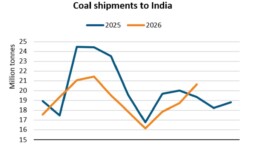
Coal shipments to India drop 7%, but limited recovery may lie ahead "Between January and October, coal shipments to India dropped 7% y/y due to the…

Hapag-Lloyd marks 20 years in South Africa and targets further growth
South Africa has become a cornerstone of Hapag-Lloyd's business in Africa Hapag-Lloyd surpasses 1 million TEU in Africa for the first time in its…
Subscribe to our newsletter!
if you dont want to swim alone in the ocean of news, sign up for the newsletter, and you will receive daily all the important news of world shipping!
