

European Union countries approved a law on Monday to impose methane emissions limits on Europe’s oil and gas imports from 2030, pressuring international suppliers to cut leaks of the potent greenhouse gas.
Methane is the main component of the natural gas countries burn in power plants and to heat homes. It is also the second-biggest cause of climate change after carbon dioxide, and fuels global warming when it escapes into the atmosphere from leaky oil and gas pipelines and infrastructure.
EU countries’ agriculture ministers – who, in common with all ministers, have the power to approve laws on any topic – gave their governments’ final approval to the policy at a meeting in Brussels, meaning it can now enter into force. Only Hungary voted against it.
From 2030, the EU will impose “maximum methane intensity values” on fossil fuels placed on the European market. The European Commission will design the exact methane limits by that date.
Importers of oil and gas that flout the limit could face financial penalties.
The import rules are likely to hit major gas suppliers such as the U.S., Algeria and Russia. Moscow slashed deliveries to Europe since its 2022 invasion of Ukraine and has since been replaced as Europe’s biggest pipeline gas supplier by Norway, whose supply has among the world’s lowest methane intensity.
The Biden administration – which alongside the EU has rallied countries to cut methane emissions by 30% by 2030 to limit climate change – has welcomed the EU’s methane law.
The U.S. last year set out its own rules requiring oil firms to limit their methane emissions.
From 2027, the EU will also require that new import contracts for oil, gas and coal can only be signed with foreign producers that follow methane emissions reporting rules equivalent to those of the EU.
Those rules include that European producers must regularly check their operations for leaks of methane, on timelines ranging from every four months for LNG terminals to every three years for energy infrastructure below the seabed.
The EU policy also bans most cases of flaring and venting, when oil and gas companies intentionally burn off or release unwanted methane into the atmosphere.
Source: Reuters reported by Kate Abnett



Related News.
RINA’s Hellenic Technical Committee puts energy-efficient newbuilding design and AI in focus
Project Mermaid, battery integration and practical AI applications highlight opportunities for more efficient ship design and fleet operations…
From mine to market – NORDEN connects Comilog’s manganese ore with global markets
NORDEN’s dedicated transhipment operation in Gabon, run under a long term contract with long-standing customer Comilog, has loaded more than 54…
Oldendorff reflags two capesize vessels to Germany
Oldendorff Carriers is reflagging two of its Capesize bulk carriers to Germany, underlining the company’s long standing ties to the country and its…
AskChief surpasses 100-vessel milestone in under a year and opens its specialised maritime AI to the wider market
Putting each company’s own knowledge to work for maritime Technical and HSQE teams. AskChief, Specialised AI for maritime Technical and HSQE…

Dalian Maritime University’s Yu Jiajia receive 2027 IMO Gender Equality Award
From the bridge to the classroom, Ms Yu has helped build a more inclusive maritime sector in China, serving as a role model for the global maritime…
“K” LINE releases video update on forecasts for FY2026 and progress of the medium-term management plan
Kawasaki Kisen Kaisha, has released a video on its official website explaining its forecasts for FY2026 and progress of its Medium-Term Management…
 …
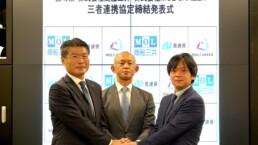
MOL and MOL CAREER sign 3-way deal with Nagasaki Prefecture to promote recruitment and retention of foreign workers
Mitsui O.S.K. Lines, and MOL CAREER, have entered into a tripartite partnership agreement with Nagasaki Prefecture to promote the revitalization of…
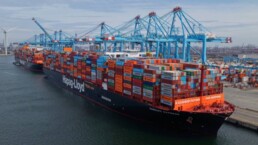
Hapag-Lloyd completes acquisition of 25% stake in APM Terminals Maasvlakte II
Transaction successfully completed following antitrust approval Investment strengthens Hapag-Lloyd’s terminal portfolio and position in Rotterdam…
11th chainPORT annual meeting at Tanger Med Focuses on scaling AI in ports
Representatives from leading ports around the world gathered in Tangier, Morocco, on 29 and 30 October for the 11th chainPORT Annual Meeting, hosted…
Subscribe to our newsletter!
if you dont want to swim alone in the ocean of news, sign up for the newsletter, and you will receive daily all the important news of world shipping!
