Dry Bulk Equity Index Up 25.2% Year-to-Date Eclipsing the S&P 500 by Drewry
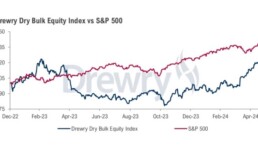
The difference in returns between the Drewry Dry Bulk Equity Index and the S&P 500 continues to narrow in 2024, showcasing the sectorial index’s outperformance. In YTD (ending 23 May), the Drewry Dry Bulk Equity Index rose 25.2%, surpassing the S&P 500’s 10.4% gain over the same period. This trend persisted into May 2024 (ending 23 May), with the sectorial index increasing 4.9%, slightly outpacing the S&P 500 index’s 4.6% rise.
All stocks of the Drewry Dry Bulk Equity Index rose in May with DS Norden being the top performer after increasing 15.6% due to its significant exposure to the product tanker market where freight rates increased during the month.
Dry bulk shipping companies delivered mixed results for 1Q24. Star Bulk and Golden Ocean recorded robust growth in revenue and profit thanks to high spot rates, with Star Bulk’s TCE revenue rising 25.3% YoY to USD 195.6mn and net income increasing 63.1% YoY to USD 74.8mn. Golden Ocean’s robust performance included a TCE revenue increase of 44.8% YoY to USD 195.3mn and a flip from a net loss of 8.8mn in 1Q23 to a profit of USD 65.4mn in 1Q24.
However, DS Norden’s results contrasted sharply. The company’s revenue and TCE revenue fell 8.5% YoY to USD 915.0mn and 15.0% YoY to USD 542.0mn, respectively while costs increased which together reduced EBITDA 55.9% YoY to USD 91.7mn, resulting in a significant drop of 58.7% YoY in its net income to USD 62.0mn.
Despite robust demand for coal at the beginning of summer, charter rates dipped at the start of April. This decline stemmed from a reduction in tonne-mile demand caused by the collapse of the Baltimore Bridge and the resulting closure of the Port of Baltimore.
Additionally, amid the ongoing crisis in the Suez Canal and transit restrictions in the Panama Canal, transits from the Cape of Good Hope have risen from 55% at the end of April 2023 to 77% at the end of April 2024. This has aided the tonne-mile demand for dry bulk vessels which along with increased demand for iron ore, coal and bauxite kept the charter rates elevated in 2024.
Asset prices have been rising due to limited availability in shipyards and the low orderbook-to-fleet ratio. Additionally, cash-rich shipowners anticipating rising charter rates this year are strategically acquiring young, fuel-efficient second-hand vessels to capitalise on improving earnings over the next few years. The price of five-year-old Capesize and Panamax vessels rose 23.2% and 8.9%, respectively, in 2024.
Source: Drewry Maritime Financial Research


Related News.

RINA’s Hellenic Technical Committee puts energy-efficient newbuilding design and AI in focus
Project Mermaid, battery integration and practical AI applications highlight opportunities for more efficient ship design and fleet operations…
From mine to market – NORDEN connects Comilog’s manganese ore with global markets
NORDEN’s dedicated transhipment operation in Gabon, run under a long term contract with long-standing customer Comilog, has loaded more than 54…
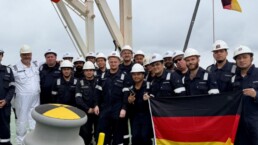
Oldendorff reflags two capesize vessels to Germany
Oldendorff Carriers is reflagging two of its Capesize bulk carriers to Germany, underlining the company’s long standing ties to the country and its…

AskChief surpasses 100-vessel milestone in under a year and opens its specialised maritime AI to the wider market
Putting each company’s own knowledge to work for maritime Technical and HSQE teams. AskChief, Specialised AI for maritime Technical and HSQE…

Dalian Maritime University’s Yu Jiajia receive 2027 IMO Gender Equality Award
From the bridge to the classroom, Ms Yu has helped build a more inclusive maritime sector in China, serving as a role model for the global maritime…
“K” LINE releases video update on forecasts for FY2026 and progress of the medium-term management plan
Kawasaki Kisen Kaisha, has released a video on its official website explaining its forecasts for FY2026 and progress of its Medium-Term Management…
 …
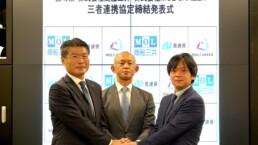
MOL and MOL CAREER sign 3-way deal with Nagasaki Prefecture to promote recruitment and retention of foreign workers
Mitsui O.S.K. Lines, and MOL CAREER, have entered into a tripartite partnership agreement with Nagasaki Prefecture to promote the revitalization of…
Hapag-Lloyd completes acquisition of 25% stake in APM Terminals Maasvlakte II
Transaction successfully completed following antitrust approval Investment strengthens Hapag-Lloyd’s terminal portfolio and position in Rotterdam…

11th chainPORT annual meeting at Tanger Med Focuses on scaling AI in ports
Representatives from leading ports around the world gathered in Tangier, Morocco, on 29 and 30 October for the 11th chainPORT Annual Meeting, hosted…
Subscribe to our newsletter!
if you dont want to swim alone in the ocean of news, sign up for the newsletter, and you will receive daily all the important news of world shipping!
