DNV study indicates high potential of hydrogen in the Northern Baltic sea region
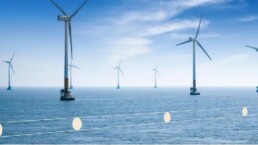

Finland could become an important hydrogen supplier for Germany, with a combination of offshore and onshore pipelines as optimal transport infrastructure
Not only the North Sea, but also the Baltic Sea region holds considerable potential to produce cheap, green hydrogen, which could be a significant contribution to the diversification of sources and energy independence in Europe. This is the conclusion of the new DNV study “Potential for a Baltic Hydrogen Offshore Backbone”.
The EU estimates the demand for climate-neutral hydrogen in 2050 at up to 2,000 terawatt hours (TWh). Part of this hydrogen could come from onshore wind farms in the Baltic Sea region. While the DNV Study saw high potential for offshore production of hydrogen in the North Sea (especially in areas more than 100 km from the coast), onshore hydrogen production in the Baltic Sea region is more favorable in neighboring countries.
Finland in particular could become an important hydrogen supplier: The export potential is 70 TWh of hydrogen per year in 2050, which corresponds to around 2.1 million tons of hydrogen. Due to its high proportion of renewable electricity in the power grid (compliance with RED III criteria), production costs (LCOH = levelized cost of hydrogen) of around 2.5 EUR/kg H2 can be achieved in Finland. In combination with favorable pipeline transport through the Baltic Sea, the system costs for green hydrogen are around 3 EUR/kg H2.
According to analyses conducted by GASCADE Gastransport, this would be half the cost assumed for hydrogen derivatives such as ammonia. Transported to Germany by ship, estimates here assume approx. 6 EUR/kg H2.

The study sees less production and export potential in Sweden, based on the current relatively low expansion targets for renewable energies in an already largely decarbonized environment.
The Baltic Sea region is favorable as a stable source not only from a geopolitical point of view: “If we know about such a large and comparatively inexpensive potential right on our doorstep, it would be criminal not to exploit it,” emphasises GASCADE Managing Director Ulrich Benterbusch regarding to the need for energy supply security in the emerging hydrogen market.

in the Baltic Sea region
An offshore pipeline connection between the production sources and Germany presents itself as a comparatively inexpensive alternative for transportation:
In view of the transport infrastructure and the expected volumes, the study recommends a combination of offshore and onshore pipelines to diversify the connection. An offshore pipeline starting in Finland can not only transport quantities of the green hydrogen produced there. It can also potentially collect the produced energy carrier along the route, for example on the Åland Islands, Gotland and Bornholm. The onshore route runs via the Baltic states and Poland.
Quantities from this import corridor could be transported in Germany via the hydrogen project Flow – making hydrogen happen. It is part of the German hydrogen core network and is set to go into operation in a first step in 2025.



Related News.
RINA’s Hellenic Technical Committee puts energy-efficient newbuilding design and AI in focus
Project Mermaid, battery integration and practical AI applications highlight opportunities for more efficient ship design and fleet operations…
From mine to market – NORDEN connects Comilog’s manganese ore with global markets
NORDEN’s dedicated transhipment operation in Gabon, run under a long term contract with long-standing customer Comilog, has loaded more than 54…
Oldendorff reflags two capesize vessels to Germany
Oldendorff Carriers is reflagging two of its Capesize bulk carriers to Germany, underlining the company’s long standing ties to the country and its…

AskChief surpasses 100-vessel milestone in under a year and opens its specialised maritime AI to the wider market
Putting each company’s own knowledge to work for maritime Technical and HSQE teams. AskChief, Specialised AI for maritime Technical and HSQE…

Dalian Maritime University’s Yu Jiajia receive 2027 IMO Gender Equality Award
From the bridge to the classroom, Ms Yu has helped build a more inclusive maritime sector in China, serving as a role model for the global maritime…
“K” LINE releases video update on forecasts for FY2026 and progress of the medium-term management plan
Kawasaki Kisen Kaisha, has released a video on its official website explaining its forecasts for FY2026 and progress of its Medium-Term Management…
 …
MOL and MOL CAREER sign 3-way deal with Nagasaki Prefecture to promote recruitment and retention of foreign workers
Mitsui O.S.K. Lines, and MOL CAREER, have entered into a tripartite partnership agreement with Nagasaki Prefecture to promote the revitalization of…
Hapag-Lloyd completes acquisition of 25% stake in APM Terminals Maasvlakte II
Transaction successfully completed following antitrust approval Investment strengthens Hapag-Lloyd’s terminal portfolio and position in Rotterdam…
11th chainPORT annual meeting at Tanger Med Focuses on scaling AI in ports
Representatives from leading ports around the world gathered in Tangier, Morocco, on 29 and 30 October for the 11th chainPORT Annual Meeting, hosted…
Subscribe to our newsletter!
if you dont want to swim alone in the ocean of news, sign up for the newsletter, and you will receive daily all the important news of world shipping!
