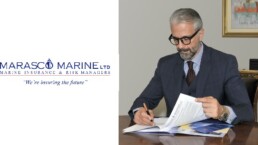

Mr Anastasios Maraslis, Founder and President/Director of Marasco Marine Ltd
As a marine risks manager and marine claims consultant with 33 years of experience, I have seen numerous cases where the concept of general average plays a pivotal role in the maritime industry. General average is a principle under maritime law where all parties in a sea venture proportionally share any losses resulting from voluntary sacrifices of part of the ship or cargo to save the whole in an emergency. However, disputes often arise regarding the seaworthiness of a vessel at the commencement of the voyage, particularly when machinery damage occurs.
Understanding General Average
General average requires that the loss or damage must be voluntary and extraordinary, and it must be for the common safety of the ship, cargo, and crew. In such instances, in a (GA) General Average, various parties or interests involved in the maritime adventure share the losses incurred from voluntary sacrifices made for the common safety during an emergency. The key parties or interests that participate in a GA contribution include:
- The shipowners: who contribute based on the value of the ship and any sacrifices or expenditures they incurred for the safety for the common safety.
- The owners of the cargo: being transported by the vessel and they contribute based on the value of the cargo saved and any sacrifices or expenditures made for the common safety.
- Charterers: in case the charterer has an interest on the cargo may also be required to contribute to the GA based on the terms of the Charter party agreement.
- Freight at Risk: The freight payable for the cargo being transported can also be considered as part of the General Average contribution. If the freight is at risk and has not yet been earned, it is included in the contribution.
- Crew: Crew Wages and maintenance of the crew during the period of the GA act are considered GA expenses. These costs are incurred to maintain the safety of the vessel and cargo and are thus shared among all GA participants and are included in the GA adjustment, although the crew does not contribute financially to the GA. Their efforts are crucial to the common safety of the vessel and cargo and voyage.
The Onus of Proof: Seaworthiness of the Vessel
The onus of proof regarding the seaworthiness of a vessel at the commencement of the voyage lies primarily with the shipowner. Seaworthiness implies that the vessel is adequately equipped, manned, and maintained to safely undertake the intended voyage. This encompasses the vessel’s hull, machinery, and all necessary equipment.
In the case where cargo interests are alleging unseaworthiness to avoid paying their contribution to general average, the shipowner must demonstrate that the vessel was seaworthy when the voyage began. The fact that a vessel was classed and maintained under class before and after the machinery damage strengthens the owner’s position but is not conclusive proof on its own.
Establishing Seaworthiness: Key Points
Class Certification and Maintenance Records:
Presenting class certification and maintenance records is crucial. These documents show that the vessel was inspected and deemed fit for service by a recognized classification society. Regular maintenance and inspection logs can demonstrate ongoing compliance with safety and operational standards.
Machinery Inspection and Repairs:
Detailed logs of machinery inspections and any repairs conducted prior to the voyage are essential. These records can substantiate that the machinery was in good working order at the start of the journey.
Crew Competence and Certification:
Proof of the crew’s qualifications and certifications, along with evidence of safety drills and operational training, can further establish the vessel’s seaworthiness. A well-trained and competent crew is a significant factor in maintaining seaworthiness.
Previous Cases and Precedents:
Citing previous cases where courts have ruled in favor of shipowners under similar circumstances can be persuasive. For example, in the case of The Good Luck, the court emphasized that regular class inspections and certifications were strong evidence of seaworthiness.
Expert Testimonies:
Obtaining expert testimonies from marine engineers, surveyors, and other relevant professionals can support the shipowner’s claim. Experts can provide independent assessments of the vessel’s condition and the adequacy of maintenance procedures.
Case Study: The Good Luck
In the landmark case of The Good Luck (1992), the court held that a vessel which had been regularly inspected and certified by a classification society was presumed to be seaworthy. The burden of proof shifted to the cargo interests to demonstrate any specific deficiencies that could have rendered the vessel unseaworthy. This case underscores the importance of thorough documentation and adherence to class standards.
In disputes over general average contributions, establishing the seaworthiness of a vessel at the commencement of the voyage is paramount. Shipowners must meticulously maintain records and documentation to discharge their burden of proof. Class certifications, maintenance logs, machinery inspection reports, crew qualifications, and expert testimonies collectively form a robust defense against claims of unseaworthiness.
By presenting comprehensive evidence and leveraging precedents like The Good Luck, shipowners can effectively counter claims from cargo interests and ensure fair contributions to general average.
Being proactive is part of Marasco Marine Ltd ‘s Risk Management and Risk Prevention Culture as it is always far more economical and time saving to maintain diligent records and act proactively managing your risks wisely by seeking expert guidance to navigate these complex waters successfully.
Source: MARASCO



Related News.
Hong Kong Global Maritime Trade Summit to return for third edition
The International Chamber of Shipping, in collaboration with the Transport and Logistics Bureau of the Government of Hong Kong and the Hong Kong…

Appetite for US crude oil exports climbs despite high freight
South Korea tops US crude destinations at 568,600 b/d VLCC rates to Asia double, closing arbitrage window European refining margins…
Shipping stocks Rally as Hormuz Traffic plunges 75%
Ship traffic through the Strait of Hormuz — a critical chokepoint handling about 20% of global crude oil and liquefied natural gas shipments — has…
Diana Shipping announces Time Charter Contract for m/v G P Zafirakis with Classic Maritime
Diana Shipping, a global shipping company specializing in the ownership and bareboat charter-in of dry bulk vessels, announced that, through a…
New IMO ESP Code framework for Remote Inspection Techniques
The International Maritime Organisation, through Resolution MSC.584(111) , has adopted amendments to the International Code on the Enhanced…

ABS opens Offshore & Marine Support Center in Bergen
ABS has expanded its capabilities in the Norwegian maritime market with the opening of a cutting-edge support center in Bergen, bringing advanced…
MOL holds giant step memorial ceremony and beach cleanup at Kashima Coast
Memorial and Reflection 20 Years After the Accident: Learning from the Past to Foster an Even Stronger Safety Culture Mitsui O.S.K. Lines, announced…

KEZAD-based Arabian Gulf Steel Industries achieves lowest verified Carbon Footprint for Rebar
CARES UK verified Environmental Product Declaration confirms 139 kg CO₂e per tonne for rebar produced at AGSI’s KEZAD Abu Dhabi facility Arabian…
Indian Register of Shipping announces launch of first fleet support ship INS Surya
Indian Register of Shipping continues to strengthen its role in supporting the Indian Navy and India’s naval shipbuilding capabilities through the…

VLCCs Climbing the Record Charts
LR2 The TC1 75kt MEG/Japan index decreased by only a single point this week to WS928. The corresponding Baltic round-trip TCE fell by $2,000 to…
Subscribe to our newsletter!
if you dont want to swim alone in the ocean of news, sign up for the newsletter, and you will receive daily all the important news of world shipping!
