Cabotage: Australia can issue substantial fines
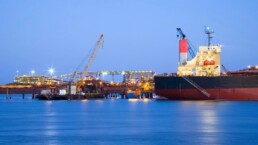

In a shipping context, cabotage refers to transporting goods/passengers between two ports or places within the same country by a vessel registered in another country. While the definition is the same around the world, specific cabotage laws and regulations can vary significantly between different countries.
Foreign ships may legally carry cargo from one Australian port to another (“Coastal Voyage”) provided that a Temporary Licence is obtained. In the liner trade, however, it may not always be obvious to owners that cabotage is being undertaken and they would rightfully expect that the charterers have arranged with the necessary licences. However, that may not always be the case. Owners should therefore, through their charter party clauses, ensure that they are not being exposed to additional liabilities because of the cabotage. Worst case, they could end up facing significant fines, as Gard’s correspondent Aus Ship recently warned.
Ensuring compliance in Australia
Licenses for Coastal Trading are regulated under the (Revitalising Australian Shipping) Act 2012 (Coastal Trading Act). Such licences are generally quite easily and commonly obtained by charterers and shipping agents. They can also be obtained by a sub-charterer or a sub-sub-charterer without informing the owner. More information about the licensing system can be found here.
Australian law requires a copy of the license to be displayed on board, but this can be difficult to comply with if sub-charterers have not informed the owner that such a license has been obtained.
Calculating the “Top Up”
The additional crew wages required during cabotage in Australia, known as a “Top Up”, are payable on the third and subsequent ‘Coastal Voyage’ conducted by a foreign ship within a 12-month period.
It is beyond the scope of this article to explain the detailed mechanics of the calculation. In theory it is easy – but practice tells a different story. It is best done using a spreadsheet or software because there are five calculations to be made for each individual seafarer’s circumstances. The wage rates change yearly. The latest version can be viewed here.
To calculate the top up amount to be paid to each seafarer, it is necessary to calculate the ‘raw’ total amount (based on amounts payable per Australian working day, over time, holiday pay and public holidays) and then subtract the seafarer’s usual pay.
Owners are required to have records on the ship for inspection that show 1) the amount of ‘top up’ wages paid to each crew member, and 2) evidence to show the ‘top up’ was actually paid. They must also provide each crew member with paperwork to show that the ‘top up’ has been paid.
Which voyages apply?
A coastal voyage is a voyage where the Sea Carriage Document (e.g. Bill of Lading, Waybill etc) is issued for cargo carried from one Australian Port to another. Transhipment cargo on container ships (transhipped at an Australian Port) is not a coastal voyage if the Sea Carriage Document names a foreign port as either Port of Loading or Port of Discharge.
A ship calling at a foreign port (such as a port in New Zealand) during a voyage around numerous Australian ports has started a ‘new voyage’ for the purposes of calculating whether the ship is on its ‘third or subsequent voyage’ and therefore whether the top up is payable. Likewise, if a foreign ship carries cargo from one Australian Port to another but failed to obtain a Licence, that also counts as a voyage.
Our advice
Whether owners or charterers should bear the risk of non-compliance will turn on the charterparty wording. The clear solution is at the fixture negotiation stage to either ensure that cabotage trade is expressly excluded under the charterparty terms or permitted only with owners’ consent in return for charterers assuming all administrative and financial burdens, backed up by an express indemnity. It would be a valid question, especially in the context of a long-term charter party, whether cabotage trading is expected and in which jurisdictions, so that the parties can ensure that the regulatory requirements are met and any financial or fiscal responsibilities are allocated clearly in advance.
Source: GARD



Related News.

RINA’s Hellenic Technical Committee puts energy-efficient newbuilding design and AI in focus
Project Mermaid, battery integration and practical AI applications highlight opportunities for more efficient ship design and fleet operations…
From mine to market – NORDEN connects Comilog’s manganese ore with global markets
NORDEN’s dedicated transhipment operation in Gabon, run under a long term contract with long-standing customer Comilog, has loaded more than 54…
Oldendorff reflags two capesize vessels to Germany
Oldendorff Carriers is reflagging two of its Capesize bulk carriers to Germany, underlining the company’s long standing ties to the country and its…
AskChief surpasses 100-vessel milestone in under a year and opens its specialised maritime AI to the wider market
Putting each company’s own knowledge to work for maritime Technical and HSQE teams. AskChief, Specialised AI for maritime Technical and HSQE…

Dalian Maritime University’s Yu Jiajia receive 2027 IMO Gender Equality Award
From the bridge to the classroom, Ms Yu has helped build a more inclusive maritime sector in China, serving as a role model for the global maritime…
“K” LINE releases video update on forecasts for FY2026 and progress of the medium-term management plan
Kawasaki Kisen Kaisha, has released a video on its official website explaining its forecasts for FY2026 and progress of its Medium-Term Management…
 …

MOL and MOL CAREER sign 3-way deal with Nagasaki Prefecture to promote recruitment and retention of foreign workers
Mitsui O.S.K. Lines, and MOL CAREER, have entered into a tripartite partnership agreement with Nagasaki Prefecture to promote the revitalization of…
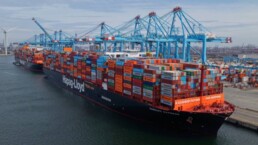
Hapag-Lloyd completes acquisition of 25% stake in APM Terminals Maasvlakte II
Transaction successfully completed following antitrust approval Investment strengthens Hapag-Lloyd’s terminal portfolio and position in Rotterdam…

11th chainPORT annual meeting at Tanger Med Focuses on scaling AI in ports
Representatives from leading ports around the world gathered in Tangier, Morocco, on 29 and 30 October for the 11th chainPORT Annual Meeting, hosted…
Subscribe to our newsletter!
if you dont want to swim alone in the ocean of news, sign up for the newsletter, and you will receive daily all the important news of world shipping!
