MOL, ITOCHU, HIF and JFE Steel sign MoU on establishing supply chain for synthetic fuel and CO2 Marine Transport using Green Hydrogen

Mitsui O.S.K. Lines, , ITOCHU Corporation , HIF Asia Pacific , a wholly owned subsidiary of HIF Global and JFE Steel Corporation announced an agreement to jointly conduct a wide-ranging feasibility study covering on carbon dioxide capture in Japan, shipping the CO2 to Australia, production and storage of synthetic fuel derived from the CO2 in Australia, and establishment of a comprehensive supply chain, including export of e-fuel from Australia.
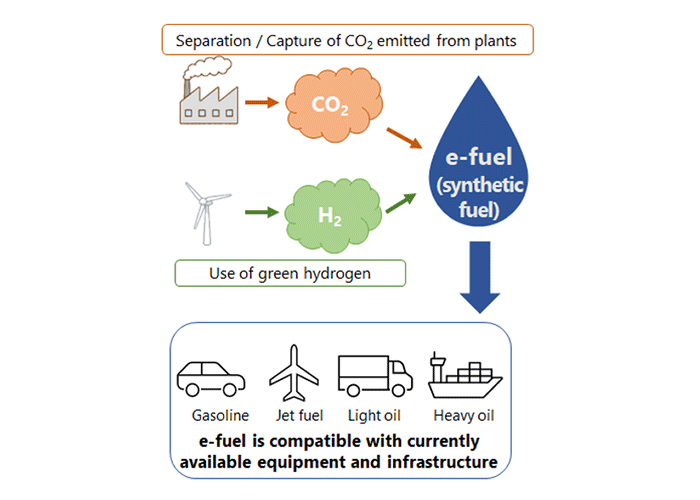
<Conceptual diagram of e-fuel production and supply chain>
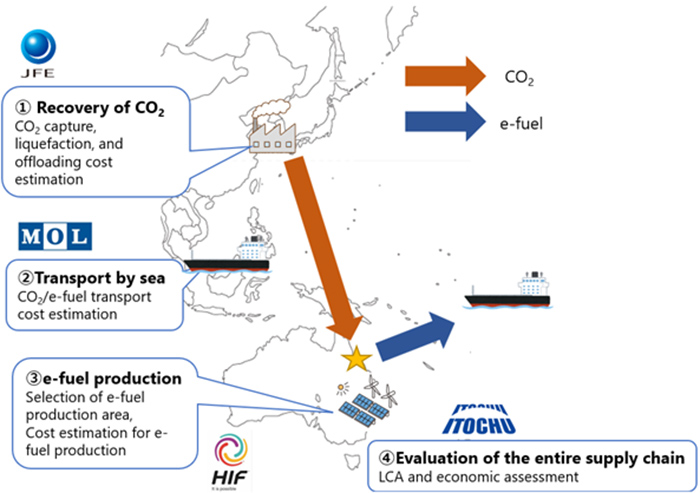
<Role of each company>
| Company Name | Business | Role |
| ITOCHU | Trading | Life Cycle Assessment (LCA)*1, economic evaluation, etc. |
| HIF | e-fuel business | Selection of e-fuel production area, e-fuel production cost estimation, etc. |
| JFE Steel | Iron manufacturing | CO2 separation/capture, liquefaction, and offloading cost estimation, etc. |
| MOL | Ocean shipping | CO2 and e-fuel transport cost estimation, study of marine transport, etc. |
The term “e-fuel” refers to liquid fuel produced by synthesizing hydrogen produced from renewable energy sources and CO2. The CO2 feedstock will be CO2 emitted from industries that will have difficulty achieving decarbonization through electrification, hydrogenation, and other means alone. A benefit of e-fuel is that it can use current infrastructure such as vessels, lorries, storage tanks, and fueling stations for transport and storage. In addition, e-fuel itself can be used to power automobiles, aircraft, and vessels without the need to modify or replace current equipment, so its use is expected to be an early decarbonization measure.
Leveraging their networks in Japan and overseas and the knowledge they have cultivated through business in Australia, MOL, ITOCHU, HIF and JFE Steel aim to establish an e-fuel supply chain, starting with a study of its use at JFE Steel, with an eye toward a decarbonized society.
*1 Life cycle assessment (LCA) is a method for quantitatively evaluating the environmental impact of a product throughout its life cycle (resource extraction, raw material production, product manufacturing, distribution/consumption, and disposal/recycling).



Related News.
Columbia Group calls for greater focus on retaining women at sea as second She Beyond Conference takes place
Columbia Group has called on the maritime industry to create a future where women can thrive, progress and lead at sea, as it celebrated the second…
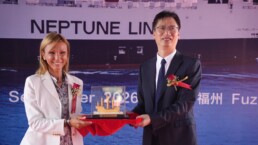
Neptune Group Welcomes “NIKOS TRAVLOS”
The new vessel proudly bears the name of Neptune's founder, who laid the foundation for the creation and enduring evolution of the Group. Her…

Wildcat Defense enters into exclusive agreement to acquire Fraser Shipyards
American family firm takes the next step in its strategy to rebuild U.S. shipbuilding and repair capacity, following its offer for Austal USA.…
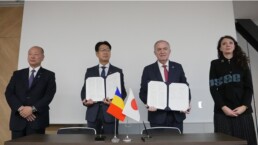
Kawasaki signs strategic partnership MOU with Romania’s Transgaz for Onshore Hydrogen Gas Transport
Establishing a model for large-scale hydrogen supply and transport via pipelines Kawasaki Heavy Industries, announced at the Romania–Japan…

UK P&I Club and TT Club secure regulatory approval for Thomas Miller acquisition
The UK P&I Club and TT Club announce the successful completion of their joint acquisition of the Thomas Miller Holdings group, marking a major…
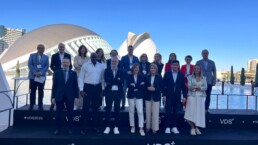
Valenciaport presents its Sandbox at PEIC’26 as a tool to bridge the gap between innovation and implementation
The opening session featured a discussion between Valenciaport President Mar Chao and Valenciaport Foundation Director Antonio Torregrosa. The…
Major investments strengthen Gothenburg RoRo Terminal
Expanded terminal areas, new rail connections and modernised quays are among the investments that have strengthened Gothenburg RoRo Terminal in…
ABP appoints key roles in the Humber
Associated British Ports has made two key appointments at its container terminals strengthening its unitised operations at the ports of Immingham…
Xinhua Silk Road 2026 North Bund Forum unveils 20 shipping-related achievements
The 2026 North Bund Forum opened in Shanghai on October 20 with 20 key shipping-related achievements spanning international cooperation, green…
Ports encouraged to prepare now for advanced nuclear in maritime and clean energy
New joint Lloyd’s Register and British Ports Association paper sets out a practical readiness pathway for ports considering nuclear-powered vessels,…
Subscribe to our newsletter!
if you dont want to swim alone in the ocean of news, sign up for the newsletter, and you will receive daily all the important news of world shipping!
