EasyJet takes to the skies with Iris: Next Generation Air Traffic Communications Service
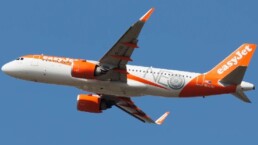

Ground-breaking Iris satellite-based datalink technology enters commercial service, enabling airspace optimisation to ease congestion and reduce delays and emissions for airlines
easyJet has taken to the skies as the first airline partner of the ground-breaking Iris programme, an initiative led by the European Space Agency (ESA) and global communications company Viasat, which is using the latest generation of satellite technology to help modernise air traffic management (ATM).
The EASA-certified Iris service provider ESSP has involved 15 leading Air Navigation Service Providers (ANSPs) in support of the first commercial flights taking place across Europe this year – with up to 11 easyJet Airbus A320neo aircraft taking part. This initiative is a European first in putting the Single European Skies initiative into action.
Through the use of Iris, easyJet will be able to operate its aircraft as efficiently as possible to achieve further fuel burn improvements and emissions reductions. More broadly, the programme will be a key component in helping deliver airspace modernisation across the industry.
Airspace modernisation and subsequent gains in efficiencies is one crucial element in the airline industry’s path to net zero. In 2022, easyJet announced its interim science-based carbon reduction target – 35% carbon emissions intensity improvement by FY2035, on a FY2020 baseline. This came as part of the airline’s commitment to achieve net-zero carbon emissions by 2050.
More efficient use of airspace is crucial for aviation to reduce emissions, as it is the most achievable source of carbon reductions right now. This is because more direct flight paths lead to shorter flying times, and thus use less fuel burn and generate fewer emissions. Achieving this will be critical to reaching the Single European Sky’s ATM Research (SESAR) ambition to deliver 10% carbon emissions savings from European aviation.
Iris represents an important technology evolution, delivering faster and more reliable satellite communications between the aircraft and the ground. This will help air traffic controllers and pilots to achieve further operational efficiencies, by calculating the shortest available routes, cruising at optimum altitudes, and using continuous climb and descent paths.
ESA has led and funded Iris with the aim of supporting the European Policy on Single European Skies through a solution that has full European coverage and is based on state of the art, highly secure, satellite communication mobile technologies. This has been carried out by ESA in full coordination with European aviation stakeholders, including the International Civil Aviation Organisation (ICAO), to ensure Iris is fully compliant with European and worldwide aviation needs and requirements. In order to achieve this goal ESA has set up a European industrial consortium of more than twenty companies, with Viasat (which recently acquired Inmarsat) as prime contractor.
Powered by Viasat’s award-winning SwiftBroadband-Safety (SB-S) connectivity platform, Iris paves the way for multilink data link communications – a cornerstone to implementing new ATM functionalities.
Offered as a fully developed and certified capability by Airbus on the A320 andA330 series aircraft, Iris shares trajectory and intent-based operational information, allowing airlines to avoid holding patterns, calculate the shortest available routes and optimum altitudes, and benefit from continuous climb and descent pathways.
Hugh McConnellogue, Director of Operations & Navigation at easyJet said:
“More efficient use of airspace is a critical way we can tackle the industry’s emissions right now. Adopting Iris technology on these aircraft will enable easyJet to fly more directly and efficiently, thereby reducing carbon emissions as well as enhancing our on time performance – which in turn improves our customers’ experiences.
“We’re thrilled to be paving the way in this area whilst working towards our goal to achieve our net-zero ambitions by 2050, as outlined in our roadmap.”
Charlotte Neyret, Chief Executive Officer, ESSP, said:
“These first commercial flights are bringing to reality a decade of both vision and investment in thisnew datalink communication solution to achieve safer and greener aviation. ESSP is delighted to operate this moment of synchronisation between all stakeholders, from industry to airlines, with the proactive contribution of numerous Air Navigation Service Providers. Thanks to all partners, ESSP is proud to provide Iris Satcom datalink service to Europe, as well as to initiate the Iris flights with a key airline such as easyJet. Iris technology allows the development of new environmentally friendly routes, which will improve ATC management, reduce fuel costs and lead to the deployment of more efficient air operations.”
Javier Benedicto, acting Director of Connectivity and Secure Communications, ESA, said:
“These first Iris commercial flights put Europe firmly at the forefront of the digitalisation and modernisation of Air Traffic Management. Iris enables tangible benefits to the commercial aviation community and society at large, including reduced emissions of carbon dioxide and fewer delays for passengers through more efficient flight paths.
“As a follow on of Iris, Iris global, which was launched in 2022, aims to extend the benefit of Iris beyond Europe. This will be achieved through geographical expansion, including Asia, the USA, the Middle East and Australia, and through service expansions by adding new ICAO aviation standards as well as new satellite-based communication solutions for supporting future air traffic management of Remotely Piloted Aircraft Systems. We are very proud to share this historic milestone for commercial aviation with the ESA Member States that have funded Iris activities and that will continue to support it in the future.”
Joel Klooster, SVP Flight Safety and Advanced Air Mobility (AAM), Viasat, said:
“We are thrilled to see Iris flying with a leading airline such as easyJet, a crucial step on our pathway to reducing emissions and easing congestion in European skies. We want to thank all the partners who played a part in achieving this long-term goal, and we look forward to seeing the results of these first commercial flights. Even more than that, we look ahead to the industry reaping the rewards of this innovation well into the future – and to passengers and airlines alike benefitting immensely.”
Source: https://www.easyjet.com



Related News.
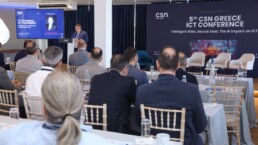
Intelligent Skies, Secure Seas: Navigating Connectivity, Cyber Resilience, and AI Liability at the 5th CSN Greece ICT Conference
The 5th CSN Greece ICT Conference, held on 19th November 2026 at the Ploes Floating Venue in Paleo Faliro, Athens, successfully convened maritime…

EU moves to ban tankers insured in Russia, repair services at Russian refineries
EU targets Russian-insured tankers, refineries Von der Leyen announces 22nd sanctions package All 27 member states must approve new…

IMO tackling fraudulent registries together
Strong national systems and international information sharing are crucial to tackling fraudulent registries and fraudulent ship registration…
Open letter on freedom of navigation and the protection of seafarers
Dear High Representative Kallas, Dear Foreign Affairs Ministers, European Shipowners | ECSA, BIMCO, the Cruise Lines International Association…

Davies Turner warns of Rising Asia-UK Container Disruption and European Port Congestion
Davies Turner, one of the UK’s largest independent freight forwarding and logistics companies, says that disruption to container shipments from Asia…

Disruptions still dominate tanker market outlook
"This year, tanker markets have been affected by disruption to transits through the Strait of Hormuz, the Houthi blockade of Saudi Arabian Red Sea…

Panama’s President called on to match COP31 Heroism with action at shipping climate talks
As a series of crucial meetings tasked with cutting greenhouse gas emissions from global shipping takes place this week and next, environmental NGOs…

Trafigura appoints Helio Cumbi as Executive Director, Mozambique
Trafigura has appointed Helio Cumbi as Executive Director, Mozambique, and Business Development Lead for East and Southern Africa Oil. Helio is a…

“K” LINE holds FY2026 Global Dry Bulk Meeting
Kawasaki Kisen Kaisha, announces that it held a global meeting for its dry bulk business at the company’s head office on November 9 and 10. The…
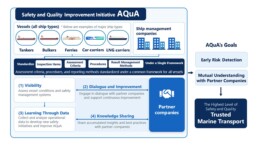
MOL launches ‘AQuA’ safety and quality improvement initiative
Standardizing Group-wide Safety and Quality Assessment Criteria to Enhance Vessel Safety and Quality Mitsui O.S.K. Lines, announced the launch of…
Subscribe to our newsletter!
if you dont want to swim alone in the ocean of news, sign up for the newsletter, and you will receive daily all the important news of world shipping!
