Oil tankers continue Red Sea movements despite Houthi attacks
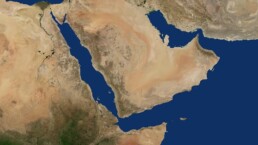

Oil and fuel tanker traffic in the Red Sea was stable in December, even though many container ships have rerouted due to attacks by Iran-aligned Houthi militants, a Reuters analysis of vessel tracking data showed.
The attacks have driven up shipping costs sharply along with insurance premiums, but have had less impact than feared on oil flows, with shippers continuing to use the key East-West passage. The Houthis, who have said they are targeting Israel-bound vessels, have largely attacked non-petroleum goods shipments.
The added costs have not made a big difference to most shippers so far because the Red Sea remains much more affordable than sending cargo around Africa. But the situation bears watching with some oil companies like BP and Equinor diverting cargoes to the longer route. Also, increased shipping costs are likely to boost exports of U.S. crude to some European buyers, experts said.
“We haven’t really seen the interruption to tanker traffic that everyone was expecting,” said Michelle Wiese Bockmann, a shipping analyst at Lloyd’s List.
A daily average of 76 tankers carrying oil and fuel were in the south Red Sea and Gulf of Aden in December, the area close to Yemen that has seen attacks. That was only two fewer than November’s average and just three below the average for the first 11 months of 2023, according to data from ship tracking service MariTrace.
Rival tracking service Kpler tracked 236 ships on average daily across all of Red Sea and Gulf of Aden in December, slightly above the 230 daily average in November.
The additional cost of sailing around the Cape of Good Hope off Africa rather than via the Red Sea would make voyages to deliver oil less profitable, she said.
“So, you’re going to try and go through”, she said.
Since the beginning of December, chartering rates have roughly doubled according to data from ship analytics firm Marhelm. It cost as much as $85,000 a day to ship oil on Suezmax tankers, which can carry as much as 1 million barrels. Aframax vessels, which can move 750,000 barrels, cost $75,000 a day.
Tanker traffic in the south Red Sea regionbriefly dipped between Dec. 18 and Dec. 22 when the Houthi group intensified attacks on vessels, averaging 66 tankers, but movements resumed after, according to MariTrace.
Container ship traffic in the area has fallen more sharply, down 28% in December from November, with steep declines in the second half of the month as attacks mounted, according to MariTrace.
“STILL TAKING THE RISK”
Several oil majors, refiners and trading houses have continued to use the Red Sea route, according to an analysis of LSEG data.
“Shippers and their customers really want to avoid a schedule disruption. So they are still taking the risk,” said Calvin Froedge, founder of Marhelm.
He noted that many oil tankers transiting the Red Sea were carrying Russian crude to India, which the Houthis have no interest in attacking.
The Chevron-chartered Delta Poseidon traversed the Suez Canal and Red Sea at the end of Decemberen route to Singapore, according to LSEG’s ship tracker.The Sanmar Sarod, chartered by Indian refiner Reliance, also crossed the Red Sea in late December to deliver gasoline components to the United States, data showed.
Chevron “will continue to actively assess the safety of routes in the Red Sea and throughout the Middle East and make decisions based on the latest developments,” a spokesperson said.
Reliance did not respond to a request for a comment.
Other tankers, chartered by trading house Gunvor’s unit Clearlake, Indian refiner Bharat Petroleum and Saudi Arabia’s Aramco Trading Company, have all navigated the route in recent weeks. The companies either declined to comment or did not reply to requests for comments.
Using the Red Sea can some 3,700 nautical miles off a trip from Singapore to Gibraltar.
SHIFTING FLOWS
Some companies such as BP and Equinor have paused all transits through the Red Sea and rerouted their vessels in the region.
Since the second half of December, at least 32 tankers have diverted or transited via the Cape of Good Hope, instead of using the Suez Canal, according to ship tracking service Vortexa.
The tankers that are diverting are mostly those chartered by companies who announced a pause on Red Sea movement, or those operated by US and Israel-linked entities, Vortexa added.
Fuel oil traders and bunkering sources in Asia said they were still monitoring Red Sea developments, though the East of Suez remains amply supplied for now so the current diversions are unlikely to boost prices.
East-to-west disruptions have mainly impacted European imports of diesel and jet fuel so far, Kpler data suggest. Meanwhile West to East diversions have impacted some European fuel oil and gasoline shipments to the Middle East, Asia-Pacific and East Africa, Kpler data shows.
Tensions there have also prompted more oil buyers to look to the U.S and likely played a role in the record 2.3 million barrels per day of crude exports to Europe in December, Matt smith, an analyst at ship tracking firm Kpler said.
“Ongoing uncertainty in the Red Sea is likely spurring on some modicum of European buying (of U.S. crude),” Smith said.
Source: Reuters reported by Georgina McCartney and Arathy Somasekhar in Houston; additional reporting by Robert Harvey in London and edited by David Gregorio



Related News.

RINA’s Hellenic Technical Committee puts energy-efficient newbuilding design and AI in focus
Project Mermaid, battery integration and practical AI applications highlight opportunities for more efficient ship design and fleet operations…
From mine to market – NORDEN connects Comilog’s manganese ore with global markets
NORDEN’s dedicated transhipment operation in Gabon, run under a long term contract with long-standing customer Comilog, has loaded more than 54…
Oldendorff reflags two capesize vessels to Germany
Oldendorff Carriers is reflagging two of its Capesize bulk carriers to Germany, underlining the company’s long standing ties to the country and its…

AskChief surpasses 100-vessel milestone in under a year and opens its specialised maritime AI to the wider market
Putting each company’s own knowledge to work for maritime Technical and HSQE teams. AskChief, Specialised AI for maritime Technical and HSQE…

Dalian Maritime University’s Yu Jiajia receive 2027 IMO Gender Equality Award
From the bridge to the classroom, Ms Yu has helped build a more inclusive maritime sector in China, serving as a role model for the global maritime…
“K” LINE releases video update on forecasts for FY2026 and progress of the medium-term management plan
Kawasaki Kisen Kaisha, has released a video on its official website explaining its forecasts for FY2026 and progress of its Medium-Term Management…
 …

MOL and MOL CAREER sign 3-way deal with Nagasaki Prefecture to promote recruitment and retention of foreign workers
Mitsui O.S.K. Lines, and MOL CAREER, have entered into a tripartite partnership agreement with Nagasaki Prefecture to promote the revitalization of…
Hapag-Lloyd completes acquisition of 25% stake in APM Terminals Maasvlakte II
Transaction successfully completed following antitrust approval Investment strengthens Hapag-Lloyd’s terminal portfolio and position in Rotterdam…
11th chainPORT annual meeting at Tanger Med Focuses on scaling AI in ports
Representatives from leading ports around the world gathered in Tangier, Morocco, on 29 and 30 October for the 11th chainPORT Annual Meeting, hosted…
Subscribe to our newsletter!
if you dont want to swim alone in the ocean of news, sign up for the newsletter, and you will receive daily all the important news of world shipping!
