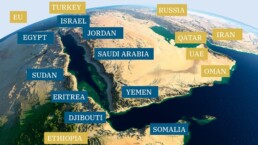

The logistics crisis originating from the Red Sea is posing a year-end threat to the global economy. Yemeni rebels supporting the Palestinian armed group Hamas persist in attacking civilian ships in the Red Sea, obstructing the shortest sea route between Asia and Europe. Consequently, international freight rates have surged, and previously stable international oil prices are experiencing fluctuations. Given the ongoing conflicts in the Middle East and Europe, the uncertain economic outlook raises concerns that the Red Sea crisis may trigger a recurrence of global supply chain disruptions and pose inflation risks.
The Red Sea serves as a crucial passageway for ships traveling between Asia and Europe via the Suez Canal. It is pivotal in facilitating 12% of global merchandise trade and accommodating 30% of maritime container traffic. Most oil and natural gas shipments from the Middle East to Europe and North America also traverse this route. Unfortunately, due to indiscriminate ship attacks by Yemeni rebels, nine out of the world’s top ten shipping companies, including the Korean shipping company HMM, have recently suspended transportation through the Red Sea. Consequently, most vessels are compelled to detour thousands of kilometers, circumventing the Red Sea and navigating past the Cape of Good Hope at the southernmost tip of the African continent.
In the aftermath of this crisis, global maritime freight rates, which had been exhibiting signs of recovery after the pandemic, surged three to four times within a week. Container shipping costs from China to the U.K. are reported to have increased more than fourfold. Global distribution companies, including IKEA, have anticipated delivery delays due to disruptions in logistics. The spike in sea freight rates has subsequently increased air and land freight rates. This implies that the longer the Red Sea crisis persists, the more pronounced the escalation in logistics costs may become, potentially exerting upward pressure on overall product prices and fueling inflation once again.
The domestic industry is already on high alert, especially concerning perishable goods, where domestic supply disruptions have become unavoidable due to transportation delays. Furthermore, the prices of agricultural products surged due to cold spells and heavy snowfall affecting the country, prompting an emergency response for food price management. Fresh food prices have witnessed a double-digit increase for two consecutive months, raising significant concerns about potential fluctuations in shopping basket prices due to supply disruptions in agricultural products caused by the cold wave.
The growth of the Core Consumer Price Index, excluding agricultural products and petroleum, recently dipped below 3%. However, this is not the time to ease concerns in price management. With supply chain risks persisting due to the ongoing conflict between the U.S. and China, the repercussions of the Middle East war have extended to the Red Sea logistics crisis, further unsettling the global economic security landscape. Therefore, our government and companies must develop a contingency plan for the worst-case scenario. As global logistics hubs continue to emerge as focal points of conflict, there is a pressing need to establish a system that constantly monitors the international trade situation and implements preemptive countermeasures.
Source: Donga



Related News.

RINA’s Hellenic Technical Committee puts energy-efficient newbuilding design and AI in focus
Project Mermaid, battery integration and practical AI applications highlight opportunities for more efficient ship design and fleet operations…

From mine to market – NORDEN connects Comilog’s manganese ore with global markets
NORDEN’s dedicated transhipment operation in Gabon, run under a long term contract with long-standing customer Comilog, has loaded more than 54…
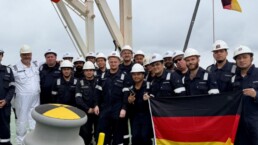
Oldendorff reflags two capesize vessels to Germany
Oldendorff Carriers is reflagging two of its Capesize bulk carriers to Germany, underlining the company’s long standing ties to the country and its…

AskChief surpasses 100-vessel milestone in under a year and opens its specialised maritime AI to the wider market
Putting each company’s own knowledge to work for maritime Technical and HSQE teams. AskChief, Specialised AI for maritime Technical and HSQE…

Dalian Maritime University’s Yu Jiajia receive 2027 IMO Gender Equality Award
From the bridge to the classroom, Ms Yu has helped build a more inclusive maritime sector in China, serving as a role model for the global maritime…
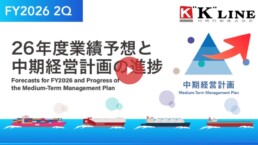
“K” LINE releases video update on forecasts for FY2026 and progress of the medium-term management plan
Kawasaki Kisen Kaisha, has released a video on its official website explaining its forecasts for FY2026 and progress of its Medium-Term Management…
 …
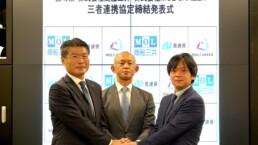
MOL and MOL CAREER sign 3-way deal with Nagasaki Prefecture to promote recruitment and retention of foreign workers
Mitsui O.S.K. Lines, and MOL CAREER, have entered into a tripartite partnership agreement with Nagasaki Prefecture to promote the revitalization of…
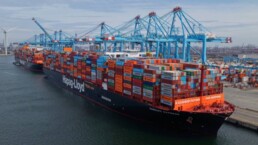
Hapag-Lloyd completes acquisition of 25% stake in APM Terminals Maasvlakte II
Transaction successfully completed following antitrust approval Investment strengthens Hapag-Lloyd’s terminal portfolio and position in Rotterdam…
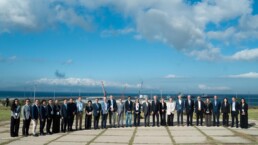
11th chainPORT annual meeting at Tanger Med Focuses on scaling AI in ports
Representatives from leading ports around the world gathered in Tangier, Morocco, on 29 and 30 October for the 11th chainPORT Annual Meeting, hosted…
Subscribe to our newsletter!
if you dont want to swim alone in the ocean of news, sign up for the newsletter, and you will receive daily all the important news of world shipping!
