Optimise quality control with next generation, real time industrial liquid process monitoring technology


Finnish deep tech company ColloidTek , has developed Collo Analyzer, a new method for real–time liquid process quality monitoring, offering significant benefits for the food and beverage manufacturing industry. Based on EMF sensors and machine learning, the technology detects various contaminants and identifies potential risks in liquid processing with a single real-time measurement and instant, in-line analysis. This novel solution has the potential to revolutionize liquid quality control by providing food and beverage manufacturers with comprehensive information about the quality of their products at any stage of production, ensuring the safety, quality and correct taste of the end-product
In liquid processing, for example, in the dairy industry, efficient quality control is critical. It is essential to confirm that there are no contaminants in milk batches, such as the remains of CIP chemicals. Traditionally, collecting samples for laboratory analysis has been time-consuming, leading to delays and potential product quality risks. In addition to the logistics of transporting the sample to the laboratory, manufacturers can expect to wait days for results. Meanwhile, the milk has often already been processed into end-products.
However, if a sample’s testing finds the batch to be potentially hazardous, the implications may be huge. Product recalls incur significant costs, from logistics and disposal to legal fees, fines, and refunds. Further to the immediate financial costs, the potential long-term consequences caused by damaged reputation and loss of consumer trust could be capable of crippling even a larger company. This is especially true in today’s digital age, where hazardous products can go viral in a matter of hours and cause lasting reputation damage, impacting sales and profits.
“It takes years to build a great reputation, but only a day to ruin it,” says Julia Vieira, Sales Manager at Collo. “Discarding a batch even partially for quality issues costs financially, but it is much worse if a poor batch slips out because you didn’t catch a problem. Recalling products is expensive and harmful to your reputation – especially if the mistake can lead to health concerns for the consumer. Gaining real-time eyesight into your process, across your production from raw material to finished product, can make a real difference.”
Even after addressing the quality control issues, companies may struggle to regain consumer trust and restore their brand image. Preventing such mistakes through rigorous quality control, adherence to regulations, and proactive risk management is essential to safeguard a company’s financial stability and reputation.
Real-time quality control for any liquid product
With the rise of advanced technologies, comprehensive quality control is easier and cheaper to achieve than ever before. Collo Liquid Analyzer is an efficient and reliable method to ensure companies meet their quality and safety requirements. Unlike traditional laboratory testing, the Collo Analyzer offers instant, in-line analysis of the quality of the liquid.
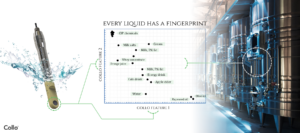
“Our solution fingerprints liquids and can detect nearly any change in any liquid,” explains Matti Järveläinen, CEO of Collo. “Collo’s strength is that it can detect various contaminants and risks from the food or beverage product with one single measurement. These include CIP chemical residues in the product, foreign objects like metal particles, cross-contamination, and even product taste or structure changes.”
Traditionally, quality control in the food and beverage industry is based on collecting samples and sending them to the laboratory, where the results arrive after several days or even weeks. In some cases, there aren’t even any tests available for detecting certain risks. With Collo, a test takes two seconds. The measurement can be done at the site manually by dipping the sensor into the product, or in-line straight from the pipe. There is no need to send samples anywhere; the results are instantly available. This is made possible by EMF technology and the advanced algorithms that power the analyzer, which is the only one of its kind in the food and beverage industry.
“The ‘fingerprint’ of a liquid is compared to what the client requires. If something is off, they know immediately and can take appropriate action. This reduces hazardous mistakes and poor-quality batches,” says Matti Järveläinen. “Our end goal is to give organizations the cost-effective tool they need to maintain strict quality control over their liquid processes.”
Simplified quality control for larger product portfolios
Due to increased consumer demand, companies must consistently monitor the quality of higher production volumes and larger plant-based product portfolios. While a diverse portfolio can offer market advantages, it also introduces a host of complexities and challenges for quality control. Larger product portfolios lead to increased numbers of quality control tests, and each product variant may have unique specifications, ingredients, and quality standards.
Most currently available systems can only analyze liquids with specific viscosity, transparency, or other characteristics. This often means several different analyzers and sensors are needed at each testing point, which leads to a complex multi-sensor system that is laborious to maintain and still doesn’t arm manufacturers with enough information for comprehensive quality control. As Collo Analyzer can be used with thick liquids, like honey, as well as transparent or non-conductive liquids, such as vodka or milk protein concentrate, only one device is required to measure the quality of all the liquids in the production.
The solution can simultaneously detect multiple risks or deviations, simplifying complex quality control processes by replacing other tests and covering aspects of safety and quality that no other analyzer can manage. This novel technology not only accelerates the quality control process but also empowers manufacturers to take immediate corrective actions when deviations are detected, reducing the risk of costly recalls and ensuring that every batch of products meets the highest quality and safety standards.



Related News.

Poland’s additional national requirements distort competition says Danish Shipping
Poland has introduced a national survey requirement for smaller foreign-flagged vessels operating in Polish waters. This creates significant…

Battery Vessels could help electrify most of Global Shipping Emissions
Battery-electric ships are economical only if the pack is cycled frequently, so they have been confined to short-sea, ferry and harbour vessels…

Mintra and Ledgid explore collaboration to connect Maritime digital identity, learning and workforce development
Mintra® and LEDGID are exploring opportunities to bring together complementary capabilities in digital learning, maritime training, professional…

World Shipping Council calls for global agreement on shipping emissions as industry investment surpasses $200 billion USD
The World Shipping Council (WSC) is calling on governments to agree on binding global greenhouse gas regulations for international shipping without…

What happened to the ITF whistleblower’s complaint?
In January 2026, a whistleblower complained that International Transport Workers’ Federation (ITF) General Secretary Stephen Cotton had manipulated…

Growing regulatory scrutiny puts seafarer wellbeing firmly on maritime safety agenda, VIKAND warns
Seafarer wellbeing is coming under greater regulatory scrutiny as international rules and guidance increasingly recognise crew health and welfare as…

Good Times Bad Times the Premium Stays with the Strait
In October, we wrote that if the transfer network off Oman kept pace, Gulf crude would carry China's refill and keep drawing tonnage east,…

Allied Weekly Market Review Week 47
Pls find below the Allied - Weekly Market Review - Week 47 ALLIED - Weekly Market Report- Week 47


Climate TRACE releases September 2026 Emissions Data
Climate TRACE reported that global greenhouse gas (GHG) emissions for the month of September 2026 totaled 4.7 billion tonnes CO₂e. This remains…
Subscribe to our newsletter!
if you dont want to swim alone in the ocean of news, sign up for the newsletter, and you will receive daily all the important news of world shipping!
