Training seafarers for a decarbonised future
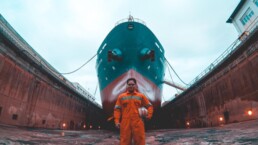

Maritime Just Transition Task Force collaborative project sets framework to equip seafarers with skills as shipping transitions to zero emissions.
A new training project will prepare seafarers for zero or near-zero emission ships, helping the global shipping industry decarbonize and ensure a just transition for seafarers.
Research commissioned by the Maritime Just Transition Task Force identified that 800,000 seafarers may require additional training by the mid-2030s in order to operate vessels run on zero or near zero emission fuels.
With seafarers at the core of the shipping industry, this training is vital to ensure a successful and just transition to a new shipping landscape. The training framework, funded through the International Maritime Organization (IMO) and Lloyd’s Register Foundation, will equip seafarers with skills in decarbonization, and provide guidance for trainers and the industry.
The project is being announced at the 2023 UN Climate Change Conference (COP 28), meeting in Dubai, United Arab Emirates, from 30 November to 12 December 2023.
Stephen Cotton, General Secretary of the International Transport Workers’ Federation, explains: “Seafarers are at the heart of the just transition needed in the shipping industry, and training the current and future workforce is crucial to ensure that workers’ expertise is front and centre as the industry transitions and decarbonizes. We have heard the message loud and clear from seafarers around the world, they are ready to lead, they are ready to shape the training frameworks for the zero carbon fuels of the future.”
Preparing the entire shipping industry for the green transition is essential. The 2023 IMO Strategy on Reduction of GHG Emissions from Ships sets a common ambition to reach net-zero GHG emissions from international shipping by or around 2050 (taking into account different national circumstances); and a commitment to ensure an uptake of zero or near-zero GHG emission technologies, fuels and/or energy sources to represent at least 5%, striving for 10%, of the energy used by international shipping, by 2030.
Kitack Lim, Secretary General of the International Maritime Organization, said: “The milestone adoption by IMO of the 2023 Strategy on the Reduction of Greenhouse Gas Emissions from Shipping shows the member States’ clear commitment to transitioning the shipping industry to a decarbonized future. To do this, we need to ensure no one is left behind and we need to commit to training the workforce so that they are ready. This collaborative project will help ensure a successful and equitable transition, harnessing the collective strength of the global maritime community.”
Ensuring a safe working environment for seafarers, as well as the effective management and operation of future technologies is at the heart of this project. The need for dedicated training has been identified by IMO and social partners. IMO is comprehensively reviewing and revising its key treaty for seafarer training, the International Convention on Standards of Training, Certification and Watchkeeping for Seafarers (STCW), with input from industry, and seafarers’ unions.
Ruth Boumphrey, CEO of Lloyd’s Register Foundation, comments: “Moving towards a low-emission future will require new green jobs and reskilling, and the global maritime industry is no different. Future alternative fuel technologies, such as hydrogen, ammonia and methanol, means there is a vital need to up-skill all seafarers. That’s why the work of the Maritime Just Transition Taskforce and its latest training framework is essential to ensuring seafarers have the right training and skills to work in a safe environment. It puts seafarers and communities at the heart of the solution as the industry works towards achieving its target for net zero emissions for shipping by 2050.”
The project will be run by IMO and the Maritime Just Transition Task Force Secretariat. Lloyd’s Register will develop the training framework for seafarers and officers, as well as an instructor handbook for maritime training institutions. The World Maritime University (WMU), an IMO global research, education and training institute based in Malmö, Sweden, will provide academic expertise. A large number of organisations are involved through a global industry peer learning group, which will provide important knowledge-sharing.
Once developed, the Baseline Training Framework for Seafarers in Decarbonization will be first tested out in Asia through a programme led by WMU, with support from the IMO Maritime Technology Cooperation Centre (MTCC) Asia and other partners. Training materials will be developed for all seafarers and for officers. The aim is to then expand testing of the package globally with all the established MTCCs and other appropriate organisations.
Guy Platten, Secretary General of the International Chamber of Shipping, said: “2030 is just around the corner and we cannot be complacent about the needs of our seafarers and the appropriate training being in place to support them during our transitioning sector. Without our people we have no industry so seafarers should always be at the forefront of every decision. As we move forward into Phase II of the Maritime Just Transition programme, we must now all continue to work together and further build on the strong relationships formed in Phase I to ensure that our seafarers have the training they need.”
This package will be available to IMO Member States, for potential use by maritime education and training (MET) institutes to develop their programmes, as appropriate. A ‘train the trainer’ programme will also be developed to assist METs further.
Sturla Henriksen, Special Advisor Ocean of the United Nations Global Compact, adds: “Decarbonizing shipping is essential to combat the climate crisis. The global nature of this transition means that no one is alone in tackling this issue and the Maritime Just Transition Task Force is committed to providing resources to support stakeholders making this journey.”



Related News.

OL Shipping Group in Tokyo: Capt. Eberhard Koch calls for realistic solutions to Maritime Decarbonisation
An intensive and engaging couple of days in Tokyo brought together leading figures from the international maritime community, providing a valuable…
Regatta for Peace one of the largest ever in Cyprus
Cyprus will host the first European stop on a global sailing journey leading up to the 2027 America’s Cup in Naples. More than 120 sailors…
The propulsion technology powering the marine energy transition
The marine industry is under increasing pressure to future-proof fleets, balancing the need to reduce emissions and improve efficiency. Propulsion…
Signal Ocean acquires Lgmar
Signal Ocean announced the acquisition of Lgmar, the Athens-based company behind Telix, a maritime email and communication platform in daily use…

Canada clean power push challenged by interprovincial grid limits, says GlobalData
Canada is entering a pivotal phase of power-sector expansion as federal tax credits, the phase-out of coal-fired generation, and accelerating…

Maritime safety depends on human factors and leadership, not procedures alone
Interim survey findings point to a gap between seafarers’ perceptions of risk and injury data Seafarers may misjudge when and where they are most at…

New BIMCO contracts tackle ship recycling and energy-saving retrofits
BIMCO adopted two new contractual solutions designed to help you manage important operational and regulatory challenges: the revised…
Stena Line to acquire vessel and make changes to its network
Stena Line has reached an agreement to acquire the RoRo vessel Somerset from CLdN. Subject to closure and transfer, the vessel would begin operating…

DORIC WEEKLY INSIGHT 16 OCTOBER 2026
Please find below the DORIC Market Insight for the week ending 16th October 2026. Weekly Report 16.10.2026

Important information for port clients and freight carriers effective November 1, a new traffic overpass and port checkpoint will open for traffic to the Port of Riga on Kundziņsala
Starting November 1 of this year, a new traffic overpass connecting Tvaika Street to Kundziņsala will open to facilitate traffic to and from the Port…
Subscribe to our newsletter!
if you dont want to swim alone in the ocean of news, sign up for the newsletter, and you will receive daily all the important news of world shipping!
