What to expect in 2024 – 5 trends in freight forwarding
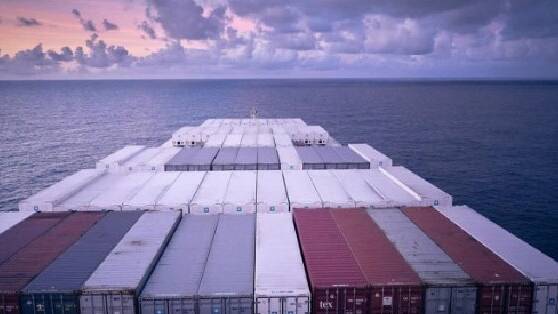

The world of freight forwarding is constantly evolving, driven by global economic shifts, technological advancements, and changing consumer expectations. In this article, we unpack five trends that will shape the future of freight forwarding in 2024 and beyond.
1. More capacity, but with demand volatility
The transport and logistics industry is facing a testing combination of declining demand for freight alongside increasing capacity. The international shipping association, BIMCO, estimates that global container volumes will increase by just 3% to 4% in 2024, while the global ocean fleet will grow by 7.8% to reach a record high of 2.7 million TEU . Meanwhile, the demand for air freight forwarding remains tepid though capacity increased by up to 9% in 2023.
The result of this scenario for freight forwarders is increased competition. Customer loyalty may waver meaning freight forwarders need to work harder to differentiate themselves in the market, for example through customer service and value-adding services. Operational efficiency will be equally important to maximize profitability. At the same time, rates will continue to be impacted as carriers compete for a smaller pool of cargo.
2. Climate change and geopolitical tensions loom large
Black swan events were one of the key trends for freight forwarders in 2023. In 2024, the focus will shift away from random, unexpected events, towards the disruptive forces of climate change and geopolitical unrest. These can affect supplies of resources, cut off transportation routes, interrupt production, and raise costs.
Research shows that natural disasters like droughts, hurricanes, and wildfires are becoming more frequent. In 2023 for example, low water levels affected traffic through the Panama Canal, as well as the Yangtze River in China, and the Rhine in inland Europe. In addition, global tensions, and conflicts around the world – both existing and emerging – have the potential to impact supply chain operations and investments. As the Economist Intelligence Unit notes, investments in supply chains will adapt to minimise political risks.
This state of play cements the need for freight forwarders to prioritise agility, flexibility, and visibility so that they are primed to anticipate challenges and are equipped to navigate supply chain disruptions quickly and effectively.
3. Waves of consolidation
The mergers and acquisition market in the freight forwarding sector has been increasingly active since the start of the pandemic and there are no signs of a letup in 2024. On the back of a series of acquisitions within the industry, The Loadstar predicted this will be ‘a year of consolidation’.
In a challenging market, the level of consolidation of smaller independent forwarders will likely reach new highs. On the one hand, enterprises without a niche will struggle to catch up to their bigger, more successful counterparts and lack the funds for key investments. On the other hand, bigger forwarders will seize the opportunity to acquire competitors and their accounts.
4. A true test of commitments to sustainability
2024 will be an important year for sustainability and the journey to decarbonise the transport and logistics sector. New reporting and disclosure requirements come into play in the European Union, with other jurisdictions on the path to following suit. The International Maritime Organisation is also expected to look more closely at the specifics of reducing greenhouse gas emissions in shipping.
Increasingly, businesses are committing to improve the sustainability of their supply chains. The world’s largest CEO study on sustainability conducted by the United Nations Global Compact and Accenture confirmed almost half of CEOs now see supply chain responsibility as part of their sustainability strategy. What remains to be seen is whether the momentum can be maintained in a difficult business environment. Will customers accept the added costs of sustainable logistics, and will freight forwarders prioritise working with carriers and agents committed to improving sustainability?
5. Digitalisation as a must-have
Digital freight forwarders have not lived up to the initial hype around their potential. Instead, 2023 saw most struggle to grow and maintain their profitability. However, what has come to light is the high importance of digitalisation for all freight forwarders. Either inspired by digital freight forwarders, or propelled by customer demands and a need for greater visibility, more of the traditional freight forwarders are investing in advanced technology solutions.
In recent years, many freight forwarders have implemented ‘track and trace’ capabilities and are increasingly catching up to the user friendliness of platforms offered by digital forwarders. This is likely to continue as freight forwarders recognise the need to offer the best possible digital services to secure new customers and keep existing ones.
Behind the scenes, digital tools are also key to maximising freight forwarders’ ability to anticipate and respond to crises, as well as to enable better decision-making and optimisation for sustainability. Digitalisation comes at a cost, yet most in the industry now agree it is imperative. According to Accenture research, 76% of freight and logistics companies felt that not focusing on building digital capabilities would ‘seriously endanger their business’.
The future of the freight forwarding industry
2024 will be a year of significant challenges for freight forwarders. They will have to withstand economic uncertainty, political instability, and technological disruption. At the same time, there will be the potential to benefit from new opportunities, again in the realm of technology, as well as in sustainability. Through strategic investment, careful planning, and prioritising resilience, freight forwarders can help maximise their potential for success.
Source: Maersk



Related News.

Cyprus Maritime Innovation takes Centre Stage at SMM Hamburg 2026
Underscoring its expanding role as a premier international hub for cutting-edge maritime technology and sustainable shipping, the Republic of Cyprus…

Trump seeks to refill US oil reserve with Venezuela deal but faces long delay
U.S. President Donald Trump said on the 30th (local time) that he would refill the U.S. Strategic Petroleum Reserve, which has been depleted with…
US Navy Official visits South Korean Shipyards in private
With U.S. President Donald Trump pushing a plan to allow overseas construction of U.S. warships, attention is focusing on whether the building of…

SES and De Boer Marine expand collaboration with FlexMaritime deployment across Global Markets
SES, a leading space solutions company, and De Boer Marine, a leading provider of top-quality marine equipment and maritime connectivity services,…

New ESG guidance to help maritime industry turn sustainability into commercial advantage
New framework helps shipowners and ports align ESG strategy with access to capital, charterer expectations and long-term asset value. Maritime…

Britannia P&I Club analysis finds four in five crew deaths linked to illness rather than accidents
New report highlights cardiovascular disease as leading cause of fatalities and raises concerns over mental health risks among younger seafarers.…

The Swedish Club launches new Loss Prevention podcast, Knot Another Lesson
The Swedish Club has launched Knot Another Lesson, a new podcast exploring the practical lessons, emerging risks and operational challenges shaping…

Lloyd’s Register appoints Jens Grunenberg as Senior Representative for Germany
Lloyd’s Register has appointed Jens Grunenberg as its Senior Representative for Germany, effective 1 September. Based in Hamburg, Grunenberg will…

Indian Register of Shipping sets sights on Hamburg for European Expansion
Indian Register of Shipping, a leading international classification society and full member of the International Association of Classification…
MOL completes Merger of 6 Ship Management Companies
Unifying Management of Over 200 Vessels and Strengthening Safety Mitsui O.S.K. Lines, announced that it has completed the integration of the MOL…
Subscribe to our newsletter!
if you dont want to swim alone in the ocean of news, sign up for the newsletter, and you will receive daily all the important news of world shipping!
