New safety study demonstrates value of live discharge testing for CO2 fire extinguishing systems
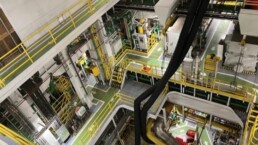

Global Survival Technology solutions provider Survitec released today the results of pioneering tests conducted on high-pressure CO2 fire extinguishing systems aboard three Floating Production Storage and Offloading vessels.
The full-release tests, believed to be the first to be conducted on vessels of this type and of such protected volume, confirmed the value to shipyards and ship operators of live testing to verify on-paper or on-screen predictions of fire system performance.
Michal Sadzynski, Product Manager, Survitec, said: “The important take-home for the industry here is that some of the protected spaces did not pass the tests the first time. This suggests there may be other vessels and offshore structures out there with potentially underperforming CO2 fire extinguishing systems in fire-critical areas such as switchboard rooms, engine rooms and generator houses.”
The tests were conducted as per NFPA’s (National Fire Protection Agency’s) NFPA12 Standard on Carbon Dioxide Extinguishing Systems, published in 2011, allowing a calculation-based prediction of system performance. This was upgraded by NFPA in 2018 to a much stronger standard and regulations advocating live, full discharge testing of all cylinders along with the constant monitoring of CO2 and oxygen concentrations over a 20-minute period in all protected spaces.
Survitec has designed and released a new set of test protocols (HPCO2) around the most recent annexes to the NFPA12 standard, with these initial tests on the three FPSOs conducted in a variety of scenarios and vessel operations from moored in the oil field to within the shipyard delivering the conversion.
“The devised live test comes as close as is practical to creating the demands of an actual fire aboard. On large vessels like FPSOs, it involves opening hundreds of cylinders – for example, in the engine room of one of these FPSOs, 315 cylinders were released,” revealed Sadzynski.
“We have found that the release of large amounts of highly pressurised gas into a partially closed space usually uncovers some engineering challenges within the protected space, rather than with the delivery system itself,” he said.
Survitec saw this most clearly in the switchboard room test aboard the first FPSO to be tested, where the space was gas-tight due to the unrelated system requirements for the air conditioning system.
During the live test, the rapid pressure increases in the space found the weakest point, which in this case was the door, causing damage. This damage reduced the gas integrity of the space, allowing CO2 gas to escape, leading to test failure.
On the second FPSO, another key finding was that a machinery space or compartment cannot always be assumed to be airtight. In one test, the gas collecting inside the space started to escape through leaks, leading to a drop in concentration and test failure.
As Sadzynski explained, “There are often relatively simple and inexpensive fixes in these scenarios. Overpressure in air-conditioned spaces can be resolved by implementing a time delay on one of the fire dampers. This allows over-pressurised gas to escape from the space and then closes when the pressure becomes stable, thereby keeping the CO2 concentration at the required level. This was the solution for the switchboard room on the first vessel to be tested.”
There is, of course, an expense associated with full-release testing as the CO2 cylinders are completely exhausted in the test and require replacement to recharge the system. Additionally, CO2 is not a human-friendly gas, so if the vessel is in operation, all personnel or crew need to be relocated to a safe space. But as Sadzynski acknowledged, the consequence of operating a system that fails to perform in a real-world scenario could be catastrophic.
“It is important to emphasise that designing a vessel is a highly complex process, encompassing hull structure, compartment layouts, ventilation systems and so on, which all interlink with the design of the fire suppression systems. As the build progresses, any amendments or deviations that are introduced can have unforeseen consequences that impact system performance – the most critical being the failure of a fire extinguishing system during emergency firefighting operations.
“This study shows very clearly the limitations of modelling the performance of a fire suppression system within a virtual environment at the vessel design stage versus a real-world test.”
“For safety-critical vessels in particular, such as FPSOs, tankers and gas carriers, we encourage shipyards and owners to consider additional safeguards, such as live discharge testing, as proposed in the new guidelines. The guidelines are there not only to protect lives better but also assets. The data collected from these tests are invaluable in helping us design even better and more efficient fire suppression systems.”



Related News.

Beyond Technical Skills: WISTA Cyprus explores the human side of leadership
WISTA Cyprus hosted The Art of Leadership & Emotional Mastery, an interactive workshop held on 15 October at the Alasia Hotel in Limassol,…
The human cost of sending merchant mariners into war zones extends far beyond the immediate danger of missiles and drones. It raises a harder question: who is really protecting the seafarer?
Who protects the seafarer? I have spent much of my professional life at sea. I am a Master Mariner. I have stood on the bridge, made decisions…
Loss of bridge control: Human failure is normal – context is key
When bridge control is lost in a functioning system, it can be easy to blame human error. But accidents rarely happen because of one mistake…
Danish Shipping announces the transport of live animals by sea new rules should improve safety for animals, seafarers and the environment
Revised rules on the transport of live animals by sea are being negotiated in the EU. Danish Shipping wants to ensure good animal welfare,…

Japan’s flawed shipping proposal leaves developing countries adrift
A new analysis by Opportunity Green warns governments of the wide-ranging risks posed by Japan’s proposal at the International Maritime Organization…

Intermodal Report Week 42 2026
Pls find below the Intermodal Report - Week 42 2026 Intermodal Report Week 42 2026

Allied Weekly Market Review Week 42
Pls find below the Allied - Weekly Market Review - Week 42 ALLIED - Weekly Market Report- Week 42
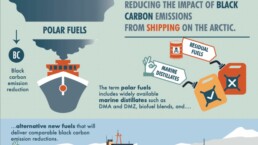
EU Arctic Strategy NGOs welcome EU ambition on on cutting shipping’s Arctic Black Carbon Emissions
Responding to today’s publication of the EU’s Arctic Strategy, which definitively states the EU’s intention to support International Maritime…
The final quarter of 2026 is expected to see softer bauxite flows
Chinese front-loading is expected to have run its course, pointing to softer bauxite flows in 2026 Q4. Global bauxite flows increased by 2.8% y/y…

DP World Foundation and Belewan new container terminal mark groundbreaking of AED 3.7 million school project in Indonesia
Classrooms of Hope initiative expands to Belawan, Medan with a new junior high school designed to provide modern learning facilities and greater…
Subscribe to our newsletter!
if you dont want to swim alone in the ocean of news, sign up for the newsletter, and you will receive daily all the important news of world shipping!
