How industry cloud builds on the past to invent a future where industries converge and boundaries disappear


Reading a recent headline in Computer Weekly, “How industry cloud platforms are shaping the future of business applications,” not only brought me back to when SAP first coined the term ‘industry cloud’ in 2020, it also affirmed that we didn’t just invent the term, we defined an entire movement.
Little did we know in 2020 how ubiquitous the term industry cloud would become across the business landscape, nor how prescient it would be in describing the collaborative, partnership-driven pathway to innovation that SAP, our customers, partners, and the entire business technology marketplace are taking.
Industry cloud has come a long way in just a few years, both as a concept and as a living, breathing business ecosystem here at SAP. In a recent survey, Gartner found that about 40% of enterprises had started adopting industry cloud platforms, with another 15% in pilots and 15% considering deployment by 2026.
Meanwhile, SAP’s industry cloud itself has produced more than 300 solutions, some coming from SAP, some co-innovated by SAP and a partner, and others developed by partners based on available APIs, with minimal or no involvement by SAP.
Before SAP’s industry cloud, there were SAP Industry Solutions. The common thread between the two is a focus on industry innovation – developing a portfolio of industry-specific solutions that help fuel business transformation for our customers. Only now, instead of taking it upon ourselves to build on-premise solutions for customers in the 25 verticals SAP serves as we would have before industry cloud came along, we’re working with partners by leveraging SAP Business Technology Platform (SAP BTP) to create a broad, diverse portfolio of extensible cloud-based solutions that can readily integrate with and augment the capabilities of the SAP suite. The solutions we’re seeing emerge from industry cloud combine SAP’s deep industry know-how with unique intellectual property, domain knowledge, and technology sourced from across the ecosystem. The result is a new application layer of next-practice solutions that can be easy for customers to consume and can add value to their business by filling a well-defined need in their digital transformation journey.
As an open, SAP-curated ecosystem, industry cloud represents a bold new way of doing business. Because customer and partner expectations are shifting, we recognized we needed to change along with them. In particular, we realized we needed to evolve to support emerging trends like industry convergence, where customers in specific industries are exploring different industries and new roles in the value chain and building new revenue streams around as-a-service business models. An industrial manufacturer pivoting to direct-to-consumer sales? A fertilizer producer developing soil or weather analytics services for farmers? A traditional oil and gas company moving into hydrogen or renewable energy? Industry cloud can give customers solutions to help make these types of transformations rapidly and successfully.
Even amid this mindset shift, some things haven’t changed, including SAP’s focus on innovating within industries and our commitment to giving customers the digital solutions they need to compete successfully in their industries. Now, however, we’re relying on partners and co-innovation to help us fill out the SAP portfolio and road map.
The collaborative mindset that drives industry cloud has fast become part of the cultural and business fabric of SAP. And it’s unlocking compelling – and, in some cases, unexpected – new possibilities for customers and partners alike. McKinsey noted in a recent study that “crises are adrenaline for innovation.” That’s certainly been the case lately, as I’ve watched the pace of innovation accelerate in industry cloud. Here, customers are using the ecosystem as a laboratory for testing ideas and use cases, with the ability to quickly scale up, market, and monetize those with the most promise. It’s creating opportunities and pivots that likely wouldn’t have been possible before, like taking a startup’s unique artificial intelligence (AI)-powered visual inspection technology and adapting it for use cases across multiple verticals, for example, or finding new ways to package warehouse-as-a-service or robotics-as-a-service to add value for customers.
I find developments like these especially exciting because they involve partnerships and collaborations that came together because of a partner-first mindset. This is the secret sauce for an ecosystem like industry cloud: it behaves organically and, with our partners as the catalyst, can produce outcomes and value for customers that we may never have envisioned.
Watching SAP, partners, and customers put their hearts and minds into writing new storylines around AI, the metaverse, fintechs, robotics, distributed energy, and other fast-emerging technologies is the best part of the work we do within SAP’s industry cloud. App by app, use case by use case, partnership by partnership, we are collectively bringing a bold new vision for the future of business technology to life for partners and customers. And we’ve only just begun to scratch the surface.



Related News.

Beyond Technical Skills: WISTA Cyprus explores the human side of leadership
WISTA Cyprus hosted The Art of Leadership & Emotional Mastery, an interactive workshop held on 15 October at the Alasia Hotel in Limassol,…

The human cost of sending merchant mariners into war zones extends far beyond the immediate danger of missiles and drones. It raises a harder question: who is really protecting the seafarer?
Who protects the seafarer? I have spent much of my professional life at sea. I am a Master Mariner. I have stood on the bridge, made decisions…

Loss of bridge control: Human failure is normal – context is key
When bridge control is lost in a functioning system, it can be easy to blame human error. But accidents rarely happen because of one mistake…
Danish Shipping announces the transport of live animals by sea new rules should improve safety for animals, seafarers and the environment
Revised rules on the transport of live animals by sea are being negotiated in the EU. Danish Shipping wants to ensure good animal welfare,…

Japan’s flawed shipping proposal leaves developing countries adrift
A new analysis by Opportunity Green warns governments of the wide-ranging risks posed by Japan’s proposal at the International Maritime Organization…
Intermodal Report Week 42 2026
Pls find below the Intermodal Report - Week 42 2026 Intermodal Report Week 42 2026
Allied Weekly Market Review Week 42
Pls find below the Allied - Weekly Market Review - Week 42 ALLIED - Weekly Market Report- Week 42
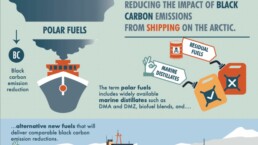
EU Arctic Strategy NGOs welcome EU ambition on on cutting shipping’s Arctic Black Carbon Emissions
Responding to today’s publication of the EU’s Arctic Strategy, which definitively states the EU’s intention to support International Maritime…
The final quarter of 2026 is expected to see softer bauxite flows
Chinese front-loading is expected to have run its course, pointing to softer bauxite flows in 2026 Q4. Global bauxite flows increased by 2.8% y/y…

DP World Foundation and Belewan new container terminal mark groundbreaking of AED 3.7 million school project in Indonesia
Classrooms of Hope initiative expands to Belawan, Medan with a new junior high school designed to provide modern learning facilities and greater…
Subscribe to our newsletter!
if you dont want to swim alone in the ocean of news, sign up for the newsletter, and you will receive daily all the important news of world shipping!
