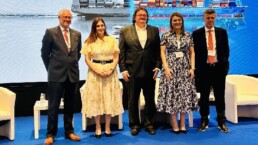

Highlights from day three of the Conference addressing the future trends and emerging markets, ship finance, maritime technology/safety, and the latest developments and dynamics in the cruising sector
Wednesday saw the third and final day of the “Maritime Cyprus 2023” Conference taking place at the Parklane Resort & Spa in Limassol. Themed Shipping in Action: An Agenda for Change, more than 900 shipping professionals from around the world, originating from more than 35 countries, attended the Conference, organized biennially in Cyprus. Panel discussions and a presentation explored how future trends and emerging markets are impacting shipping, the complexities of ship finance within the context of shipping’s current challenges, maritime technology and how it can improve safety at sea, and the shifting dynamics of cruising.
The opening presentation on day three “Exploring Future Trends and emerging markets for a dynamic and resilient shipping industry” was made by Mr Ben Nolan, Managing Director, Maritime, Rail, & Energy Infrastructure at Stifel. Discussing major factors currently impacting shipping, he explored populism, reshoring, the energy transition/decarbonization, evolving demographics and population centers, and higher interest rates/inflation.
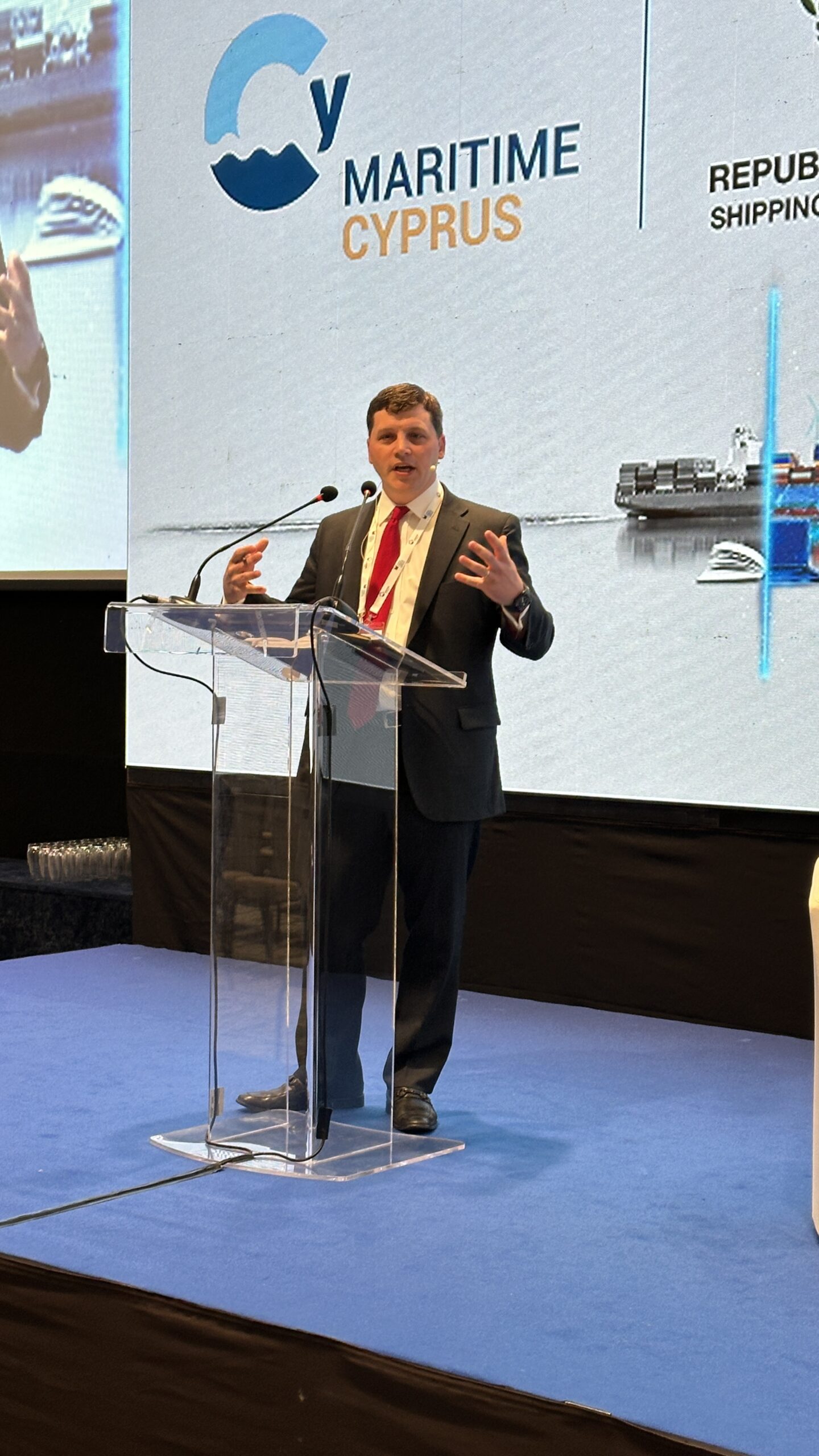
He explained that the world was entering another era of cyclical populism – noting how countries are becoming more insular, thus affecting ocean transportation. “Reshoring is becoming a major trend – for example, technology companies are moving manufacturing processes back to North America,” he said. On the energy transition, he observed how capital spending driving decarbonization was at an all-time high, with investment in clean electrification having increased substantially. Encouraging a more realistic perspective, he highlighted how “Anecdotally, there is a growing realization that decarbonization goals are going to be difficult to attain. And that is especially true in an environment where collaboration is lacking.” He called for an increased level of ‘energy realism’ – “We have a long way to go, and the idea that all of this can happen quickly is farcical. It’s noble and I certainly agree that we should be doing it, but the idea that it’s going to happen overnight is not realistic.”
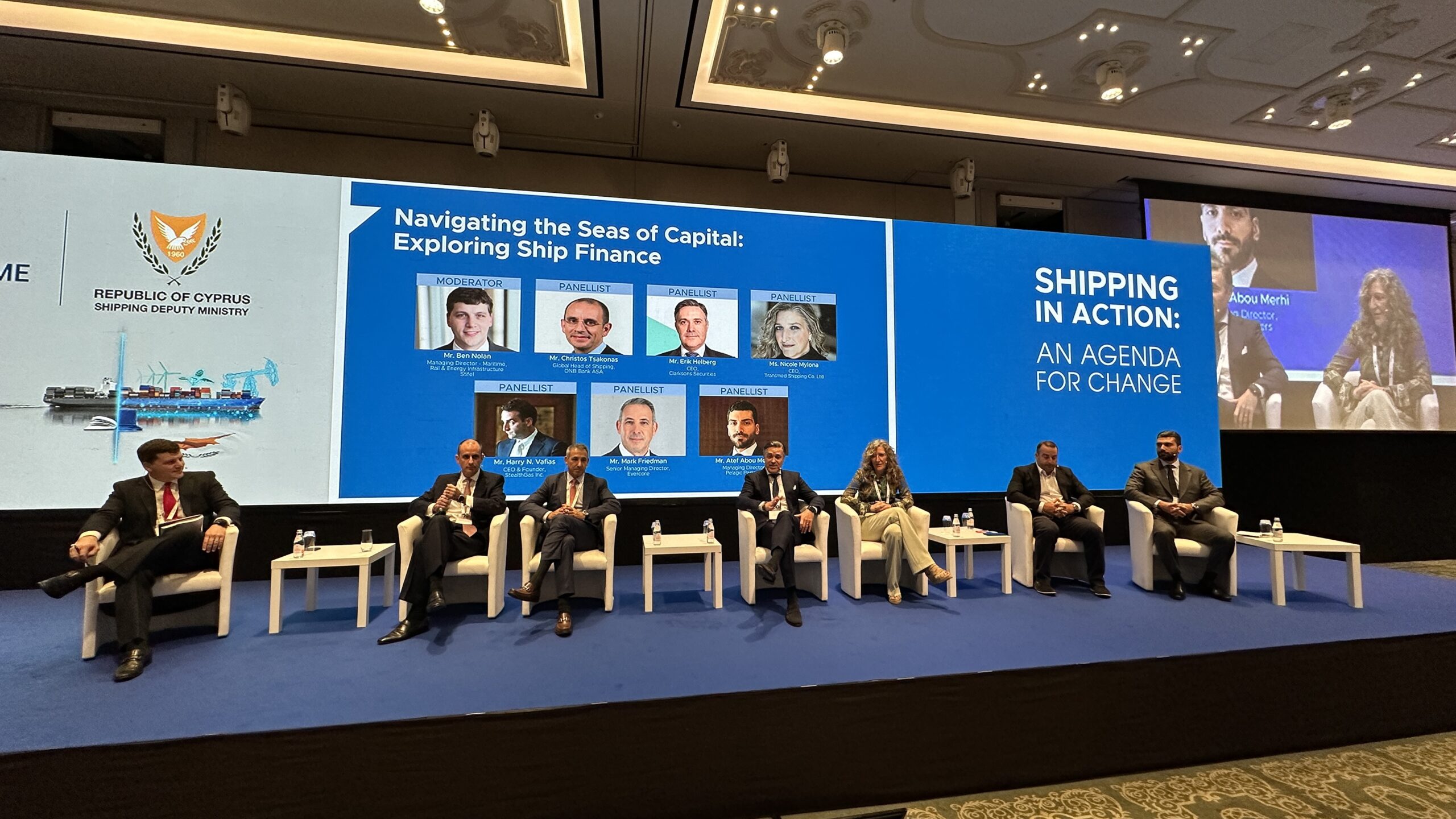
The first panel discussion, titled “Navigating the Seas of Capital: Exploring Ship Finance”, was moderated by Mr Ben Nolan, Managing Director, Maritime, Rail, & Energy Infrastructure at Stifel, and featured Mr Christos Tsakonas, Global Head of Shipping, DNB Bank ASA, Mr Mark Friedman Senior Managing Director, Evercore, Mr Erik Helberg, CEO, Clarksons Securities, Ms Nicole Mylona, CEO, Transmed Shipping Co. Ltd, Mr Harry N. Vafias, CΕΟ & Founder, StealthGas Inc., and Mr Atef Abou Merhi, Managing Director, Pelagic Partners. Discussion centered around the challenges faced by shipping when it comes to financing growth within the context of an uncertain future fuels landscape, geopolitical factors, and the pace of technological development.
“Investing across the cycles is challenging as it’s volatile,” said Mr Erik Helberg. “But we’re optimistic due to the supply side. At the right time, there are phenomenal returns to be made.” Supporting this, Ms Nicole Mylona said: “There is capital available for projects with good companies have proven track records with healthy balance sheets, and good, solid cash flow.” Conversation turned to the administrative burden that smaller shipping companies are facing to comply with the multitude of incoming regulations, noting that while the operating environment makes it hard for new players to enter the market, it is also increasingly difficult for smaller companies to survive. “It is likely we will see further consolidation,” Mr Erik Helberg continued, “If you can find a differentiator then there is still room for smaller companies, but it is more challenging than it used to be.” Mr Atef Abou Merhi noted how small companies are the cornerstone and backbone of shipping and will stay. “But there is more focus now on pools, for example, where we see consolidation on the commercial side. And smaller companies increasingly need support from ship managers,” he concluded. Mr Harry N. Vafias believes that owners with two to five vessels, often in dry bulk, will continue to win against the bigger players as the balance sheet is the most important element, with low leverage and a focus on OPEX. As conversation turned to competitiveness in shipping, Ms Nicole Mylona said: “We need competition – it’s what keeps us on our toes. If there are only a few large organizations controlling trade, this will impact safety, costs, everything.”
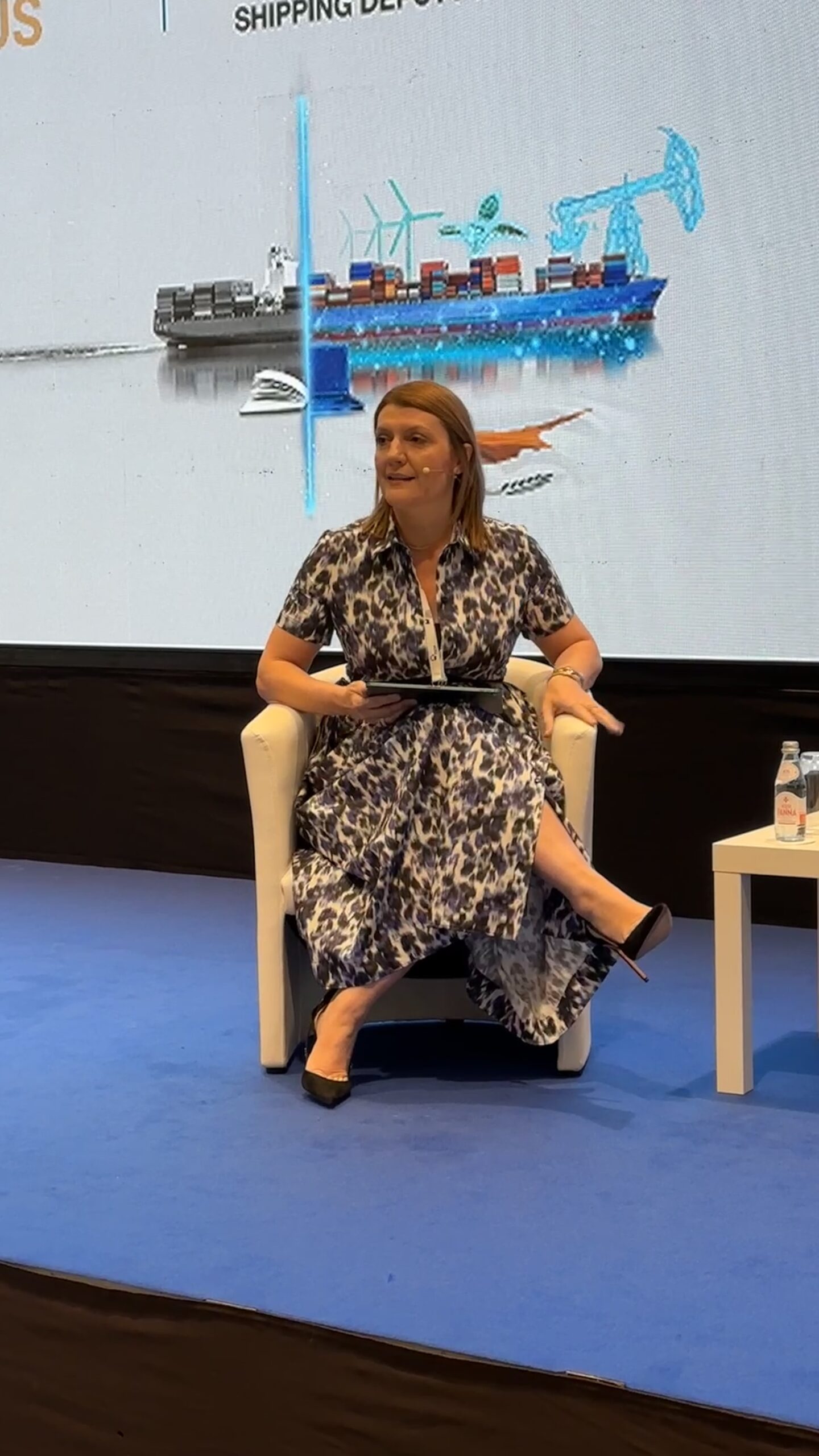
The second panel discussion, titled “The future seas: advancing maritime technology for enhanced safety”, was moderated by Ms Despina Panayiotou Theodosiou, Joint CEO, Tototheo Maritime, and featured Mr Peter Broadhurst, Senior Vice President Safety and Regulatory, Inmarsat Maritime, Capt. Piotr Rusinek, Master Mariner, DPA and Fleet Marine Superintendent, Intership Navigation, and Mr Erwin Derlagen, COO at ENESEL Limited. Conversation focused on how digitalization is ushering in the adoption of highly sophisticated technological advancements, designed to assist seafarers in the duties, and how – because of these technologies – potential impacts on jobs within the industry have become apparent. The panel engaged in a debate about the direction of change, reflecting on the path shipping has taken as an industry, the invaluable lessons learned, and the crucial questions and opportunities that lie ahead.
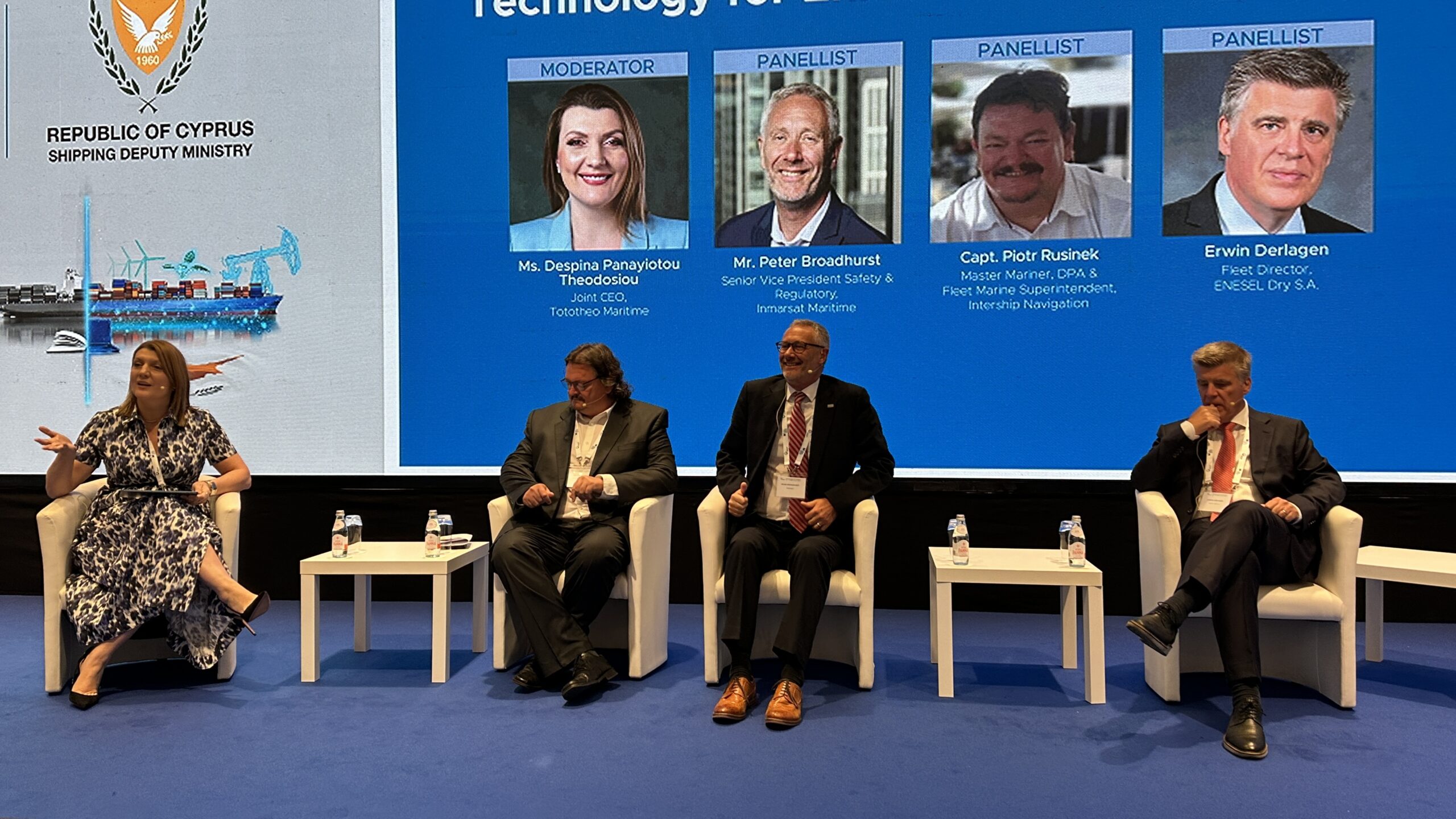
“The reality is, we do live in a connected world. The upcoming seafarers are used to that level of connectivity, and so we must embrace it – and use it to improve the safety of shipping,” said Mr Peter Broadhurst. Mr Erwin Derlagen highlighted the importance of training, citing the value of well-produced video content that can be delivered to and consumed by seafarers on vessels. “We really must change the culture around how we train our crews on board. We must distance ourselves from the old-fashioned style of training, where we simply tell people what to do and how to look at things. Instead, we need to listen to crew when they tell us where their shortcomings are and adjust our training strategy accordingly.” Ms Despina Panayiotou Theodosiou noted how the term ‘disruption’ has been replaced by ‘transition’ since the advent of the pandemic, marking a shift in focus to an internal drive for change, rather than external disruptive forces. The value of data was stressed by Mr Peter Broadhurst: “I don’t think we should restrict ourselves – there is more that can be done with this technology, even if that means the technology is monetized by other companies.” Mr Erwin Derlagen stressed that there were two important elements coming into shore-based decision making – “technology and the data made available by it, and crew, who remain the eyes and ears onboard vessels, offering uniquely human perspectives of onboard challenges.”
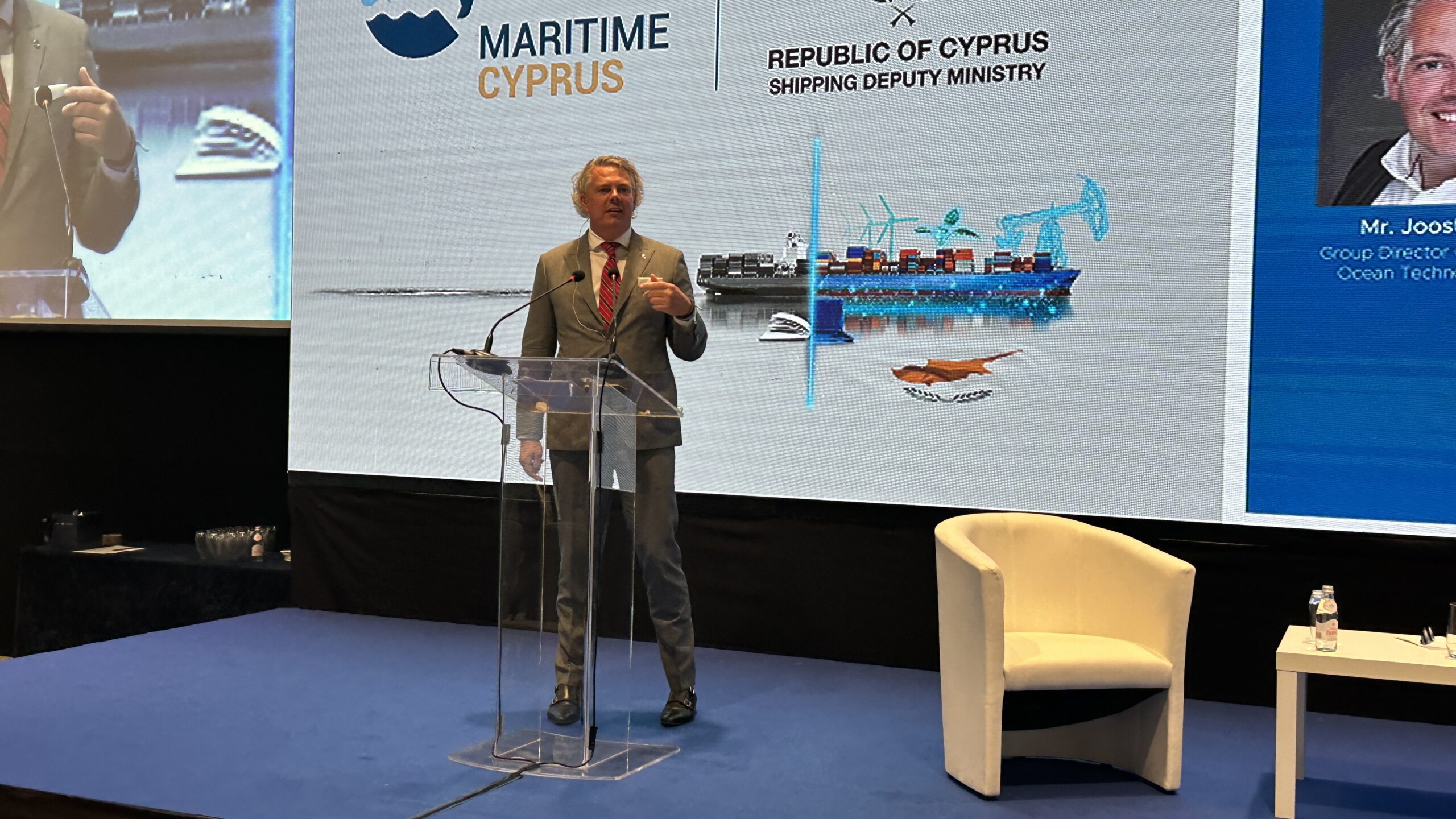
The third and final panel discussion of the day titled, “Cruising Ahead: Exploring Current Developments and Dynamics in the industry,” was moderated by Mr Joost van Ree, Group Director Cruise & Yachts, Ocean Technologies Group, and featured Mr Bert Hernandez, Senior Vice President – International, Royal Caribbean International, Ms Maria Deligianni, National Director, Eastern Mediterranean, Cruise Lines International Association, Mr Vincenzo Galati, Director, Corporate Marine Technology, Carnival Corporation & PLC, and Mr Norbert Stiekema, CCO, Explora Journeys.
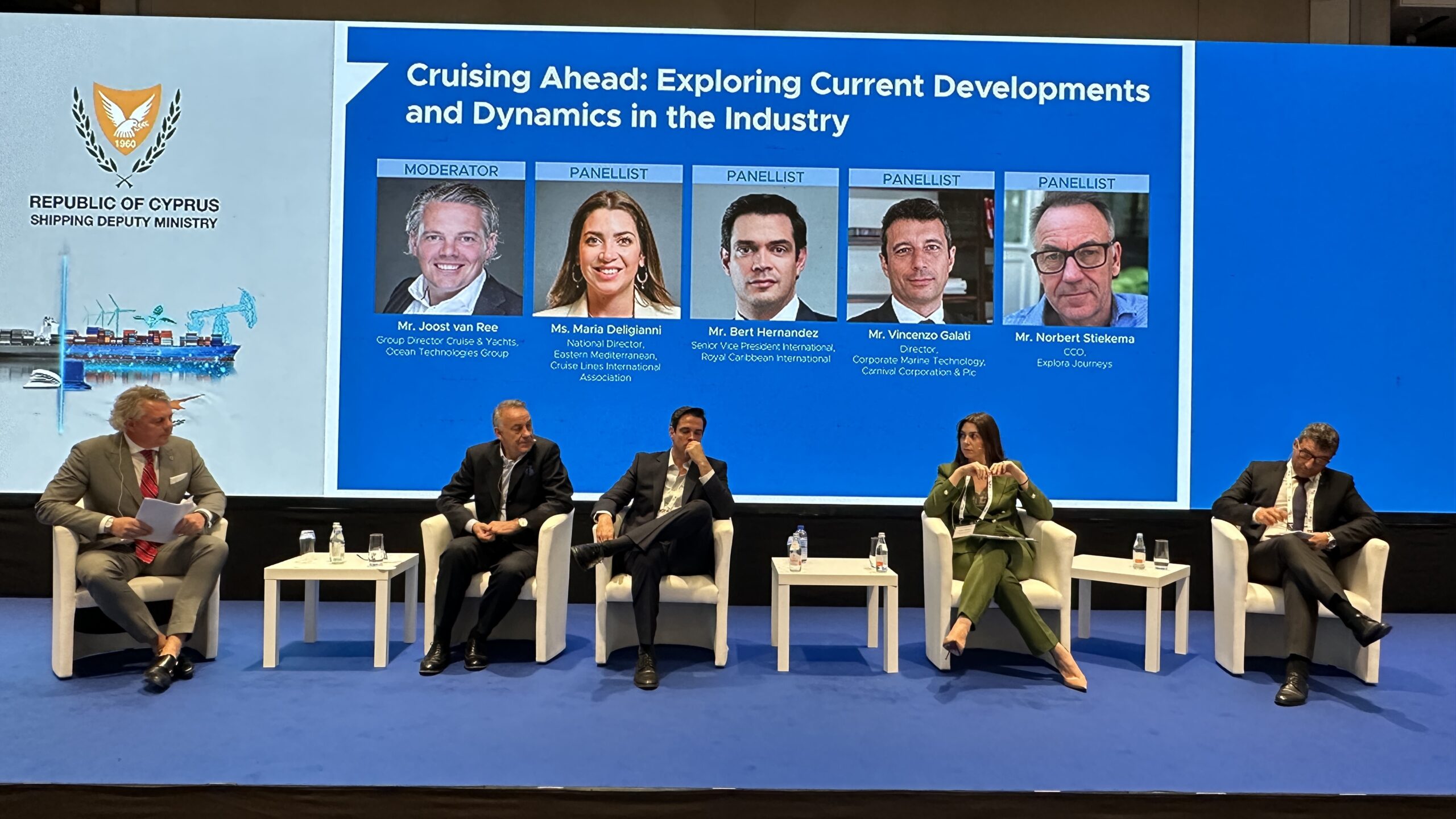
The panel discussed the complexities of the cruise sector, and how dynamics are changing as the shipping sector transitions towards sustainability. “We are very visible,” said Mr Joost van Ree. “Because of this, the cruise industry is always an early adopter of new technology.” Expanding on the cruise industry’s visibility in European cities, the example was made of Amsterdam’s efforts to reduce over tourism by banning large cruise ships from the city center. Commenting from an ESG perspective, Ms Maria Deligianni shared how the company not only continues to pursue substantial decreases in emissions from vessel propulsion systems, but also prioritizes sustainable activity at cruising destinations the company operates in. Asked about his views on the future of the cruise sector, Mr Bert Hernandez explained how the destination is the primary determinant of how people choose their vacation. “Destination is key. It’s therefore critical that our ships have access to these destinations, and this can only be secured through ongoing engagement with local communities.” It was agreed that local offices and partnerships help address infrastructure needs and foster long-term growth for cruising. Concluding on a positive note, Mr Bert Hernandez explained how Cyprus played a leading role at the beginning of the pandemic in helping crew members get home. “This tiny nation really was the catalyst for allowing the cruise industry restart.”



Related News.
Global study finds Cyprus ranks SEVENTH and set for $1.1 billion AI GDP boost
Cyprus beats India and New Zealand to come SEVENTH in major AI study – with potential €1.1 billion GDP boost and youth jobs opportunity Some 86% of…

Global shipping’s trillion dollar climate bill according to Zero Carbon Analytics
A new study by Zero Carbon Analytics finds that emissions from international shipping cost the global economy around USD 963 billion between 1990…
Keeping Children Safe Online at Sea Seafy® earns friendly WiFi Certification across 26 vessels
Seafy becomes Friendly WiFi’s first partner in the maritime sector, helping protect kids from harmful content online. Friendly WiFi is delighted…
ShipManager joins Star Information Systems to accelerate the maritime industry’s transition to cloud
CFARER, a DNV Company selects Star Information Systems as the longterm home for ShipManager and its cloud future Star Information Systems (Star)…

Seafarer experience must shape maritime technology, initial STEER Project report finds
New research finds technology can shift rather than remove risk as The Nautical Institute, with support from Lloyd’s Register Foundation, calls for…
New LR service targets cargo disruption when trade routes fail
New LR Advisory service helps ports, governments and logistics operators respond to disruption, protect critical cargo flows and strengthen trade…

DORIC WEEKLY INSIGHT 06 NOVEMBER 2026
Please find below the DORIC Market Insight for the week ending 06th November 2026. Weekly Report 06.11.2026
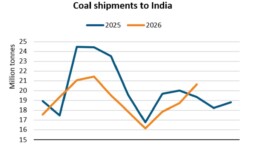
BIMCO Shipping Number of the Week
Coal shipments to India drop 7%, but limited recovery may lie ahead "Between January and October, coal shipments to India dropped 7% y/y due to the…
Hapag-Lloyd marks 20 years in South Africa and targets further growth
South Africa has become a cornerstone of Hapag-Lloyd's business in Africa Hapag-Lloyd surpasses 1 million TEU in Africa for the first time in its…
Subscribe to our newsletter!
if you dont want to swim alone in the ocean of news, sign up for the newsletter, and you will receive daily all the important news of world shipping!
