12 trillion to be spent on renewables and grid infrastructure in the US and Canada by 2050 according to DNV Report


-
DNV publishes Energy Transition Outlook North America. The report covers the energy future of the U.S. and Canada through to 2050
-
Policies are triggering massive investment into new technologies, accelerating the energy transition in North America
-
Domestic fossil fuel demand declines 60%, mainly in transport and power sectors, but export remains stable while domestic energy use is declining
-
Household energy expenditure halves by 2050 driven by energy efficiency and a cleaner energy mix driving energy affordability
Federal and household spending on energy in the U.S. and Canada will drop sharply as the two countries reduce their reliance on fossil fuels, according to DNV’s Energy Transition Outlook North America. The new report explores the most likely energy future of the U.S and Canada to the middle of the century and it forecasts 12 trillion dollars will be spent in the two countries on grid and renewables between now and 2050. The intrinsic efficiency of renewables and electrification mean that overall expenditure on energy will be the equivalent of 2.5% of GDP by 2050, compared to 4% now. The report forecasts capital expenditure (CAPEX) on renewables will overtake fossil fuel CAPEX by 2040 as domestic demand for the latter falls by some 60% by the middle of the century.

Electrification will be a key driver of the energy transition, which will ultimately benefit consumers. Household energy bills are set to halve by 2050 as they reap the rewards of cheaper electricity generated by renewables. To support the influx of renewable energy resources, the grid must undergo a vast expansion, increasing its capacity 2.5 times by 2050. The Outlook takes into consideration the current bottleneck in transmission lines, which, if not addressed, will limit the attractiveness of wind and solar installations. Policies have already been initiated in the U.S. and Canada to address the lack of grid capacity, although ultimately DNV believes that transmission- and distribution-system operators will be driven by the unprecedented opportunity to capitalize on the vast market for renewable power.
“The cost efficiencies of renewable power are proving irresistible even in the land of big oil,” said Remi Eriksen, Group President and CEO at DNV. “The $12 trillion to be spent on renewables and grid infrastructure in the U.S. and Canada should be viewed as an opportunity to put the region at the heart of technologies essential to the global energy transition, such as hydrogen e-fuels, whilst reducing energy bills for households.”
Decarbonization in the two countries is being accelerated by the Inflation Reduction Act (IRA) and policies enacted by the Canadian government. IRA is providing much needed stability for the renewables industry, which previously suffered from boom-and-bust cycles linked to the changing regulatory and fiscal landscape. Boosted by IRA, solar and wind power will grow 15- and 8-fold respectively by 2050. Investments in hydrogen, carbon capture and storage (CCS) and direct air capture (DAC) are all front-loaded in the 2030s thanks to the fiscal incentives, which otherwise would have matured much more slowly. Notably, IRA has changed DNV’s forecast of hydrogen share of the energy mix in North America from 5 percent to 9 percent by 2050, with green hydrogen from dedicated renewables overtaking blue hydrogen by the mid-2030s.
Currently, fossil fuels account for around 80% of energy supply in the U.S. and Canada, but this will drop to less than 50% by 2050. Coal production in the region will drop 85% by midcentury as it struggles to compete with cheaper forms of electricity production such as wind and solar as well as natural gas. The shift to electric vehicles will be the main reason for a reduction in domestic oil demand, with consumption forecast to decline by 75% by midcentury. Oil exports, though, will triple. Natural gas demand is approaching its peak and consumption will almost halve by 2050 as power generation becomes dominated by renewables, but also here export remains stable.

Electrification will double by 2050 and account for 41% of the region’s overall energy demand driven by the emergence of new demand categories such as electrified road transport, electrolysis for hydrogen production, and the use of heat pumps in buildings and manufacturing. Solar will become the largest producer of electricity by the mid-2030s, supported by favorable economics and enhanced policy support in the region. By 2050, solar will account for almost half of all electricity generated in North America. Although currently stymied by inflationary and supply chain pressures, continued policy support for wind will ensure wind accounts for 35% of the region’s electricity supply by midcentury.
“The progressive policies of the IRA are accelerating the transition and demonstrate a pathway that governments can take to hasten the energy transition. However, the U.S. and Canada, like the rest of the world, still need to do more to reach net zero by 2050,” added Eriksen.
Although the policies enacted in North America are accelerating the energy transition, the U.S. and Canada will not reach net zero CO2 emissions by 2050. CO2 emissions are forecast to drop 75% by 2050 as fossil fuels, especially natural gas, will still play a role in the energy mix and the emissions of hard to electrify industrial processes like cement production will remain significant. According to DNV’s Pathway to Net Zeroscenario, for the world to meet the goals of the Paris Agreement, North America would have to be net zero by early 2040s which will require, among other things, even more rapid scale-up for CCS and almost 6 times as much DAC as is currently forecast. This would require the type of American focus that ushered in the atomic age and the space age.



Related News.

Beyond Technical Skills: WISTA Cyprus explores the human side of leadership
WISTA Cyprus hosted The Art of Leadership & Emotional Mastery, an interactive workshop held on 15 October at the Alasia Hotel in Limassol,…

The human cost of sending merchant mariners into war zones extends far beyond the immediate danger of missiles and drones. It raises a harder question: who is really protecting the seafarer?
Who protects the seafarer? I have spent much of my professional life at sea. I am a Master Mariner. I have stood on the bridge, made decisions…
Loss of bridge control: Human failure is normal – context is key
When bridge control is lost in a functioning system, it can be easy to blame human error. But accidents rarely happen because of one mistake…

Danish Shipping announces the transport of live animals by sea new rules should improve safety for animals, seafarers and the environment
Revised rules on the transport of live animals by sea are being negotiated in the EU. Danish Shipping wants to ensure good animal welfare,…

Japan’s flawed shipping proposal leaves developing countries adrift
A new analysis by Opportunity Green warns governments of the wide-ranging risks posed by Japan’s proposal at the International Maritime Organization…

Intermodal Report Week 42 2026
Pls find below the Intermodal Report - Week 42 2026 Intermodal Report Week 42 2026

Allied Weekly Market Review Week 42
Pls find below the Allied - Weekly Market Review - Week 42 ALLIED - Weekly Market Report- Week 42
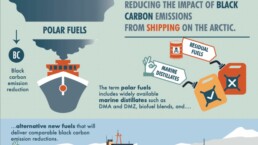
EU Arctic Strategy NGOs welcome EU ambition on on cutting shipping’s Arctic Black Carbon Emissions
Responding to today’s publication of the EU’s Arctic Strategy, which definitively states the EU’s intention to support International Maritime…

The final quarter of 2026 is expected to see softer bauxite flows
Chinese front-loading is expected to have run its course, pointing to softer bauxite flows in 2026 Q4. Global bauxite flows increased by 2.8% y/y…

DP World Foundation and Belewan new container terminal mark groundbreaking of AED 3.7 million school project in Indonesia
Classrooms of Hope initiative expands to Belawan, Medan with a new junior high school designed to provide modern learning facilities and greater…
Subscribe to our newsletter!
if you dont want to swim alone in the ocean of news, sign up for the newsletter, and you will receive daily all the important news of world shipping!
